
An Art Interlude, Parte Dos
A follow-on to the other day's dive into one of two paintings that caught my eye recently, focusing on, no surprise, the second one.

Back on my wander through the temporary exhibit (just through this weekend), “Itinerarios artísticos entre la Argentina y España (1880–1930)" and the second of two paintings from artist Ignacio Zuloaga y Zabaleta. This one, titled with a simple plaque as Gitanilla, more or less “gypsy girl”, is quite striking, almost in opposition in style to the Witches painting I delved into in the previous post.
Zuloaga’s slot in the show ties back to the 1910 Centennial I talked about in the previous post, but with an added connection - he actually had an Argentine pupil. Normally he kept his studio closed to students, yet in 1909 he took on budding artist Jorge Bermúdez. Each autumn Zuloaga would decamp to Segovia to paint dancers, bullfighters, and gitanas, and in 1911–12 Bermúdez tagged along, learning the craft firsthand. That’s the Gitanilla subject matter literally handed down, master to disciple.
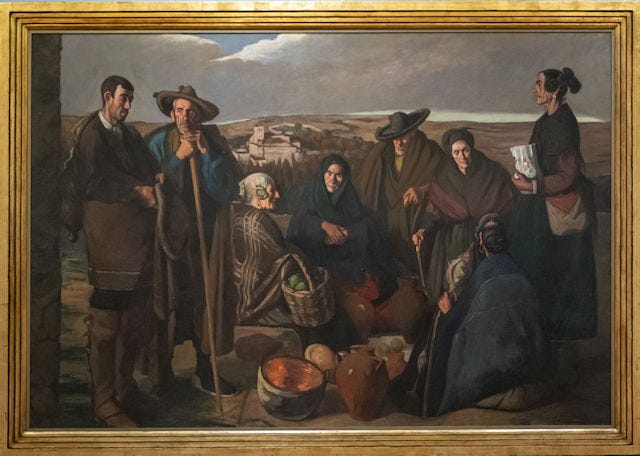
The exhibition makes the point by hanging Bermúdez’s Gente de Castilla (c. 1912) right beside Zuloaga’s canvases.
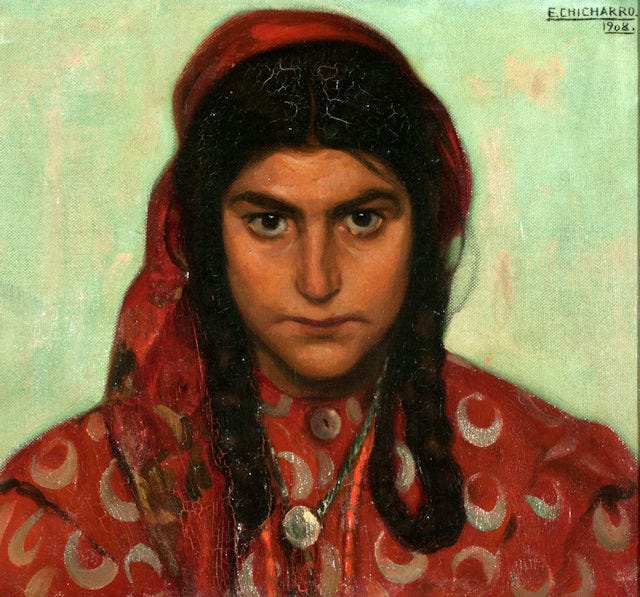
And the painting isn’t alone in the gypsy‑theme corner: it’s flanked by Eduardo Chicharro’s Gitana (1908) from the museum’s permanent collection…
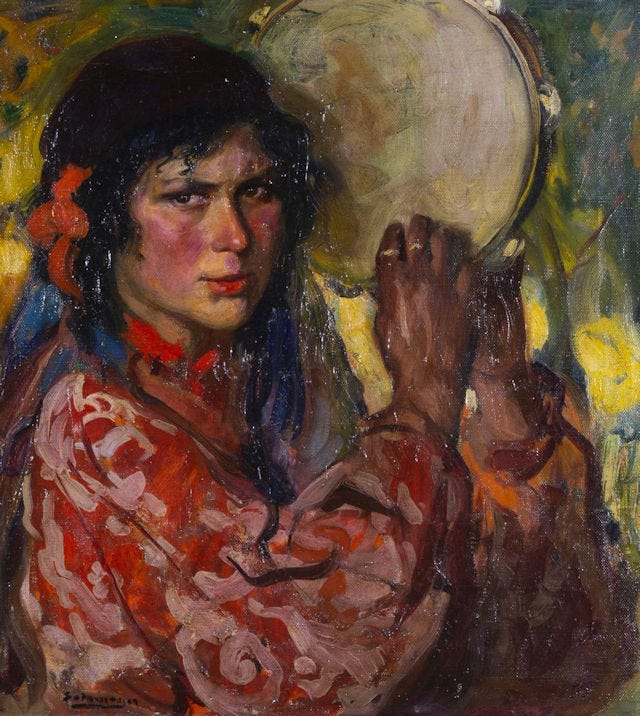
…plus Fernando Álvarez de Sotomayor’s Gitana con pandereta. Taken together, the display shows just how saturated the gitana type was across this generation’s work on both sides of the Atlantic, which makes it clear why the museum had one tucked away, waiting for the right curatorial spotlight.
Zuloaga had his go‑to cast of characters, and the gitana/gitanilla was right there among them: the Roma woman as shorthand for a wild, pre‑modern Spain, poised alongside his bullfighters and dwarfs in the visual lexicon that made him famous abroad. The type wasn’t his invention; Cervantes had already set the mold with La Gitanilla in the Novelas ejemplares, turning the figure into a cultural archetype. So when Zuloaga painted her at the beginning of the 20th century, working in that costumbrista‑regionalist groove, he was dipping into a well‑worn reservoir of associations rather than conjuring something new.
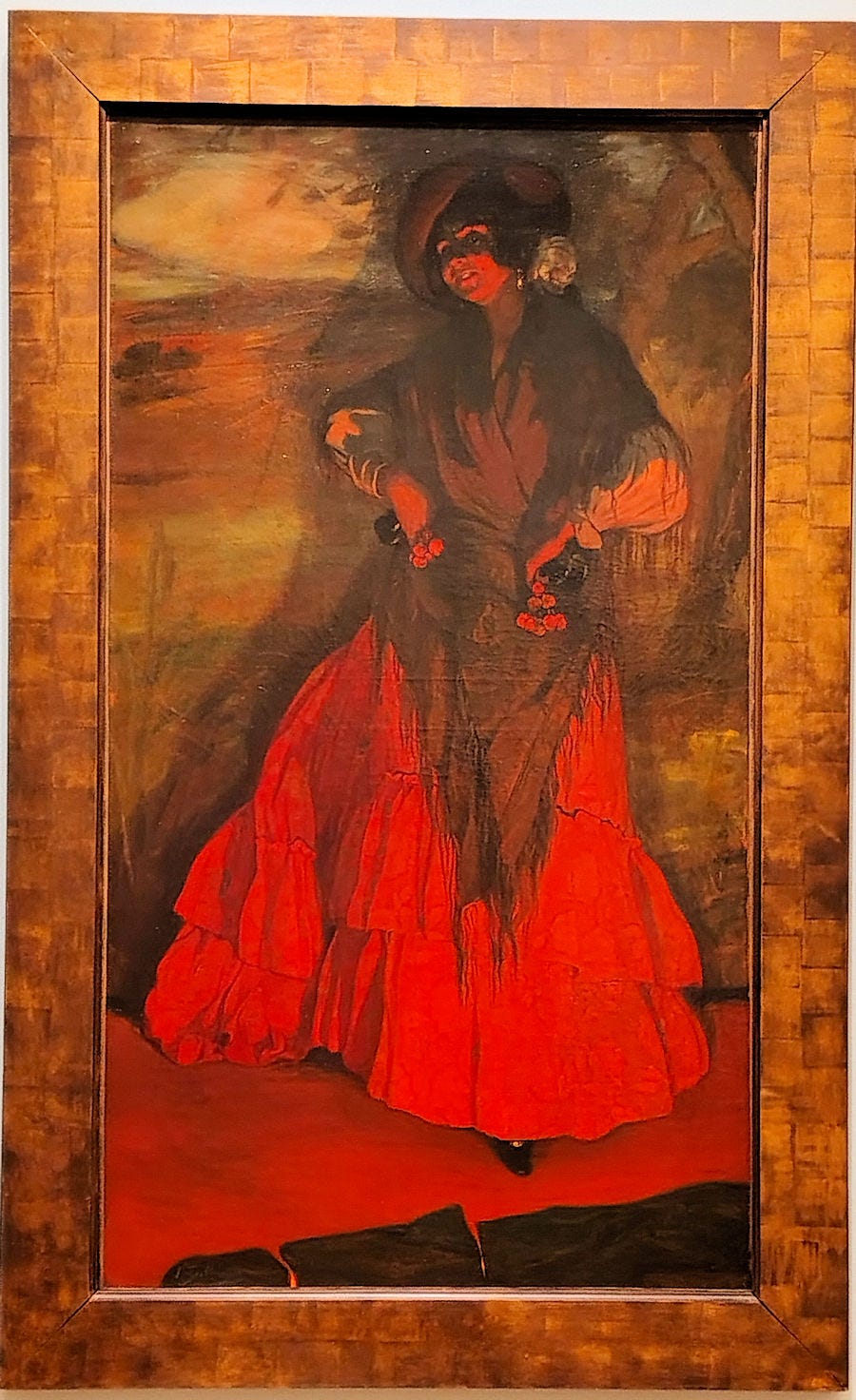
One interesting note, diving into the museum’s history of this work, is that it was originally catalogued as La bailarina: Carmen la Gitana ("The dancer: Carmen the Gypsy"), and dated from 1902 (the attached plaque doesn’t list a date). There’s no indication in the records that I could see as to why they retitled it for exhibition. There was also a discussion of the work belonging to Zuloaga's "España negra" period of typecasting Spanish figures.
‘The whole España negra (Black Spain) versus España blanca (White Spain) split came out of the identity crisis after 1898, when Spain lost its colonial empire. España negra, led by painters like Ignacio Zuloaga and José Gutiérrez Solana, turned away from romantic clichés and leaned into a gritty, somber realism. They claimed the true Spanish soul lived in Castile’s austere landscapes and in the melancholic traditions of its people, painting with earthy tones to give everything a heavy, brooding historical weight.
By contrast, España blanca, most famously championed by Joaquín Sorolla, offered a vision of national renewal through light, color, and Mediterranean vitality. Where the negra camp looked inward to the complexities of the past, the blanca camp looked outward, painting a sun‑drenched, optimistic future that lined up with European modernization. These weren’t just stylistic choices but rival manifestos: one trying to preserve the gravity of fading tradition, the other trying to sweep away the shadow with clarity and brightness.” (Google Gemini explanation)
Around 1900 Zuloaga nailed down the style that came to define him: a gritty realism built on light‑and‑shadow contrasts and regional themes with a tragic edge, even though he’d earlier worked in the opposite “España blanca” register. The notes explain that this phase focused on Spanish “types,” especially women dressed in ornate traditional costume of lace mantillas, fans, and so on. Picturing a lone gypsy woman against a stark, wind‑bent tree: it slots perfectly into that dark, dramatic, single‑figure mode, rather than the brighter, crowded genre scenes.
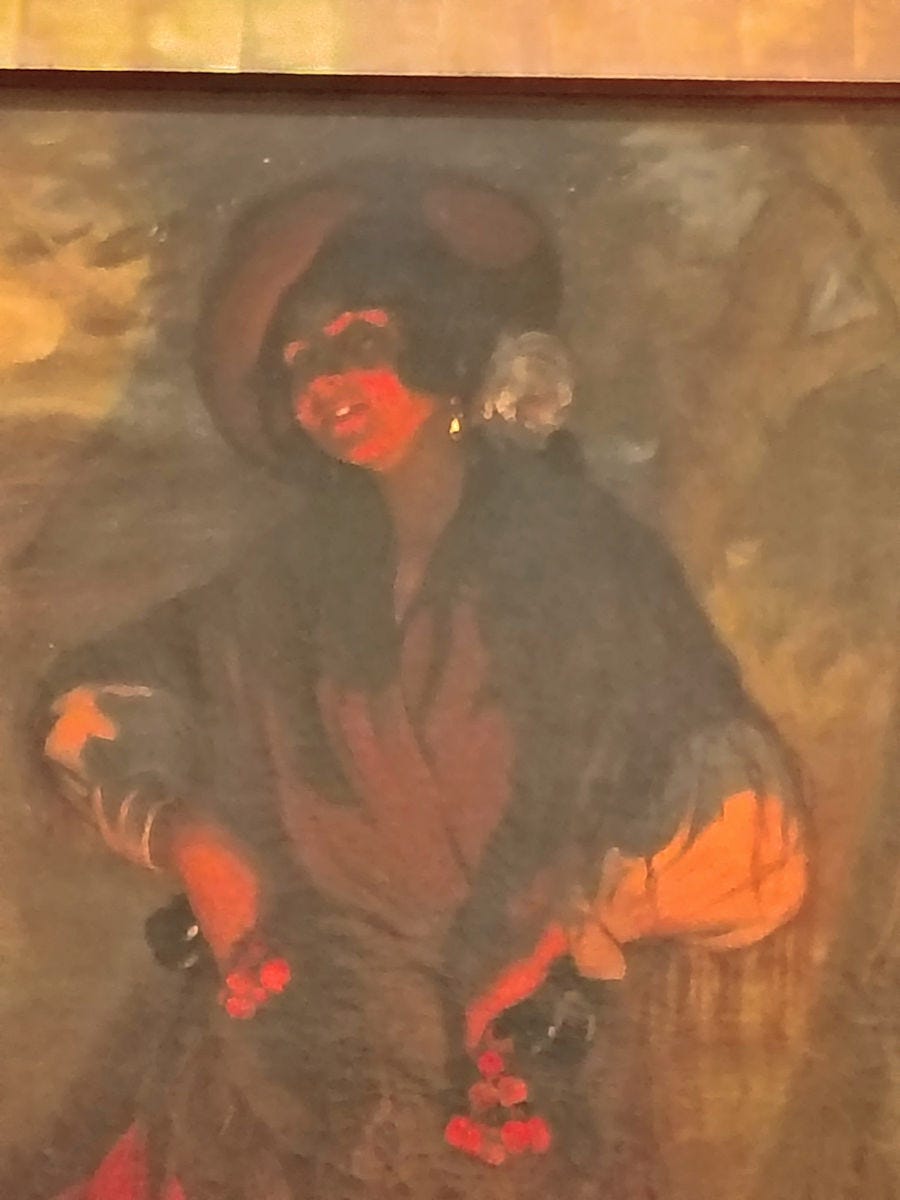
I must admit, when I was admiring the painting, I thought that the woman was masked, and it wasn’t until zooming in that I realized it was just a shadow from her hat.
The painting was donated to the museum’s collection by the Girondo family. Juan Girondo, an Argentine art collector, and father of famed local poet Oliviero Girondo, apparently bought the work directly from Zuloaga in 1911. His family donated the work in 1933, a few years after Juan passed away, along with numerous other artworks that are now in the Museo de Bellas Artes permanent collection.
Whew! Back to food.
Art and food...two of the best things in life!