
An Artful Interlude
A wander through our local fine arts museum, waiting for something to catch my attention.

The Museo de Bellas Artes is featuring an exhibition of paintings from their collection of Spanish artists. I picked out two that caught my eye. Today, the first…
Ignacio Zuloaga y Zabaleta is one of those painters who makes you rethink what “Spanish” painting meant at the turn of the 20th century.
Born in 1870 in Eibar, Basque Country, he came from a dynasty of damasceners, i.e., artisans who inlaid gold and silver into iron (I learned a new word!). A trip to Rome with his father flipped his career path from commerce to art. By 18 he was in Montmartre, broke but surrounded by fellow Spaniards and rubbing shoulders with Gauguin, Degas, and Rodin. His first painting hit a Paris exhibition in 1890. Not bad for a kid nearly starving on arrival!
London didn’t work out, so he returned to Spain, settling in Seville and Segovia. There his style crystallized: earthy realism with Andalusian subjects like bullfighters, gypsy dancers, beggars, and dwarves; set against stark landscapes. Spain as proud, poor, theatrical, and perhaps a little brutal.
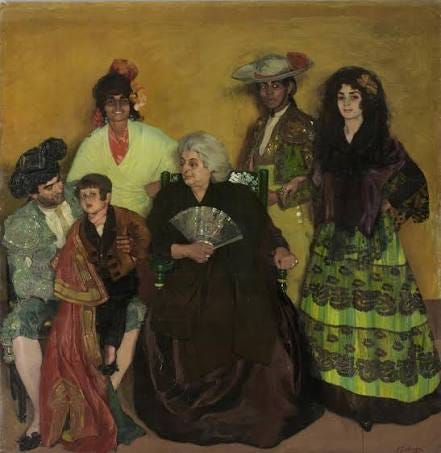
His breakthrough came in 1899 with Daniel Zuloaga and His Family, snapped up by the Luxembourg Museum in Paris. By 1907 he was also painting society portraits, which paid the bills.
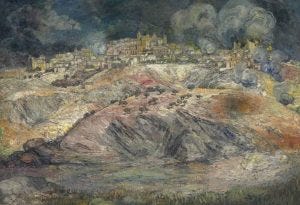
Later politics are harder to swallow: he backed Franco in the Civil War, even painting the dictator in 1940, and memorialized the Nationalist side with works like El Alcázar en llamas (The Alcázar in Flames).
In 1910 Argentina held its Centennial International Art Exhibition in Buenos Aires, marking a hundred years since the May Revolution, and Zuloaga’s work was shown there in a dedicated Spanish section. It was a hit, and his works sold well, and along with others in the exhibit, became the real catalyst that got Spanish painting taken seriously by the Buenos Aires art market, which up to then had favored Italy and France.
That exhibition also cemented a personal friendship that’s quite interesting: the Argentine painter Cesáreo Bernaldo de Quirós, and Zuloaga, both of Basque descent, built on the success of the 1910 Centennial show to deepen a friendship that continued in prewar Paris, and helped along by mutual close friends, especially the writer Enrique Larreta, whom Zuloaga painted in 1912. Larreta is a fixture of Buenos Aires cultural history, and his old residence is now the Museo de Arte Español Enrique Larreta in Belgrano. That museum still holds Zuloaga material today, including letters Zuloaga wrote to Larreta between 1920 and 1921.
On to the work that captured my attention.
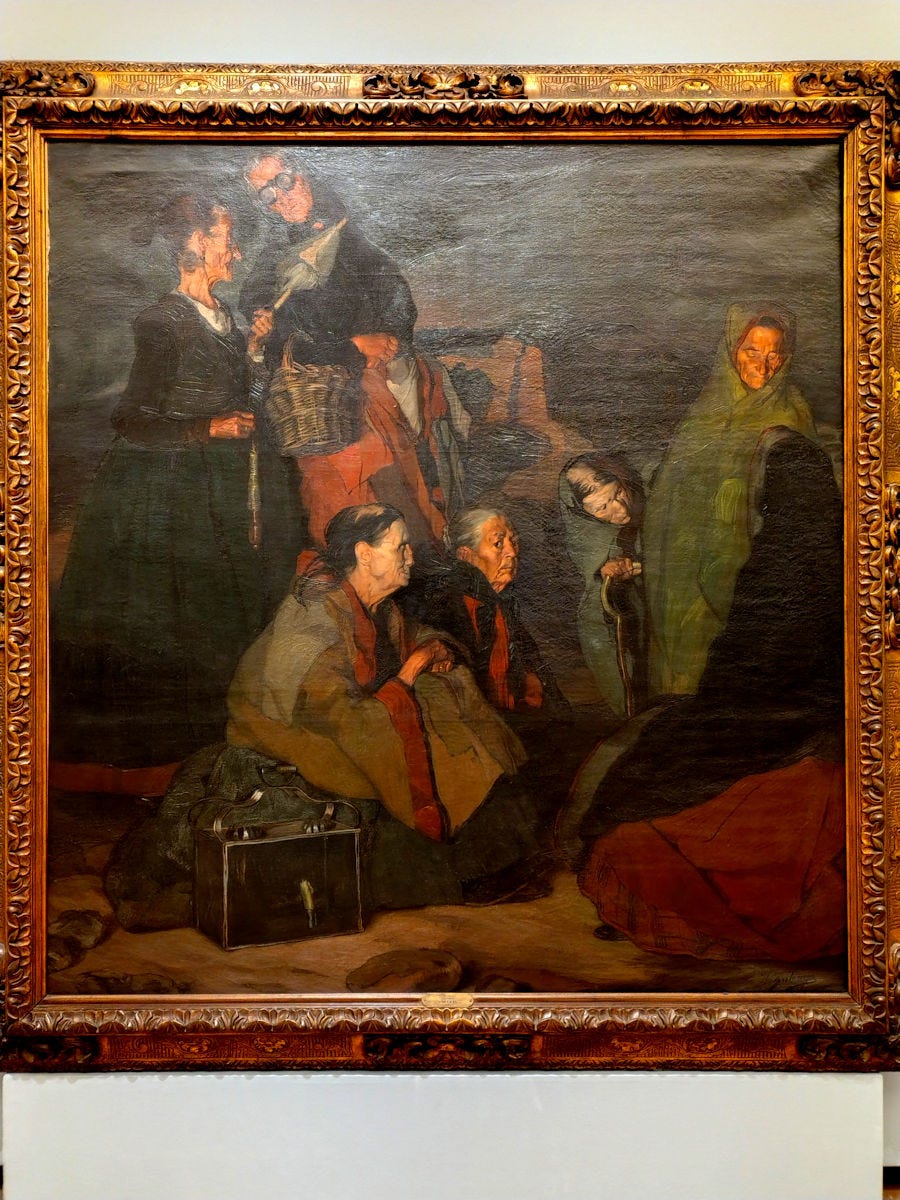
Despite the spooky title Las Brujas de San Millán (The Witches of San Millán), Zuloaga’s “witches” are just elderly women in black, clutching everyday props like a lantern, spindle, walking stick; arranged with deliberate eeriness.
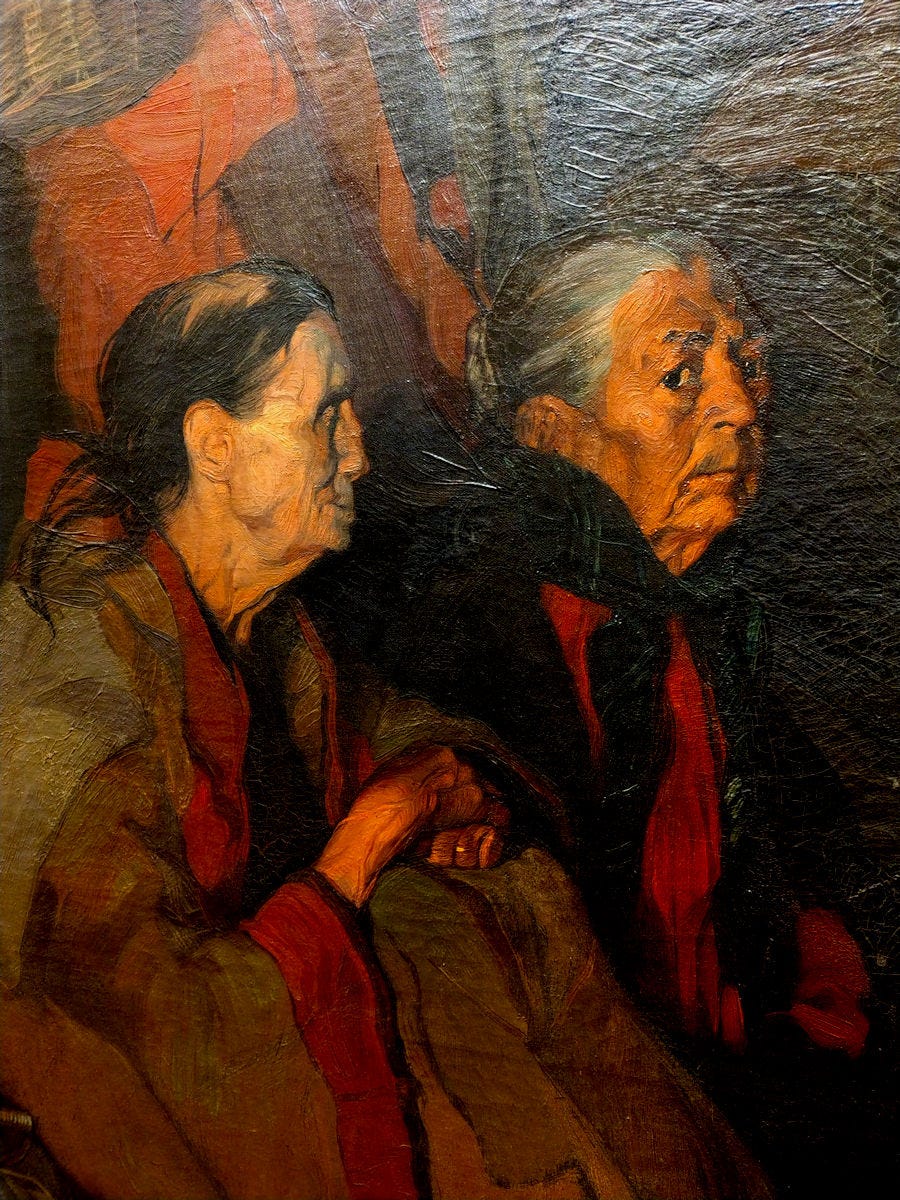
One figure stares out from the canvas, breaking the spell as if viewers have barged in on a personal, reflective moment that we weren’t invited to be a part of.
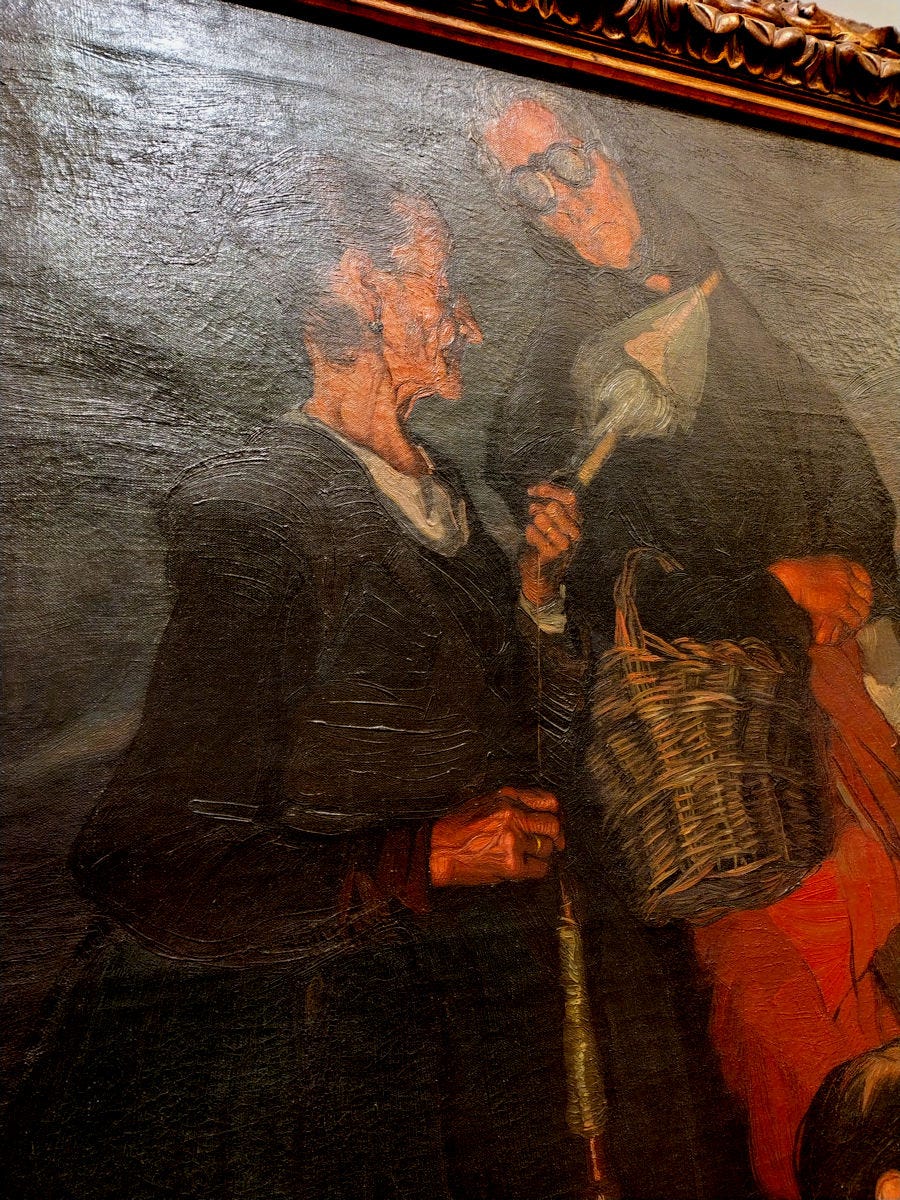
His models weren’t cauldron stirring hags but the widows he saw daily, shrouded in cloaks, and on their way to Mass; servants from his uncle Daniel’s household pressed into modeling.
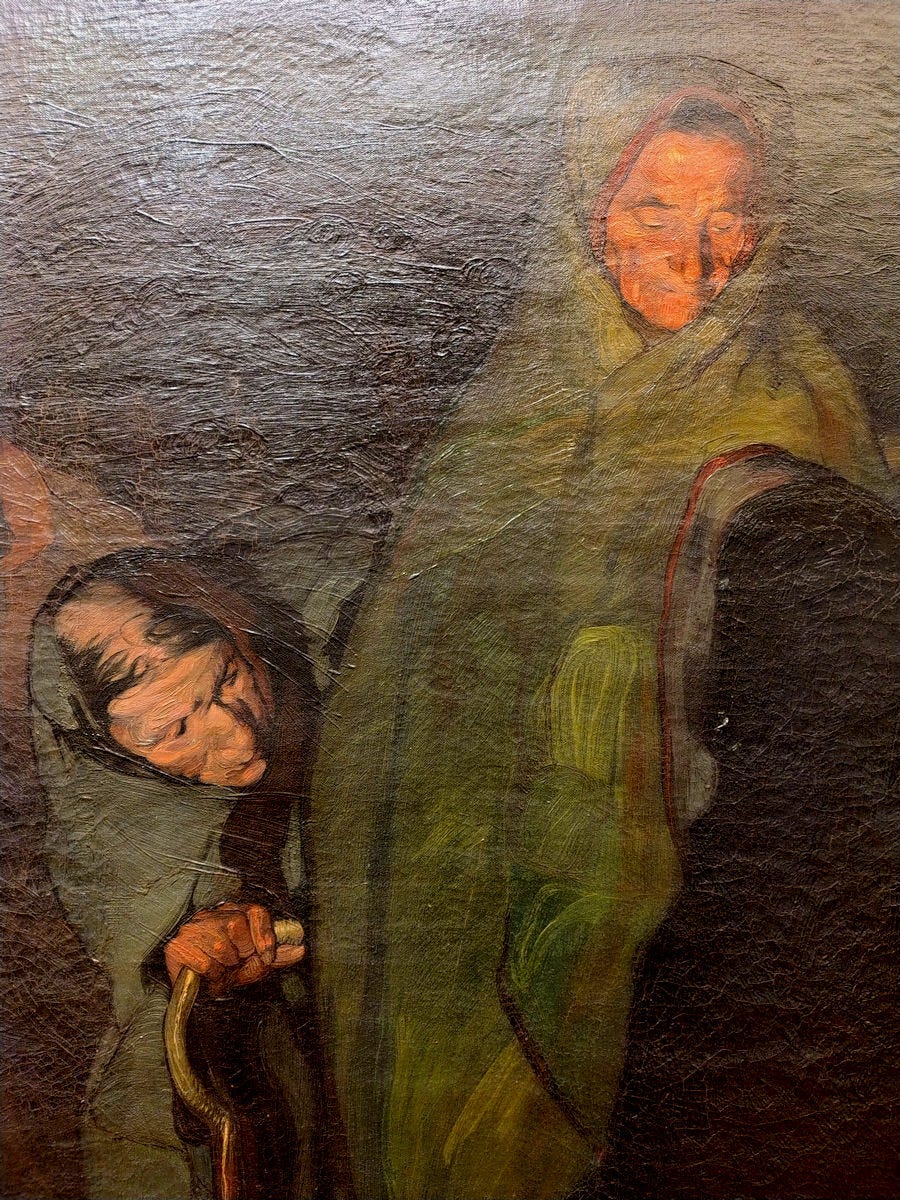
The painting itself ended up creating a legend: San Millán in Segovia still carries the nickname “witches’ neighborhood,” a reputation born not of sorcery but of Zuloaga’s dark canvas and the barrio’s gloom.