
Wines of the Jesuit Legacy
A surface dive into the world of the lesser known grape varieties of the Criolla family.

Criolla Grande, Criolla Chica, and Criolla Blanca are not the world’s best known grapes. The Sotheby’s Encyclopedia of Wine only mentions “Criolla” as a secondary grape grown in Argentina, on page 543 of a nearly 700 page tome. For Pais, a.k.a Criolla Chica, it is mentioned only in passing as a native grape of Chile and Argentina. It’s neither native, not limited to these two countries, it was brought here by 16th century conquistadors and Jesuit missionaries from the Canary Islands, where it’s still grown and made into wine. The first Argentine vineyard dedicated to the grape was planted in 1557. It’s worth noting that all the Criolla vines grown in South America are from pre-phylloxera cuttings, and as such have developed, and are notedly different from, their post-phylloxera grafted cousins still grown in Europe.
Hugh Johnson’s World Atlas of Wine, which was often considered the bible of wine reference until the mid-90s, in its last edition (1994) only mentions Argentina in a few paragraphs before moving on to Chile. He acknowledged that Argentina was the world’s fifth largest producer of wine, but declared that because Argentines drink insatiably, no one outside of Argentina is likely to ever taste their wines. Criolla was not mentioned until the latest update of his Wine Companion, in 2003, and then disparagingly, as “a primitive grape thankfully being replaced by good wine grapes”.
Jancis Robinson refers to Criolla Grande as “Argentina's most common vine (in both senses)”, a properly backhanded swipe; and to Criolla Chica as “commonplace”, though she admits it is being increasingly made into interesting wines.
Quoting my friend Evan Goldstein’s The Wines of South America in reference to Criolla Grande: “The fourth most widely planted grape in Argentina (mostly in Mendoza) is, like Cereza, the source of volumes of pink or rosé and white wines that are at best everyday quaffers and at worst innocuous. This variety is on the decline, more so than any of the other Criolla varieties.” Though for Criolla Chica, a.k.a. País, Listán Prieto, or Mission he waxes far more positively.
These two are part of a family of grapes that include Cereza, the second most planted grape in Argentina, Mollar, Uvina, and Quebranta of Perú, the last being the primary grape used in making Pisco, and white varieties Torrontés and Pedro Gimenez (a historical clone of the Spanish Pedro Ximenez that is its own thing, coming from pre-phylloxera vines).
Here in Argentina, the grapes are gaining in popularity, with the INV, our national organization that oversees the wine industry, having granted Criolla chica the status of a “quality grape” for wine making just last year. And some of the country’s top winemakers are undertaking the re-discovery of these oft ignored grapes.
Here are ten that I’ve tasted over the last few weeks, plus one extra from a tasting a few months back, just to give another example. These mini-reviews run the gamut of different varietals in the family.
Whites (Criolla Blanca & Torrontes)
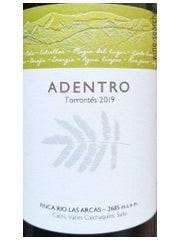
Adentro Torrontés 2021, Cachi, Valle Cachalqui, Salta, Argentina. 100% Torrontés, cold fermented, aged 12 months in barrique. I didn’t get a photo of the bottle(s) so this one is just pulled from the web (and has a different vintage). Dry, light bodied, fruit forward, moderate acidity, medium finish. Mix of tropical fruits, light floral notes, and a bit of lemony citrus. Decent wine with an array of pastas, but nothing special - the folk who ordered it at the table ordered it because “it’s the cheapest wine they have”. 26,000 pesos in a restaurant setting, looks like it runs around 16-17,000 pesos retail. Acceptable quaffing wine.
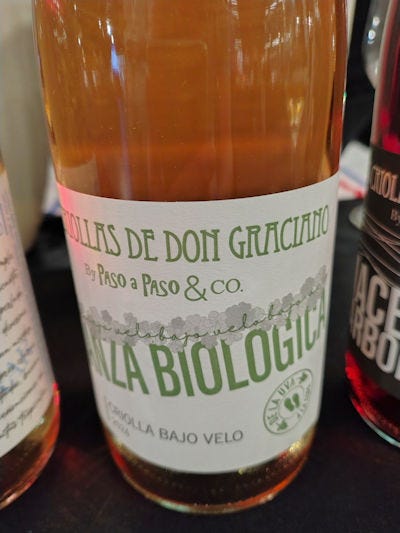
Paso a Paso & Co. “Criollas de Don Graciano” Criolla Bajo Velo 2024, Tupungato, Mendoza. According to my scribbles this is a blend of Criolla, Torrontés, and Pedro Ximénez grapes, but neither the winery’s website nor Instagram feed even mention the wine’s existence. Technically a white wine of sorts, it’s got a color something like “rose gold”. The “bajo velo” gives a clue, meaning “under veil”, and given the style of the wine, I’d say it’s made in a similar style to a dry sherry, and probably gets the touch of pink from the Criolla grapes. It’s got beautiful exotic tropical fruit flavors, and a strong whiff of coconut. Dry, moderate acidity, medium bodied, long finish. No idea what the pricing would be, but unless it’s ridiculously high, this wine is Highly Recommended.
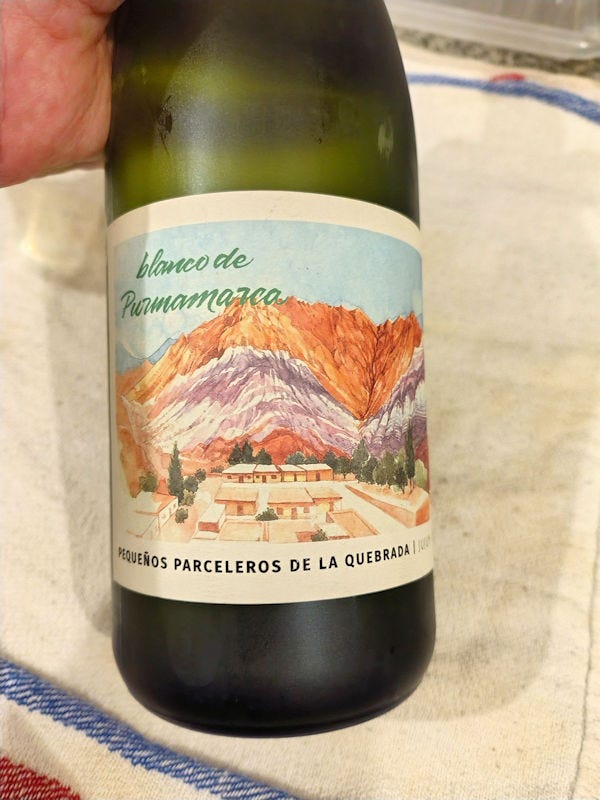
Bodega El Bayeh “Blanco de Purmamarca” 2023, Maimará, Jujuy, Argentina. Mostly Criolla Blanca with small amounts of other white grapes (not specified), pressed and fermented without skin contact in large concrete amphorae. The family story in Argentina begins a century ago with the arrival of the Lebanese patriarch, Boutrus Mansour El Bayeh, to these shores. And while growing grapes and making wine for family and friend consumption was a part of their tradition, it wasn’t until 2018 that his descendants opened a winery dedicated to him and adopted his last name (the family has gone by Manzur for decades). Small production, beautifully hand crafted wines. This wine has an intense aroma of green bell pepper, with side notes of lime zest and lightly toasted almonds. Dry, high acidity, light to medium bodied, long finish. Perhaps slightly aggressive for the sopa de maní, a Bolivian peanut soup, that we paired it with - a better match, I’d think, with an assertive seafood dish. Well worth the 23,000 peso price!
Rosés (Criolla Grande)
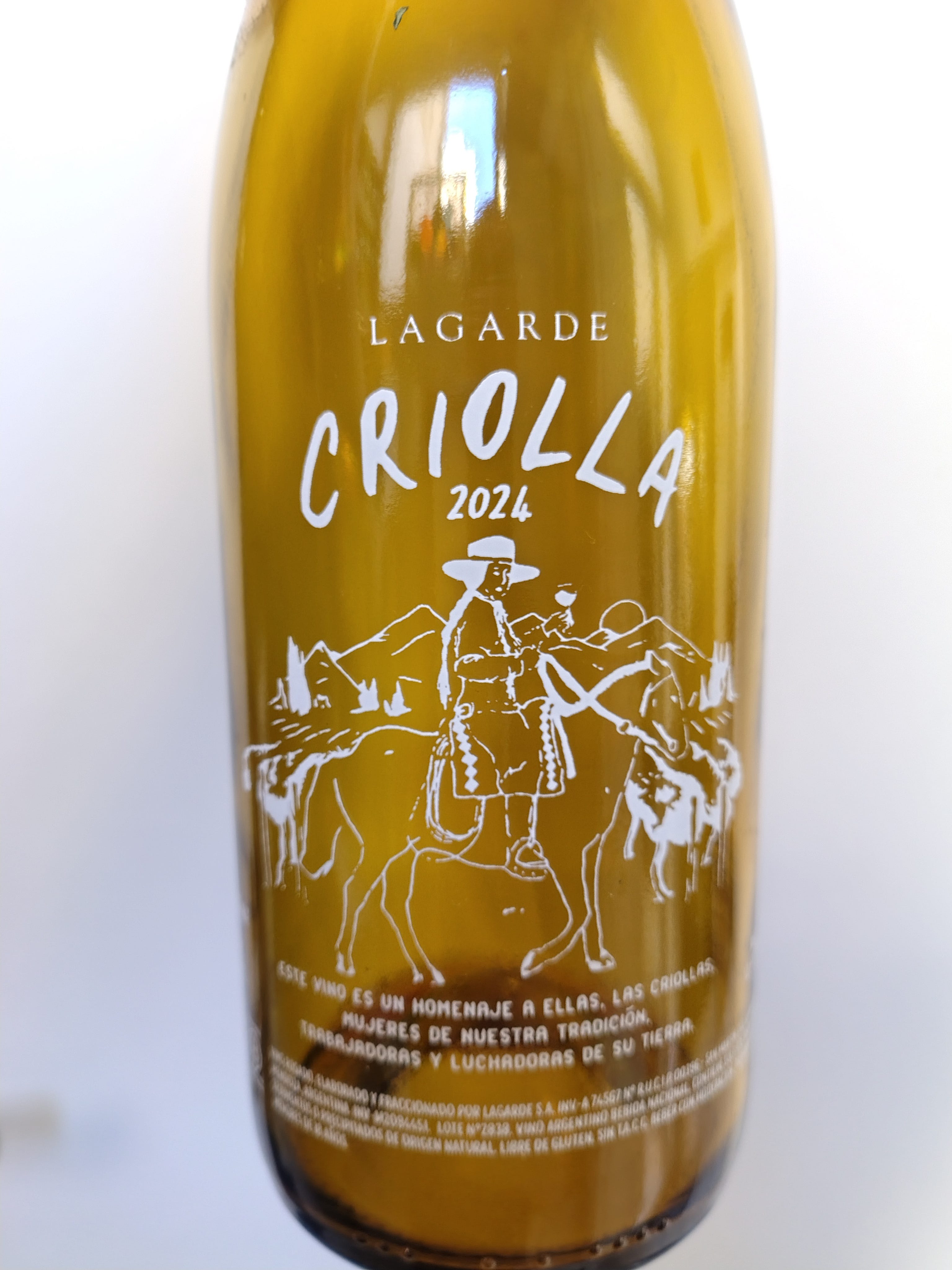
Bodega Lagarde Criolla 2024, Tupungato, Mendoza, Argentina. 100% Criolla Grande. Vivid dark pink color (sorry, didn’t take a photo until after we’d drained the bottle). Fresh and lively, mixed red fruits, with strawberry and cherry being at the forefront. Moderate acidity, light bodied, almost a rosé, dry, well balanced, medium finish. Chilled, it paired very nicely with a mushroom and olive risotto. Good quaffing wine. 15,400 pesos.
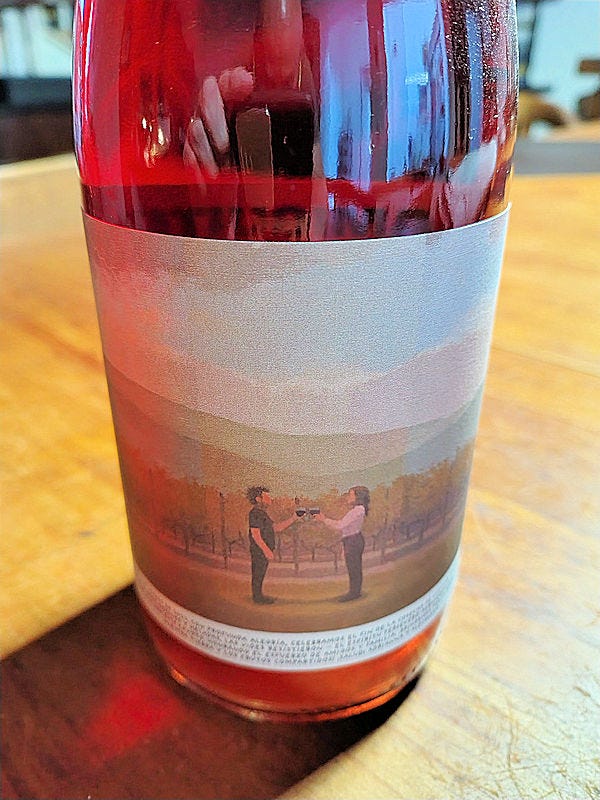
Bodega El Enemigo “Amiguito” Criolla Grande 2023, Mendoza, Argentina - 100% organic Criolla Grande fermented in clay amphorae with wild yeasts, and left unfiltered. Lovely garnet pink color. Dry, light bodied, moderate acidity, medium finish. Roasted strawberry, tarragon, hint of bacon fat. Went quite well with a steak seared in blue cheese butter, with a cherry tomato salad on the side. 28,500 pesos. Recommended.
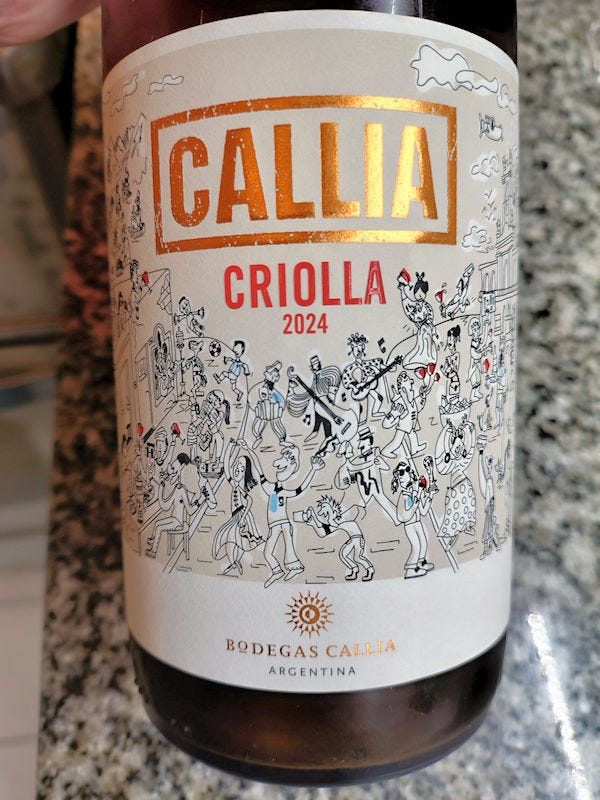
Callia Criolla 2024, Valle de Tulum, San Juan, Argentina. 100% Criolla Grande, cold fermented 12 days, then left to mature 6 months in contact with the lees before fining and filtration. Lovely, vivid ruby color. Easy drinking rosé, fruit forward, dry, moderate acidity, medium finish. Cherries, vanilla, and a hint of roses. Worked quite well with a spicy, Sichuan style Napa cabbage and prawn stir-fry. A steal at 5,900 pesos! Recommended.
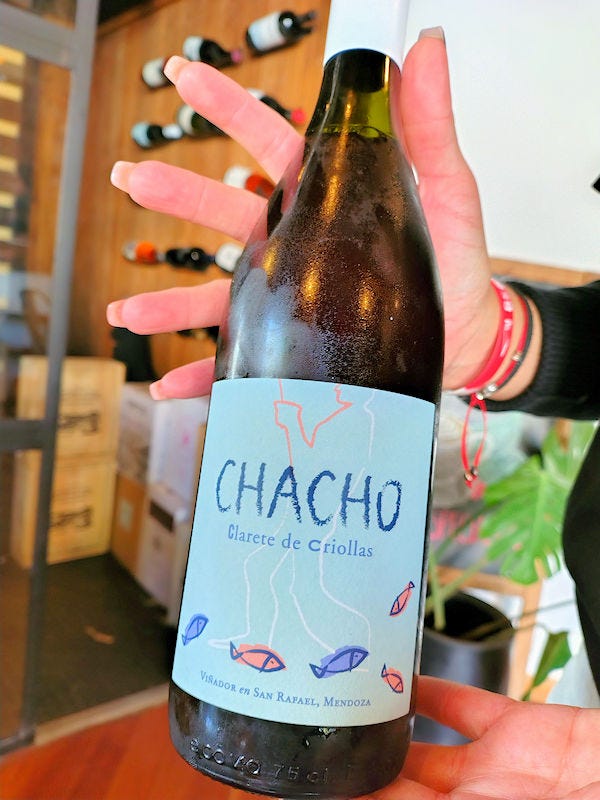
Chacho Clarete de Criollas 2023, San Rafael, Mendoza, Argentina - blend of Criolla Grande, Cereza, Moscatel Rosado, and “others”, macerated and co-fermented for five days on the skins, then aged for six months in 600 liter barrels. Limited production of 800 bottles. Lovely light red color with hints of orange - almost coppery. Perfume of papaya and warm, exotic spices. Dry, moderate acidity, medium bodied, long finish. Shared with a group of friends over an array of creative versions of classic Argentine dishes, paired particularly well with a pasta bolognesa. Retails for around 20,000 pesos and only 23,000 in the restaurant where we had it.
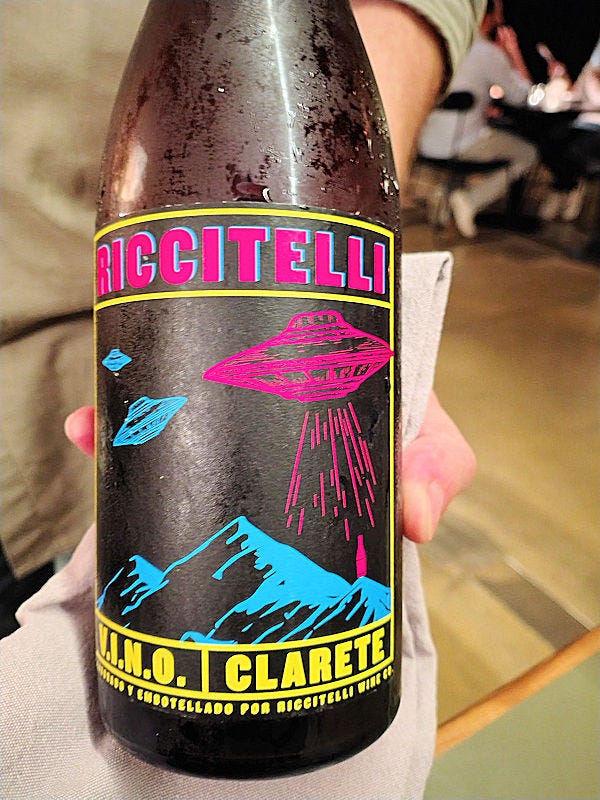
Riccitelli V.I.N.O. Clarete, Valle de Uco, Mendoza, Argentina. Blend, without exact details, of Criolla Chica, Criolla Grande, Criolla Blanca, Torrontés, and Pedro Ximénez… I think. Whole cluster cold fermentation in amphorae, then left to age on the skins for eight months. It’s listed as a non-vintage wine, and as best I know, only produced once, in early 2023. Somewhat weighty for a rosé, it’s got a deeper ruby color. Excellent wine - fruit forward, a mix of red fruits and stone fruits, floral. Dry, medium bodied, moderate acidity, long finish. Retail it runs in the 30-35,000 peso range, we had it at a restaurant where it came in at 40,000. Highly recommended.
Reds (Criolla Chica)
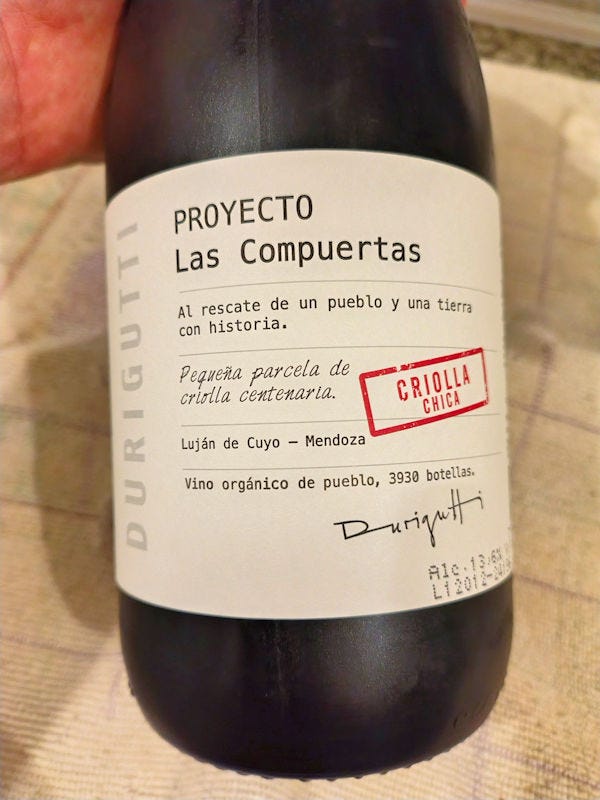
Durigutti “Proyecto Las Compuertas” Criolla Chica 2024, Lujan de Cuyo, Mendoza, Argentina. 100% Criolla Chica (País) whole grape, cold macerated and malolactic fermented in concrete eggs, then filtered, and aged another two months in concrete tanks. Dry, light to medium bodied, soft tannins, fruit forward, moderate acidity, long finish. Strawberries with floral notes, a hint of smokiness. 28,500 pesos. Highly recommended.
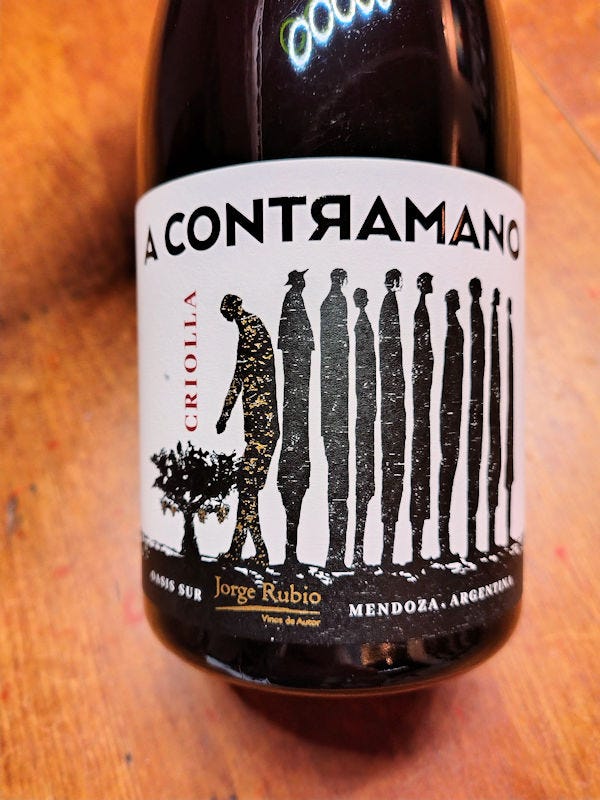
Jorge Rubio “A Contramano” Criolla ?, Oasis Sur, Atuel, Mendoza, Argentina. 100% Criolla Chica, 12 day fermentation in stainless steel using indigenous yeasts, malolactic fermentation, pressed, and bottled. This bottle, for some reason, has no vintage on it. All the info I can find on the wine is for 2022, and all pictures of those bottles have the vintage printed to the left of the word Criolla on the label - including on the winery’s website. Is this an earlier or later vintage? Did it just get missed? Light red wine, slightly off-dry, fruit forward, moderate acidity, virtually no tannins, long finish. Cherries and raspberries, a floral hint reminding me of Red Zinger tea… so, hibiscus. Really lovely wine and a hit with heaping plates of spaghetti all’assassina. 14,000 pesos. Recommended.
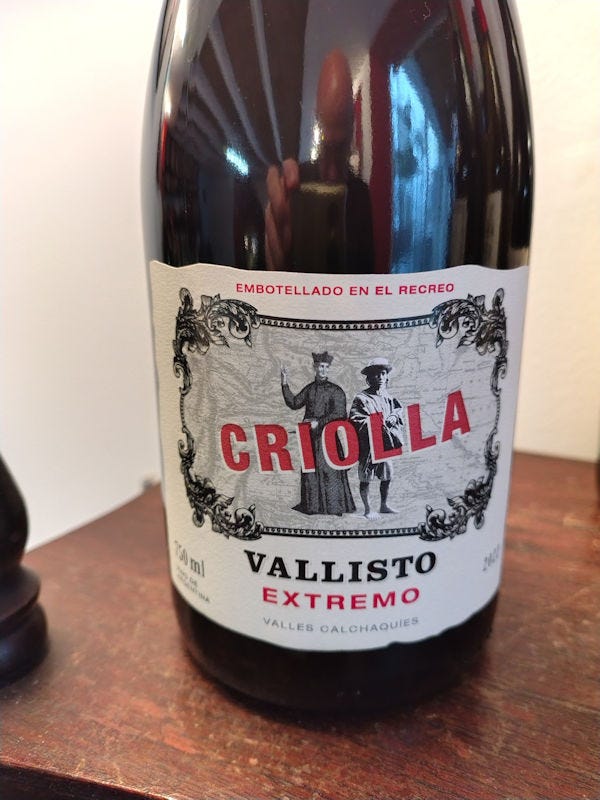
Vallisto “Extremo” Criolla 2022, Valles Cachalquies, Catamarca, Argentina. 100% Criolla Chica (País), manually harvested. High altitude vineyard - 2600 meters/8500 feet above sea level, from a vineyard originally planted by Jesuit missionaries in 1898, with vines of various ages at this point. Medium ruby red color. On the nose, blackberry, pomegranate, and hints of warm spices. Dry, medium bodied, moderate acidity, soft tannins, long finish. Truly delightful wine to drink and it paired fantastically well with a mildly spicy chicken in an orange and anise sauce. At 15,000 pesos this is an absolutely steal.
I must say I was much more impressed than I thought I would be given the assessments of various luminaries of the wine world. In general, the rosés from Criolla grande were the least interesting category, I suppose not surprising, but still, the ones I tried were good to very good. I’ll skip over the Torrontés on the white side and focus on what might be the only two Criolla blancas I’ve tried to date. If those are the quality of wine that can be made from this grape, it’s one to pay attention to. And all three reds from Criolla chica were wines that I’d be completely confident in placing on a dinner table to impress any of the noted wine folk.
More to come down the line!