
The Perfect Grilled Cheese
And no, it's not a sandwich

Provolone is a semi-hard cow’s milk cheese made by a unique process of stretching or pulling the curds. That stretch pulls it throughout Italy, from Lombardia in the north to Basilicata in the south, to the islands of Sicilia and Sardegna. Described by Steven Jenkins in his Cheese Primer as “an unsophisticated, workmanlike antipasto cheese”, it’s common as a simple, sliced sandwich cheese, and is a very popular alternative to “Whiz” when it comes to Philly cheesesteaks. If you taste it carefully, aromas and flavors of fresh butter and new cut grass leap out at you. Good quality provolone adds in notes of freshly shelled peanuts, lightly toasted bread, or just made pasta. It comes in a variety of shapes and sizes, but the one of interest here is the long, more or less melon shaped version, known in Italian as the mandarino, mandarone, or simply la provoletta.
This particular shaped provolone tops all the various bottle-shaped, pear-shaped, ball-shaped, or cone-shaped versions for one important reason. This one is easy to slice into equal sized portions. With a huge Italian influence on the culture and cuisine of Argentina, provolone has become one of the country’s most produced cheeses. While the idea of grilling it is neither unique nor original to Argentines - both mozzarella and provolone alla griglia are known, if not common in Italy - here it has been raised both to an art-form and to a staple of the parrilla, or open grill.
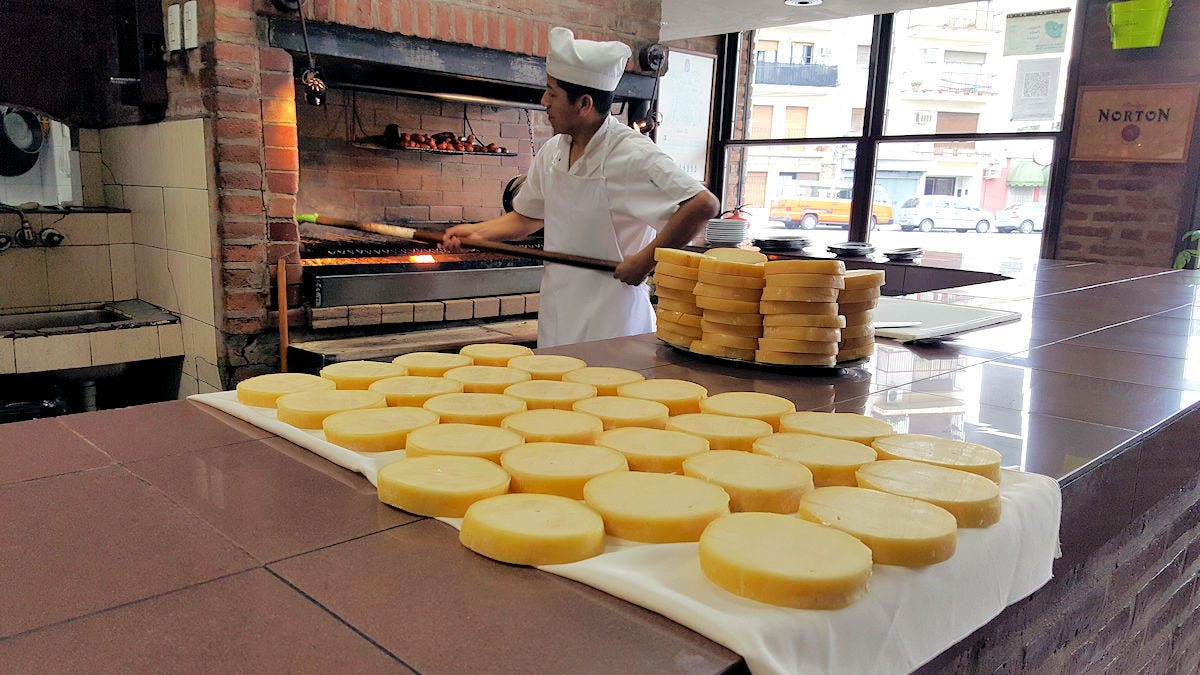
To properly prepare a provoleta requires a little advance preparation. The cheese must be sliced into a three-quarter inch (two centimeter) round slab at least an hour before cooking. The surface is lightly coated with dried oregano, salt, and a bit of cracked pepper. Some folks like to use other herbs, or maybe a light dusting of paprika, dried chili flakes or powder - acceptable alternatives as long as one doesn’t go overboard - picante, or spicy hot, is not the goal.
The cheese is left sit out in the open air for a minimum of an hour. For best results it’s set on some sort of rack so the underside is also exposed to the air. The idea is to form a dry crust on the surface that will hold together when the cheese is slapped on the grill. Failure to get a good crust on the cheese results in a mess - the cheese melts and drips through the grating on the grill, leaving a stalactite style sculpture stuck and burned onto the grill rack.
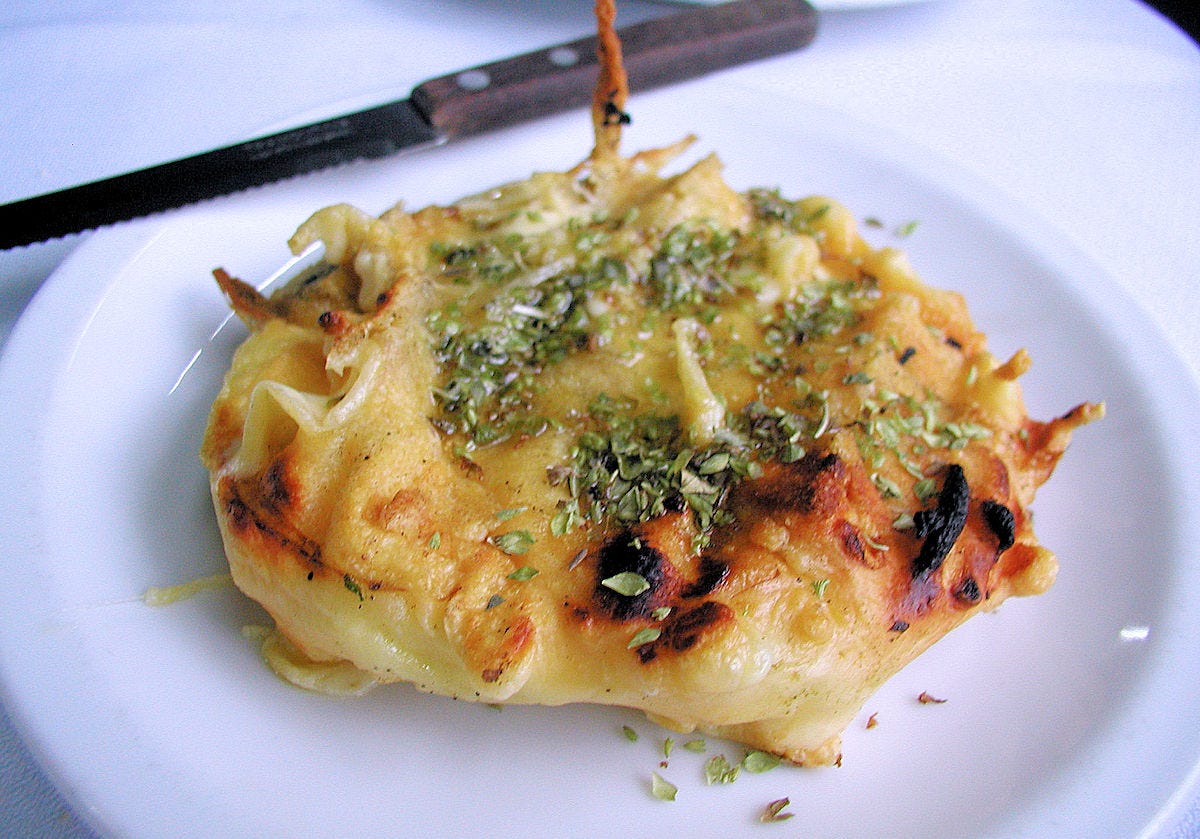
The two sides of the cheese are brushed with a little olive oil to help prevent sticking and in essence to help sear the crust of the cheese. The grill needs to be very hot. Most folks only grill one side of the cheese, waiting until it’s nicely browned, and then carefully flipping it over onto a plate. True grill masters have such an eye and a feel for it that they can flip the cheese right on the grill and get a nicely browned crust on both sides. It ain’t easy.
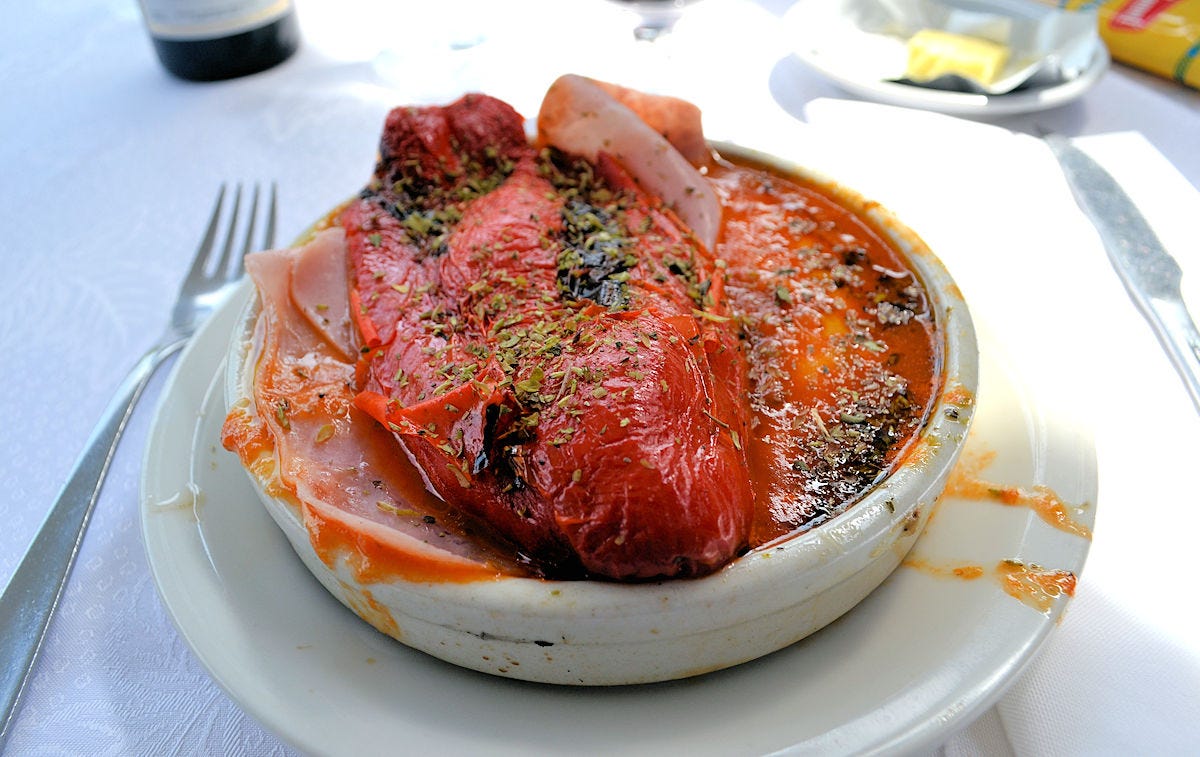
There are numerous variations on provoleta, the most common being the simple substitution of different herbs or spices. Some cooks like to chop fresh or grilled tomatoes, red bell peppers or olives atop. Possibly the most interesting of these variations is the provoleta rellena, or stuffed provoleta, a version seen in scattered restaurants in Argentina, and more commonly in Uruguay, where the slab of cheese is slit open like a pocket pita bread and the middle is filled with slices of ham, tomato, and peppers.
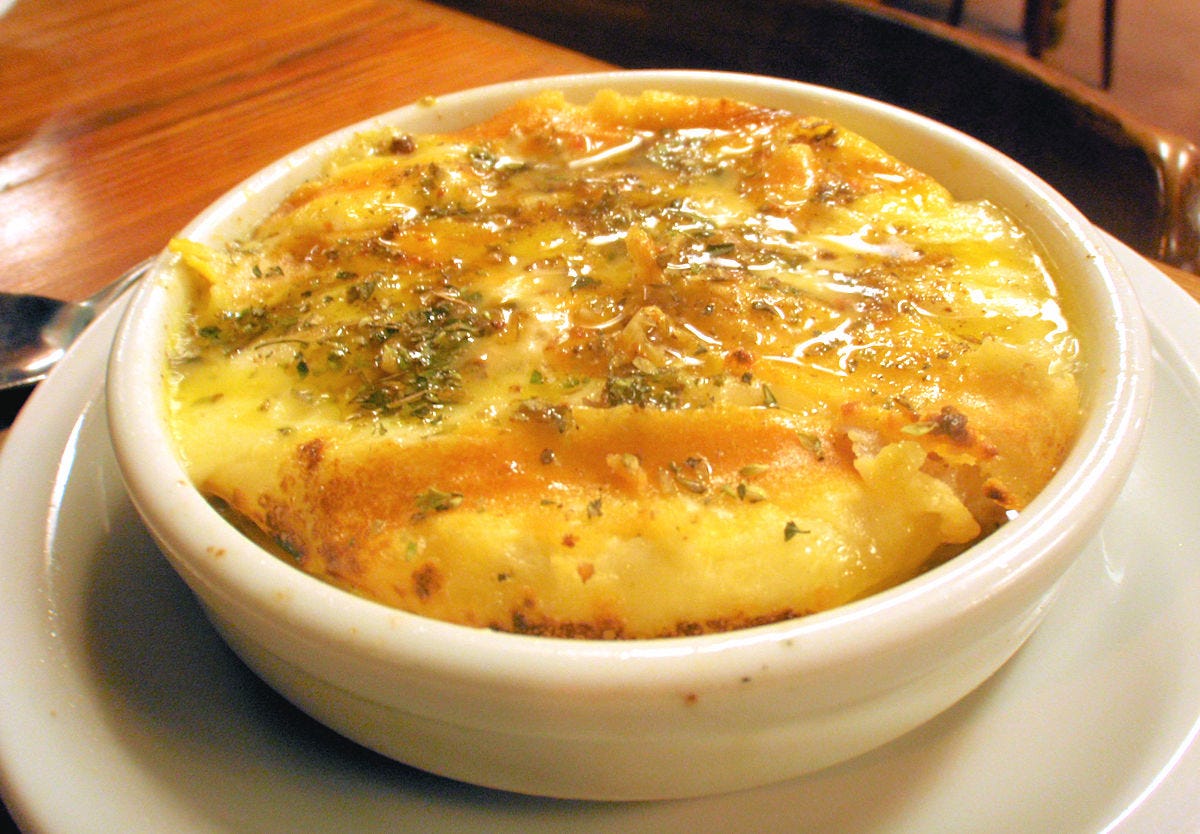
While some might consider it cheating to cook a provoleta in a hot pan or on a griddle, and there’s no question the result will be lacking in a coal or wood smoke char, it is a way of getting a piece of nicely toasted provolone onto a plate. There’s also a version called a provoleta liquida that involves putting the provolone into a small dish and cooking it under a broiler so that the top browns, and the bubbling cheese underneath it melts into a puddle.
Some favorite spots to try a great provoleta? Of course!
For the classic style my favorites are at Rio Alba, Av. Cerviño 4499, in Palermo chico; Gran Parrilla Cramer, in Av. Dr. Ricardo Balbín 2782, in Belgrano; and El Obrero, Agustín R. Caffarena 64, in La Boca (pictured above). For the liquida style La Tasca de Fosforito, Av. Hipólito Yrigoyen 1218, near to the Congreso; El Pobre Luis, Arribeños 2393, in Belgrano (pictured above), and then up to the northern suburbs to El Braserito, Sebastián Elcano 538, in Acassuso.
Special mention to the stuffed and topped version (pictured above with the tomato sauce, ham, and roasted bell pepper) at Gato Blanco up in Tigre (you have to take their own water taxi to get there from the water taxi station) and the ham and tomato topped version at Antigua Tasca de Cuchilleros, Carlos Calvo 319, in San Telmo.
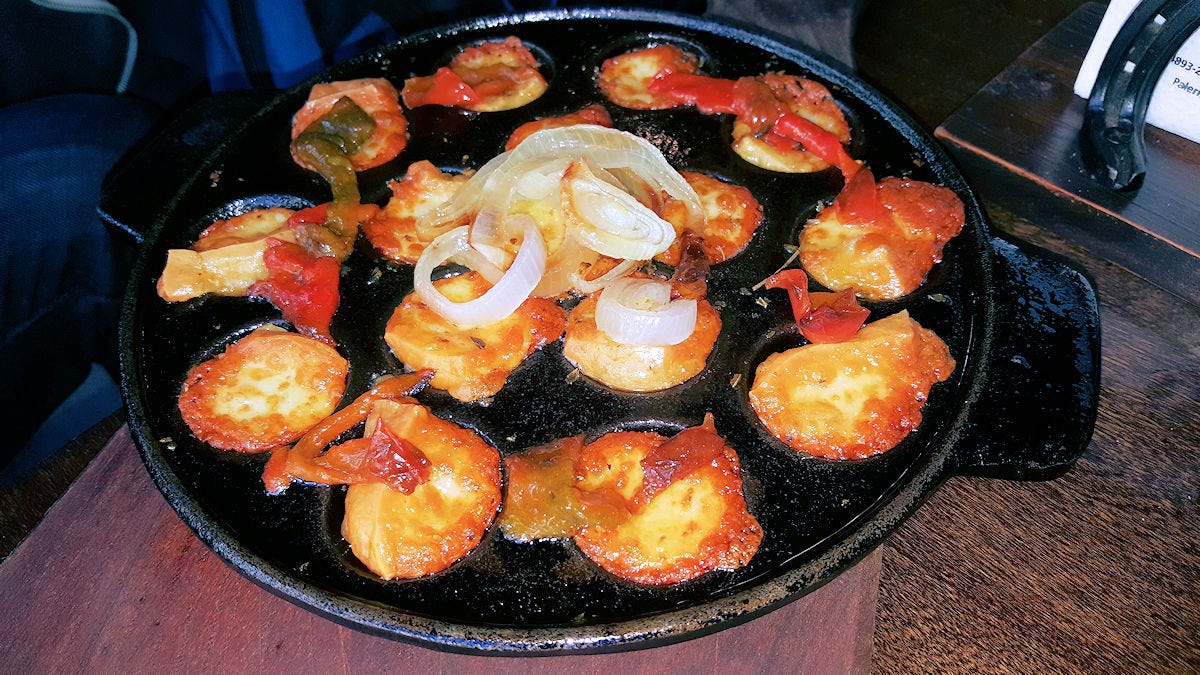
And hey, just for fun, the little mini-bite provoletas at 1810 Cocina Regional, Julián Álvarez 1998, in Palermo (they also have two other locations).