
"The One"
Seoul sizzles in Buenos Aires, where kimchi meets caviar in a lux tasting menu.

As Sophia Petrillo might say, “Picture this: Buenos Aires, Friday night, the city humming with its usual tango of parrillas and Malbec. But tucked away in Villa Crespo, the glow isn’t from a grill piled high with ribeye, it’s from a sleek Korean dining room where the scent of sesame oil and, interestingly, fennel, permeate the air. Diners line the stone counter, sipping wine and creative infusions, and marveling at how a cuisine once confined to immigrant enclaves has become the newest darling of the city’s fine-dining scene.
The rise of high-end Korean restaurants in the Americas began in earnest in the early 2010s, when chefs in New York and Los Angeles started reimagining Korean BBQ as a luxury experience. But in South America, and Buenos Aires especially, the movement has picked up steam in the past five years. What was once pretty much limited to the two Koreatowns in Flores and Floresta, with its humble bulgogi joints and family-run eateries, has spilled into the city’s trendiest neighborhoods. While early on, Na Num (now closed) garnered a Michelin Guide nod, the new hotspot, according to the tire folk, is Han Restaurante, Vera 966, in Villa Crespo. It’s emblematic of a broader shift, Korean cuisine is no longer just about comfort food, it’s about spectacle, refinement, and cultural prestige.
Why the sudden popularity? Part of it is that the Korean Wave of K-pop, K-dramas, and cinema has primed audiences to explore Korean culture more deeply. But it’s also the adaptability of the cuisine itself. Korean, and non-Korean chefs (Urondo Bar, a long time fave, comes to mind) in Buenos Aires are pairing local beef with gochujang marinades, plating banchan like tapas, and weaving Korean flavors into tasting menus that feel both exotic and familiar. The result is a hybrid identity; Seoul meets San Telmo; kimchi meets Malbec.
And the growth is fast. Buenos Aires now boasts dozens of Korean establishments across the city, ranging from casual bibimbap counters to avant-garde destinations. The trajectory mirrors sushi’s rise here in the early aughts, once niche, now indispensable to the fine-dining landscape.
This isn’t just a culinary trend; it’s a cultural dialogue. Korean fine dining in Buenos Aires is rewriting the city’s food story, proving that global flavors can thrive in a city obsessed with beef and tradition. The question isn’t whether Korean cuisine will last, it’s how far it will reshape the very definition of luxury dining here.
And, luxury it is, starting with a tasting menu price-tag that rings in at a whopping 200000 pesos, around $135, and that’s before you look at the wine list. These days, there are plenty of spots around charging more than that, but this is a huge jump for Korean restaurants, where the next most expensive is probably half that.
Let’s meet the man behind the curtain first - chef Pablo Park. Expats who love Korean food may well know him, or at least his work, from Kyopo, the Korean gastropub that opened back in 2015 and provided not just great twists on Korean food, but what was arguably the best burger in the city, for over a decade. The pandemic hit it hard, as it did many places, and it never really regained its footing. On my last visit, in 2023, the place, and the burger, were ghosts of what had once been. And, it closed up shortly thereafter. Now, upfront, Pablo and I know each other casually - mostly just from online interactions on Instagram - I think we met twice, once at Kyopo and once at a Korean food festival. And, if there were to be any Korean or Korean-Argentine chef who could pull of a high-end luxury experience with creative food, in this city, he’d be my first pick.
Let’s go….
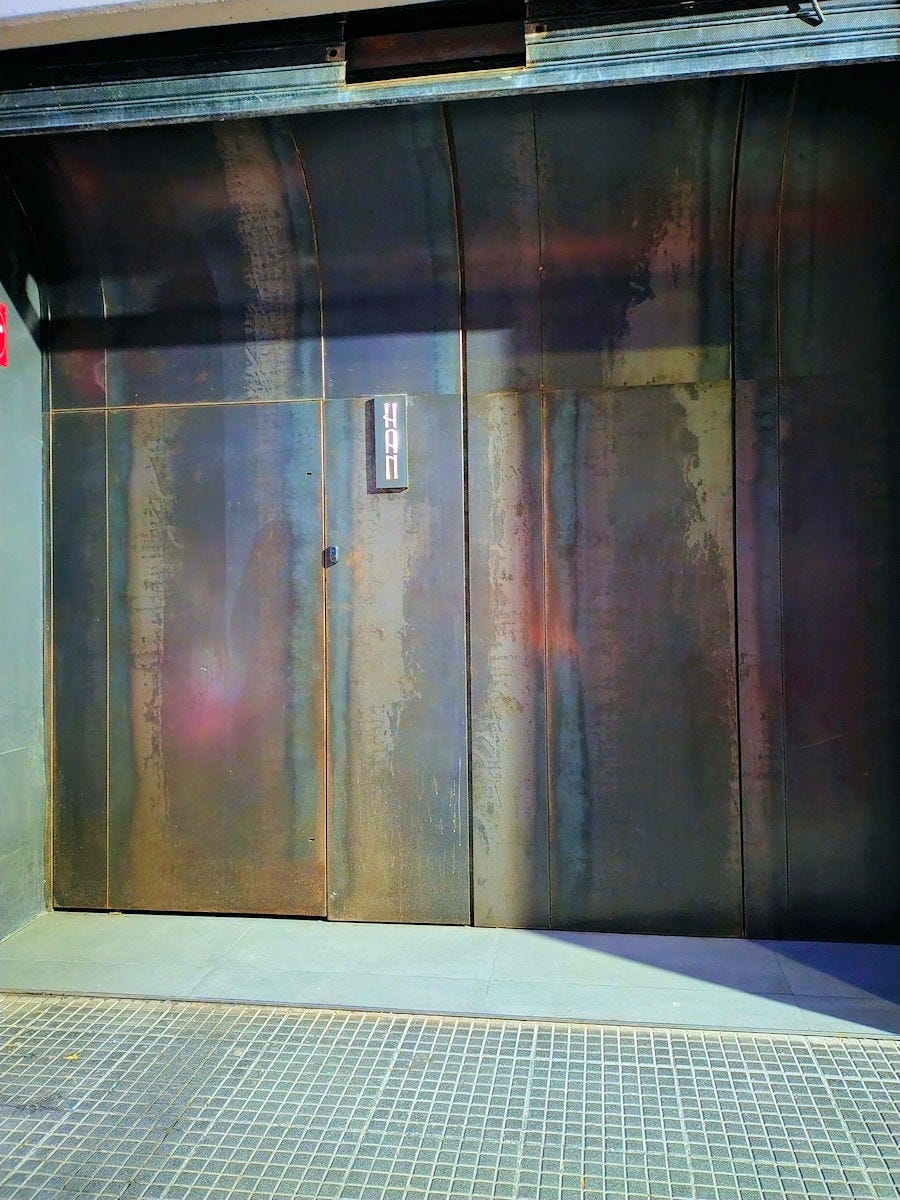
The door is… understated? I had booked for the early seating, and they weren’t quite open when I arrived. There was a couple, around my age, expats, awaiting, and as I approached the door, the woman announced loudly that she’d already rung the bell, and were waiting. When one of the staff shortly came to the door to let us know they’d be open shortly, she looked at him, then pointed at me, and in Spanish said “this person needs something, you should handle it”. I looked at her, at him, and, likewise in Spanish, said, I’m just here for my reservation. She looked taken aback, but recovered and sort of murmured an apology. And then we chatted a bit about Korean food in town. I think it sunk in further for her when Pablo came over to chat with me.
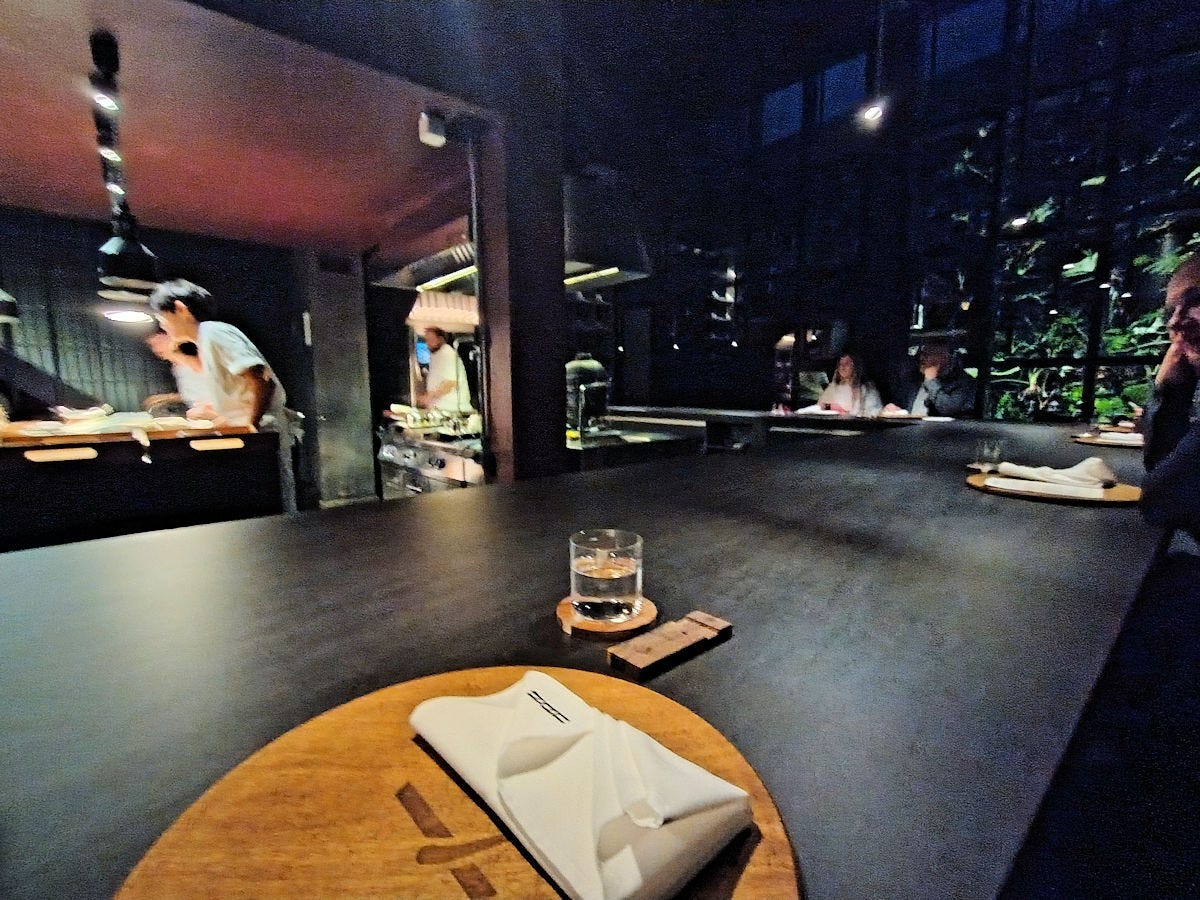
Now, he wasn’t to be cooking that evening - in fact, he’s sitting at the far right end, just out of sight - I think you can see his hand - he was entertaining a friend. Over there on the far side is the couple I mentioned. Plus the guy sitting to my right, that was the entire attendance at the early seating. I hope they had more for later!
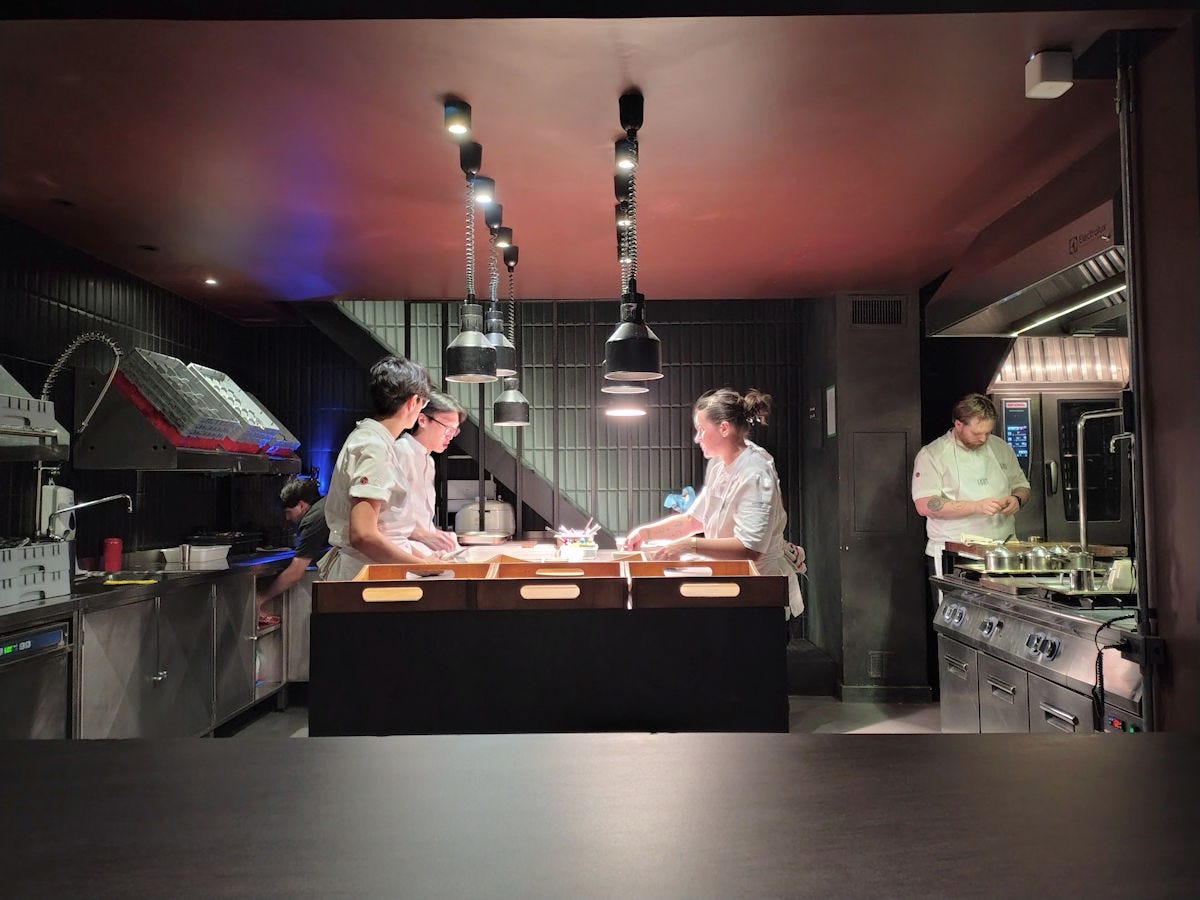
The kitchen was being run by his sous chef, Pío Yoon. There are no waiters - the kitchen staff both serve and clear the dishes. There is a sommelier, who offered a few different options (I’d decided not to go with the rather pricey pairing, plus these days I just don’t drink that much). When I couldn’t decide between two wines he offered, he suggested a half glass of each, one at a time, for the beginning and later parts of the menu. That works. Albeit he charged me for one glass a the more expensive price. And, I’d note - the wine list prices are around three times retail pricing, which is pretty high for anywhere, but Buenos Aires in particular, where restaurant wine prices are often not that much more than retail.
Let’s do the food!
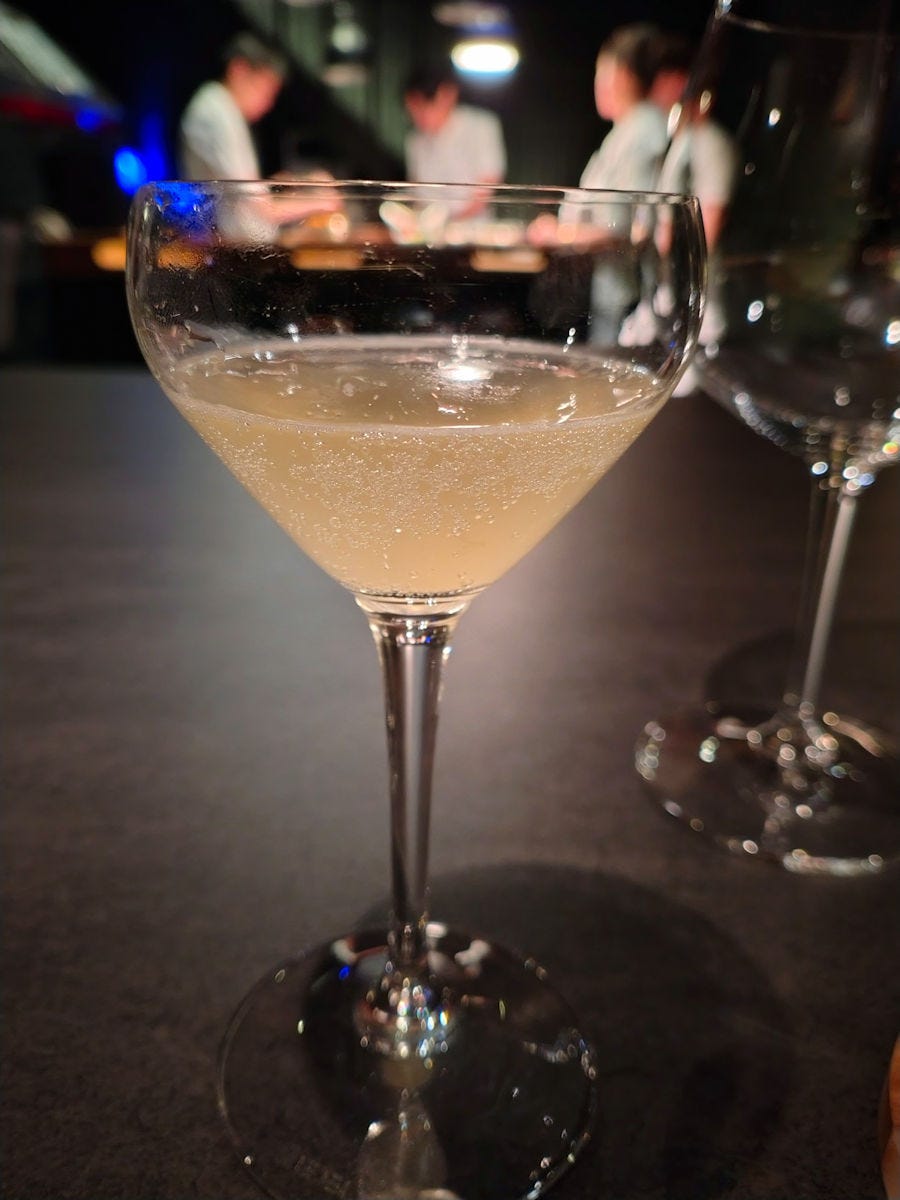
We all got a glass of their housemade kombucha, with fennel, rosemary, and chamomile. To refresh the palate before the parade of dishes.
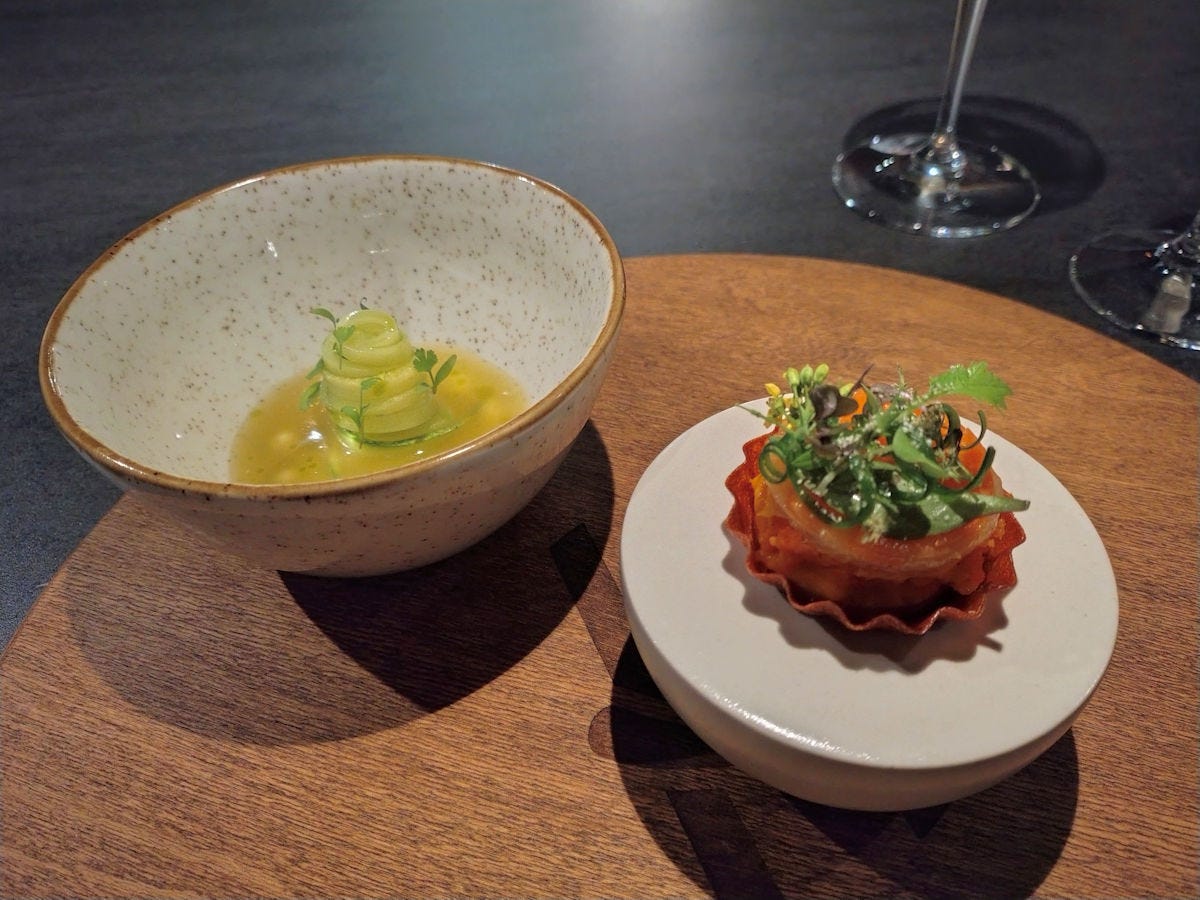
I’m not going to remember all the lengthy descriptions. A fermented carrot tart with an orange gel; and zucchini noodles with scallops, goat cheese, cilantro, and a zucchini and fennel broth.
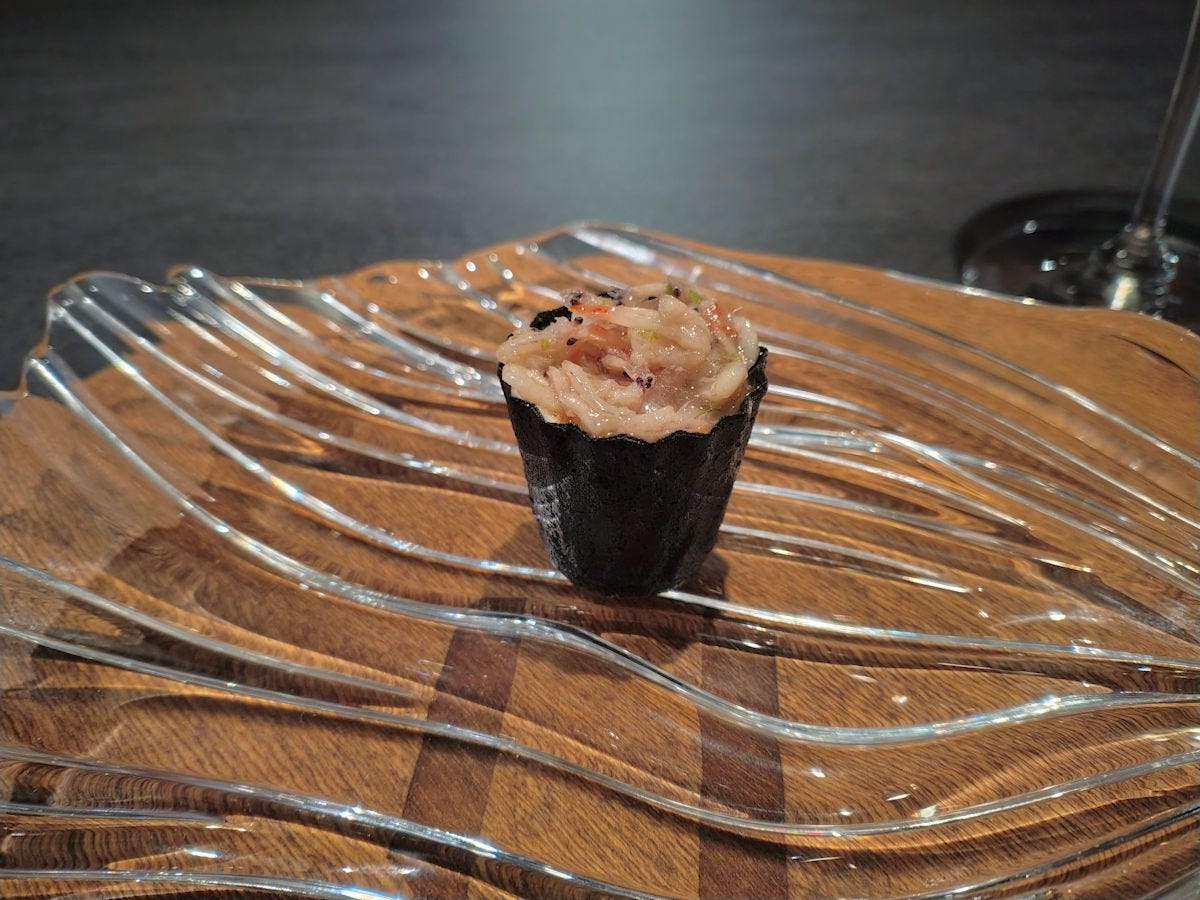
Assuming I got this right - a nori cup filled with a bell pepper and strawberry yogurt, topped with kimchi and krill. I found it a bit too salty for my tastes, even with the balance of the yogurt. The one dish the entire evening I wasn’t excited about.
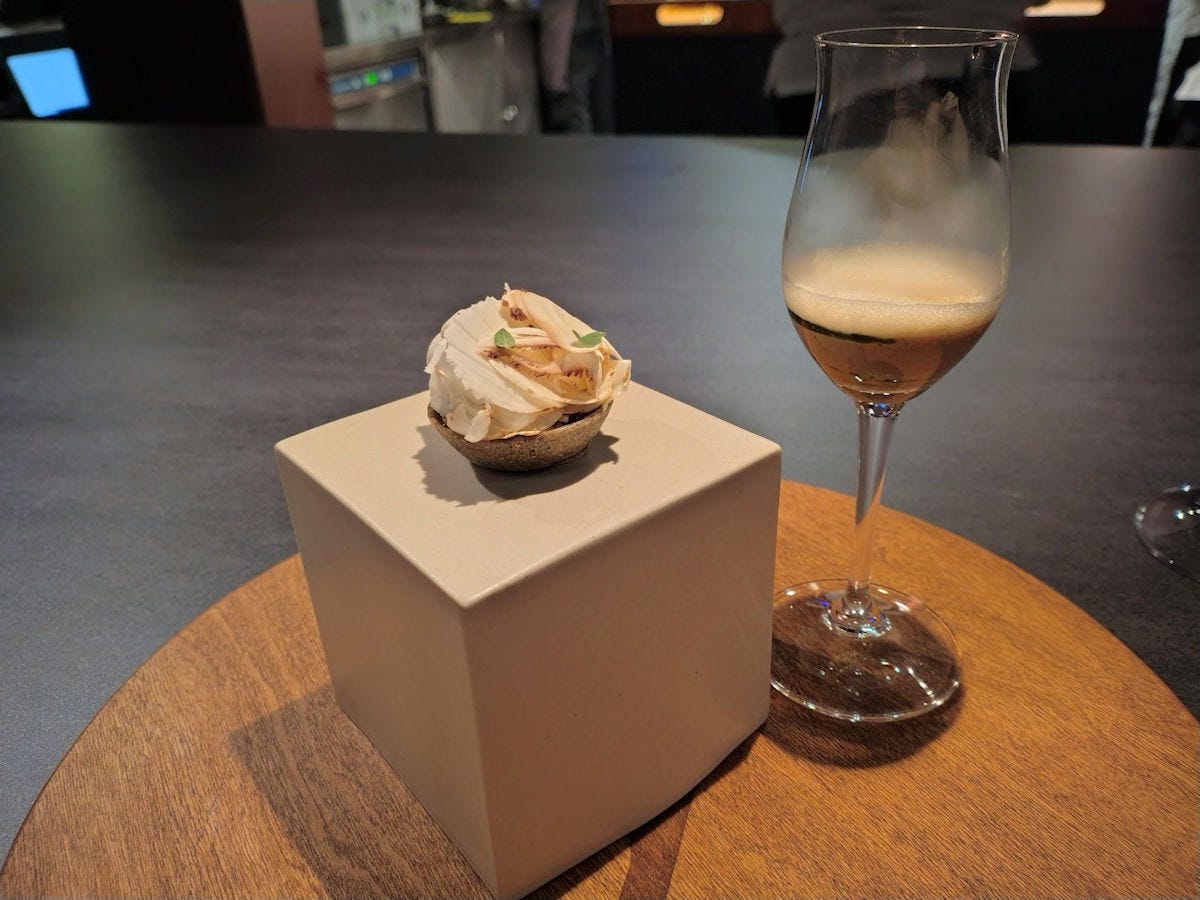
Maybe my favorite dish. A misugaru (a Korean multigrain mixture that’s used as a flavoring agent) and mushroom puree tartlet, black bean emulsion, coffee and vinegar pickled cherry, gochugaru (Korean chili powder), and on the side, a mushroom coffee with lemon verbena foam. Absolutely stunning in complexity and depth of flavor.
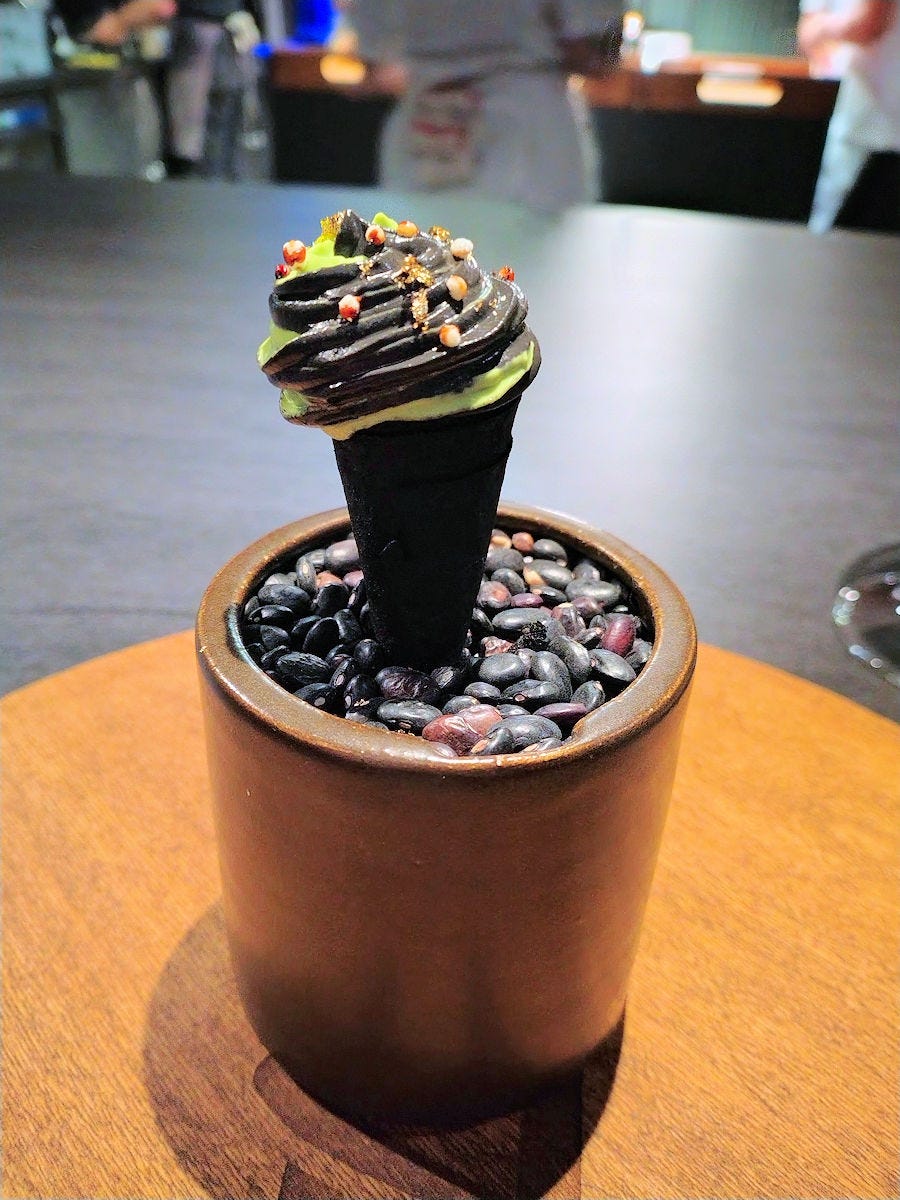
Squid ink cone filled with sriracha prawn and fennel salad (they do like their fennel), and coated with wasabi and squid ink purees, and a little edible gold.
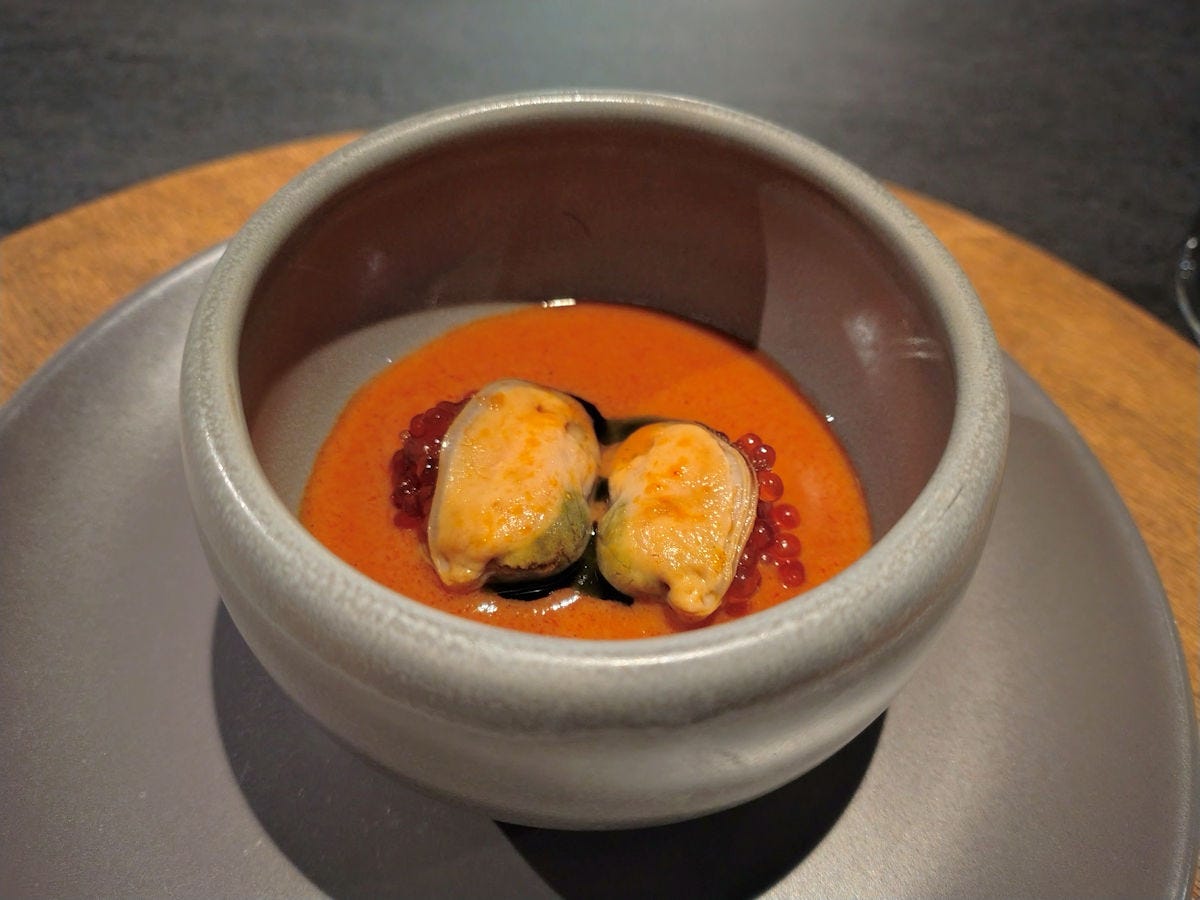
A soybean… chawanmushi, I think in Korean it’s called gyeran-jjim, a custard, with XO sauce sweetbreads, escabeche of mussels, trout roe, and basil oil.
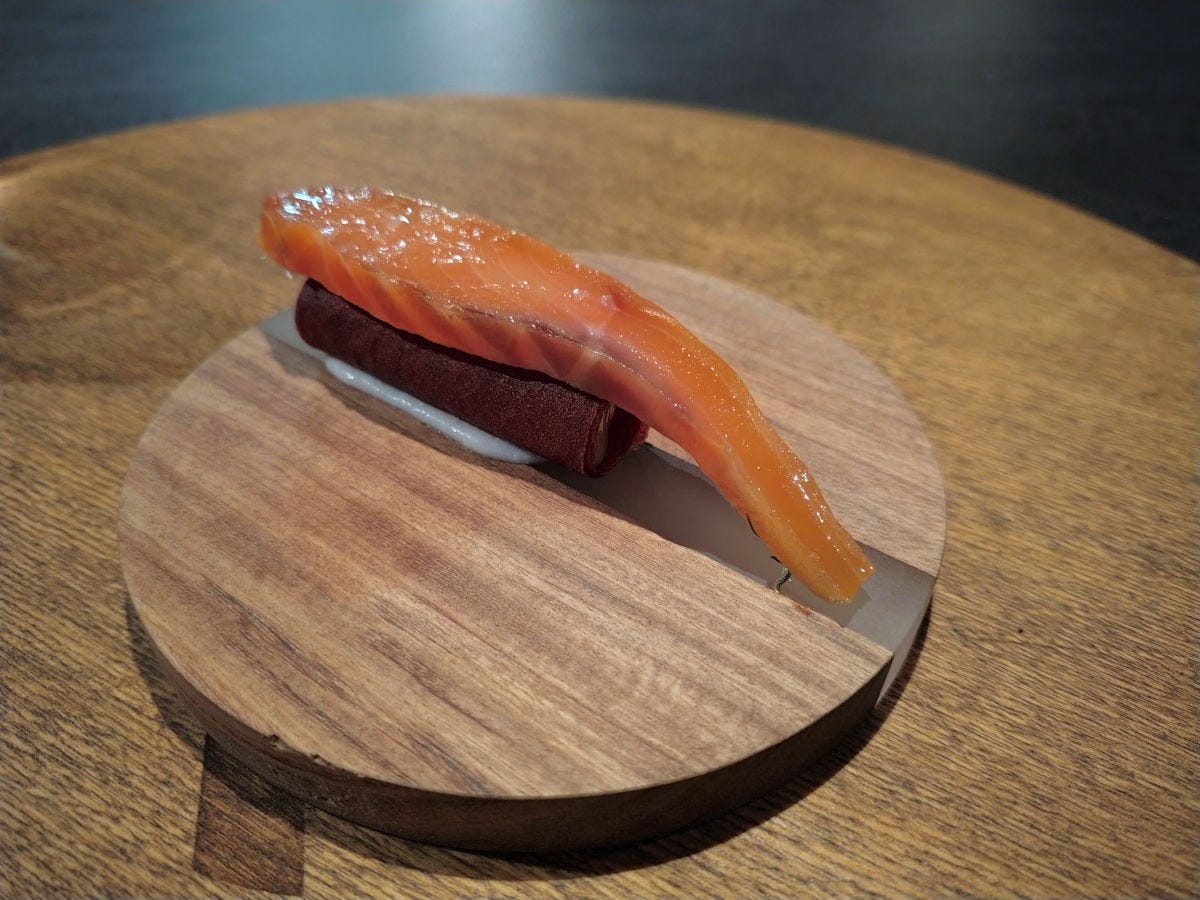
Cured trout over a cigar, or cubanito, of beet leather, filled with a citrus cream.
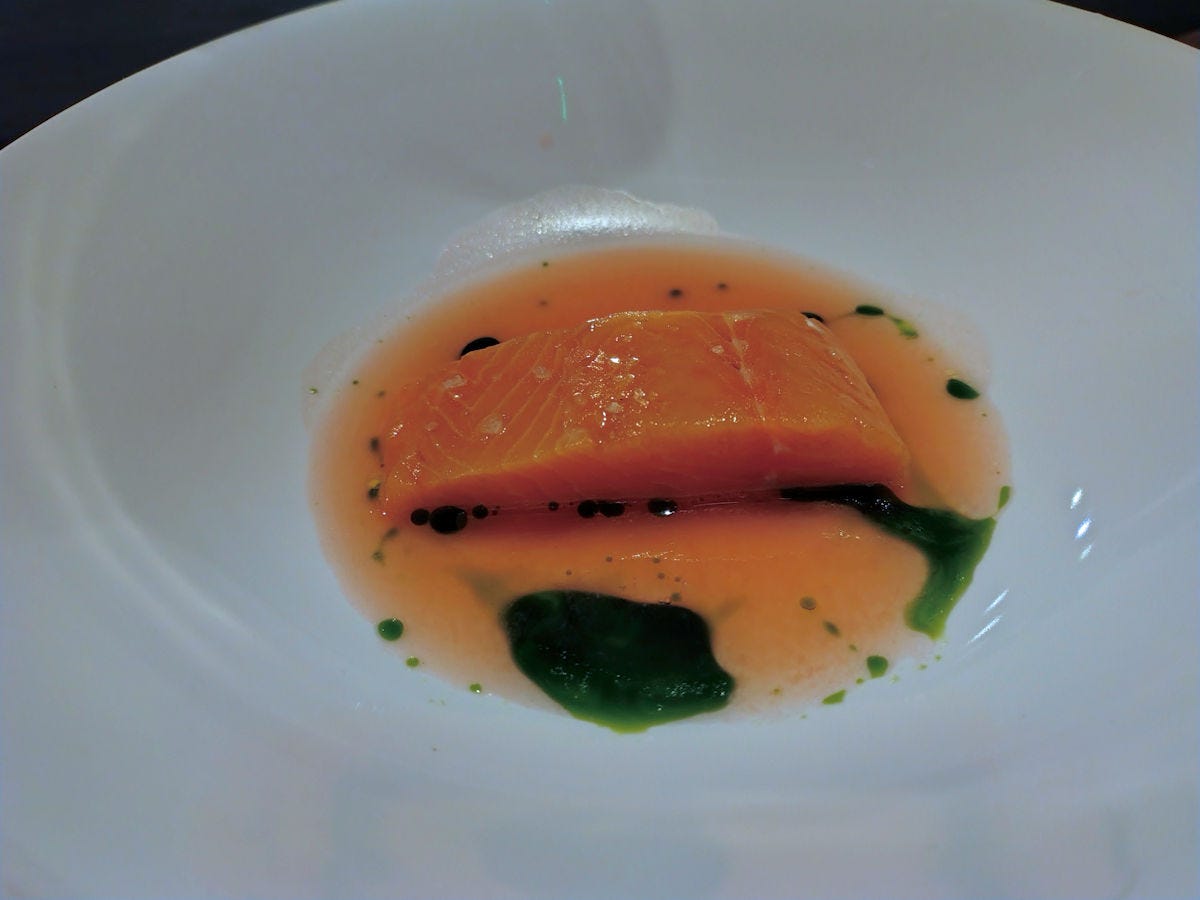
Trout poached in a lemon, thyme, oregano, and rosemary oil, in a pool of charred watermelon broth, with mint and parsley oils.
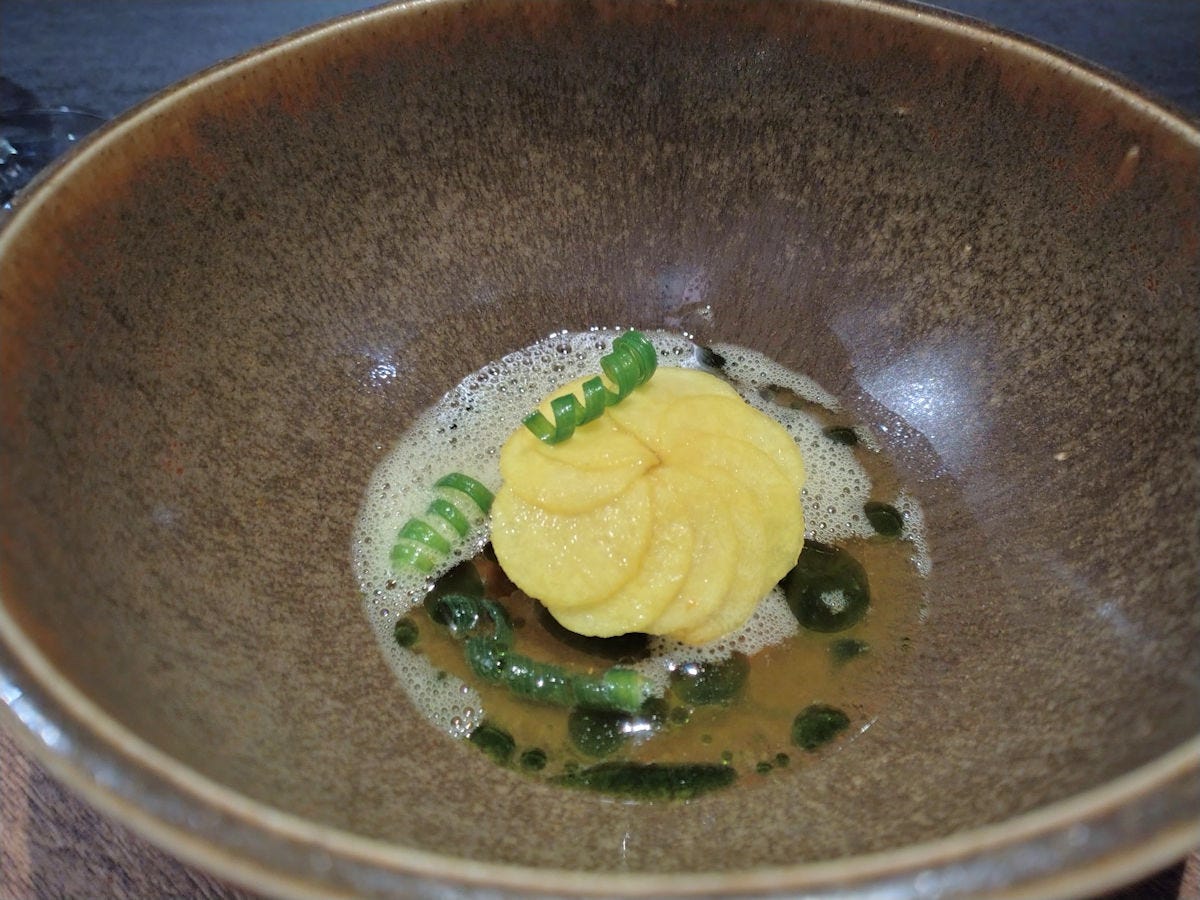
A turmeric sirloin tartare under slices of daikon, in a gochujang (Korean chili paste) broth.
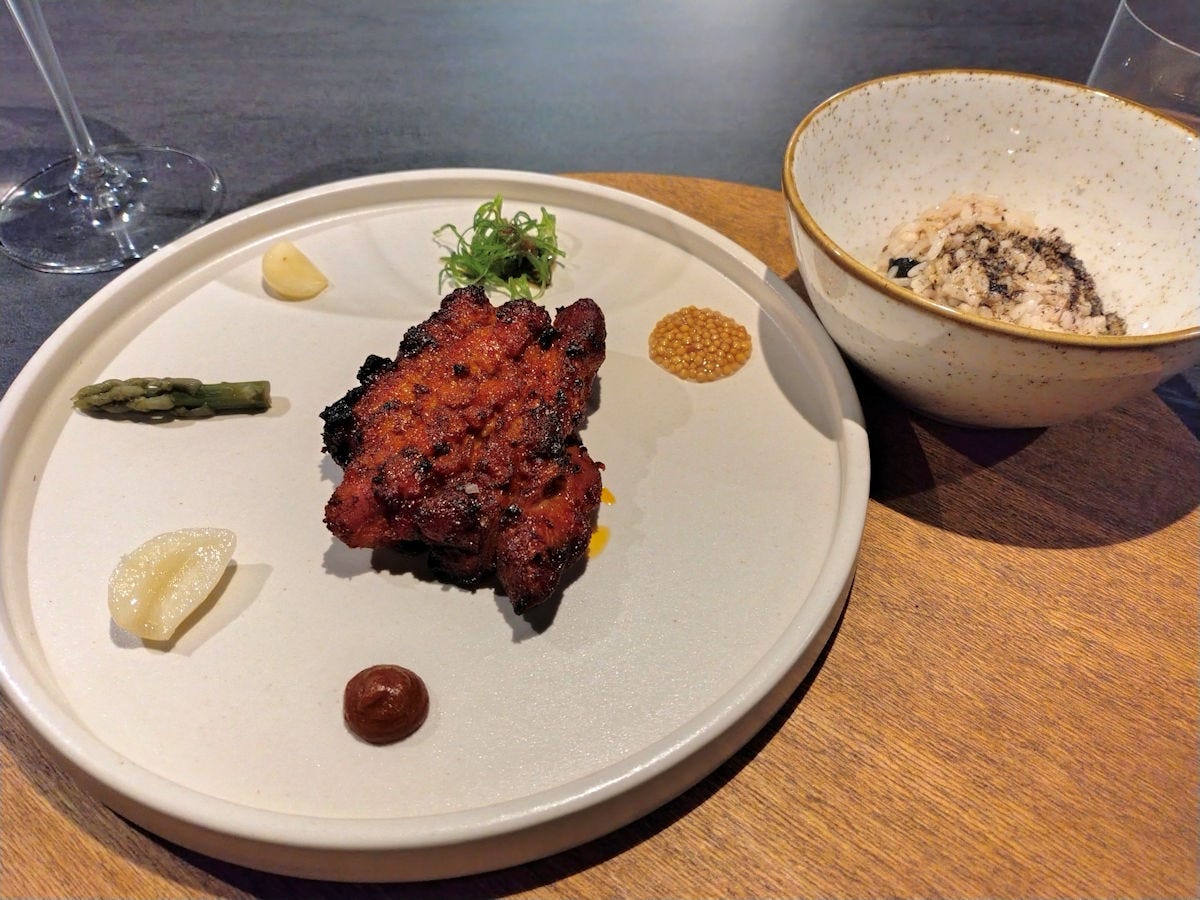
Jeyuk, or chili-spiced and grilled pork, served with different condiments, and a side of vegetable rice.
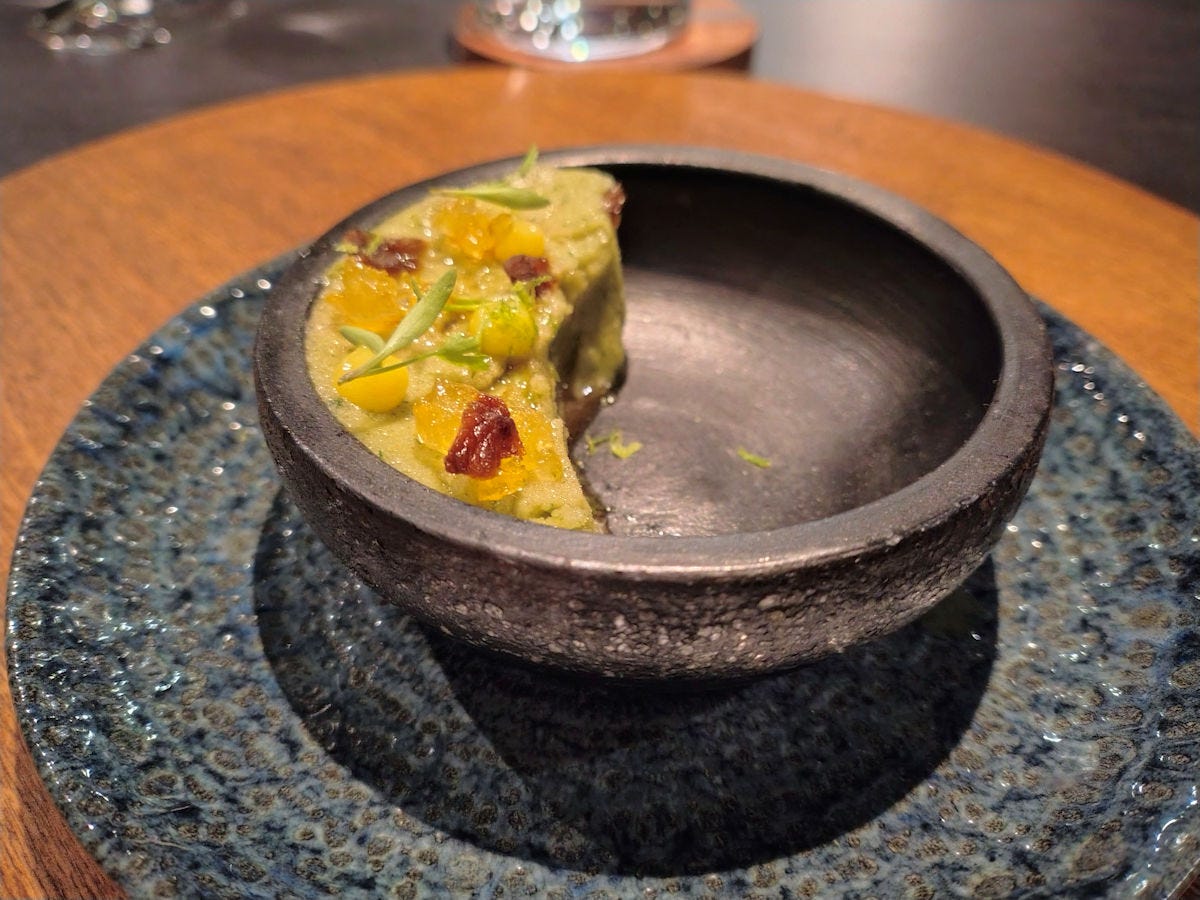
Cucumber, matcha, and mint sorbet, goji berries and lime.
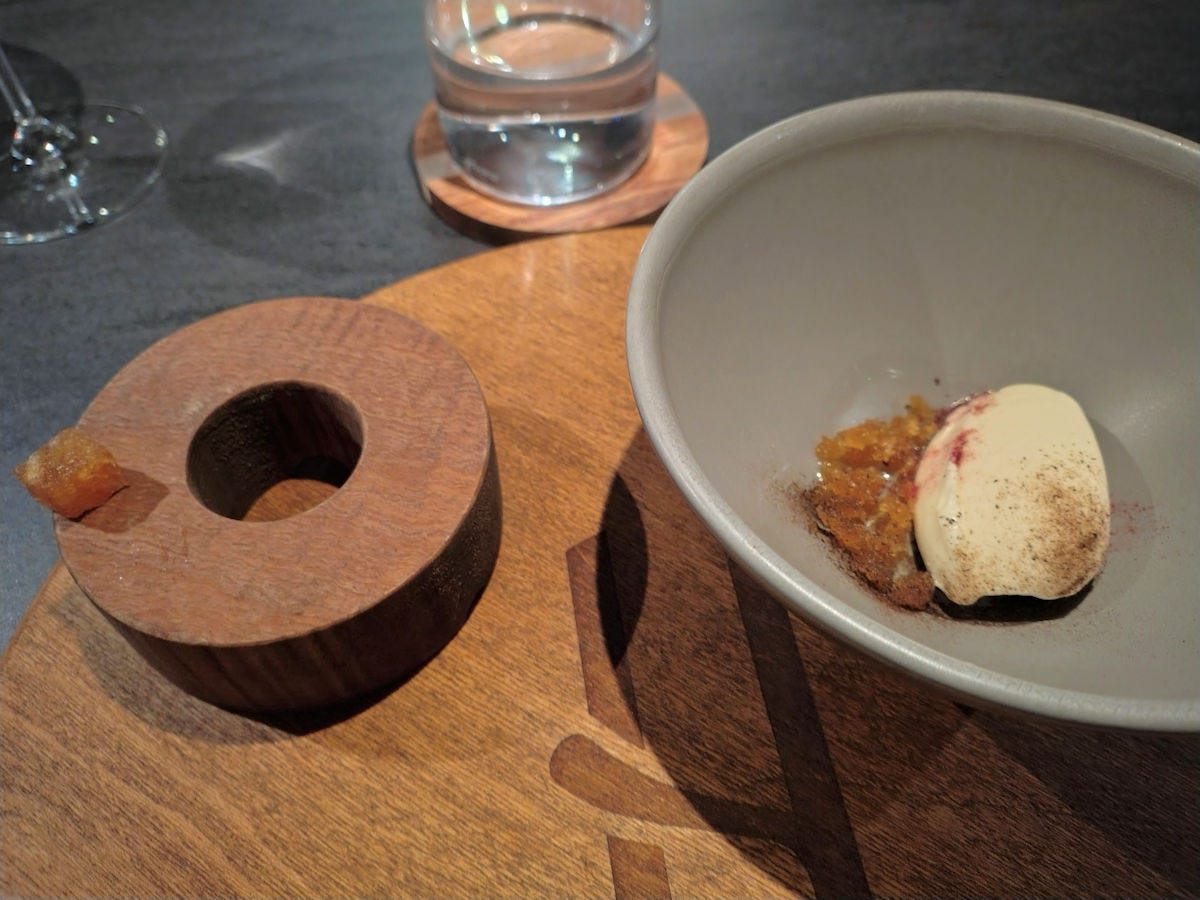
Makgeoli ice cream (Korean unfiltered, sparkling rice wine) over a bed of yacaratía, an edible wood from the Amazon. Yes, wood. It’s a thing. Interesting texture and flavor.
I probably got some of those descriptions wrong, there was just a little too much information coming with each dish.
Overall, love the space, love the interaction with the kitchen staff, and really, for non-front-of-house, the service was impeccable. The food, with the one exception, was… exceptional. I would happily eat any but one of the dishes again, and I doubt that’s ever been the case at another tasting menu. If I had the money for it, I’d eat here every time they updated the menu. As it is, it was probably a one-time thing, unless someone offers to take me there for dinner again. It’s expensive, but not outrageous, especially for the quality of the food and experience. Well deserving of its Michelin mention, if not an actual star at some point.
Oh, and Pablo, I miss the Kyopo Burger! Figure out a way to fit a mini version into the tasting menu….