
Meaty Aromas
A touch of elegance in Barrio Corea.

We tend to go to Barrio Korea, or Koreatown for either a fix of spicy dishes, or for Korean barbecue. And the Bajo Flores Koreatown (as opposed to the Floresta one) is not exactly the neighborhood you’d head to for a more elevated “dining experience”. But why should the folks who live there not have a nicer restaurant to eat at, and one that celebrates the finer end of Korean cuisine?
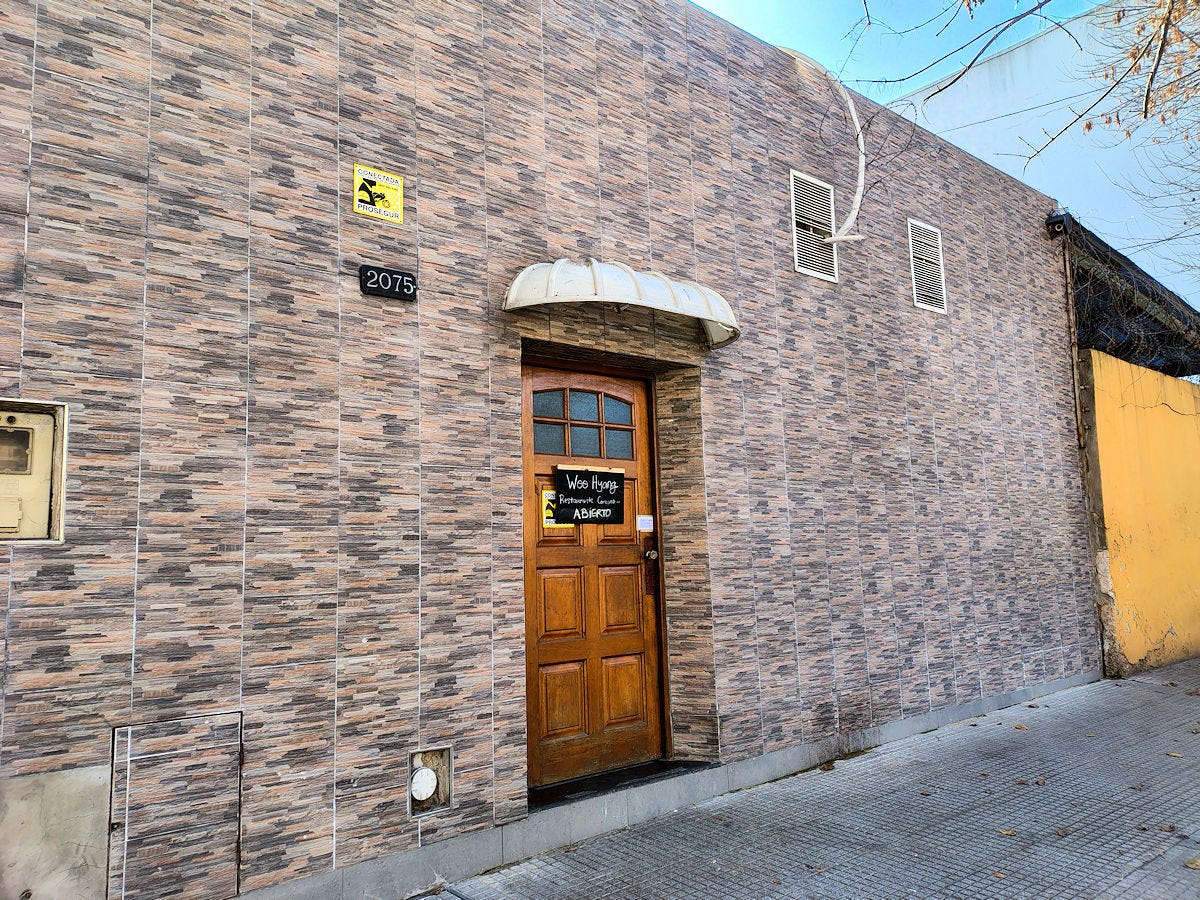
Now, no one recommended this spot. It just suddenly appeared on Google Maps as a Korean restaurant when we were looking to see if there was somewhere we hadn’t yet tried (there are still a few). We headed to Woohyang (“Aroma of beef”), Balbastro 2075, this past Sunday for lunch.
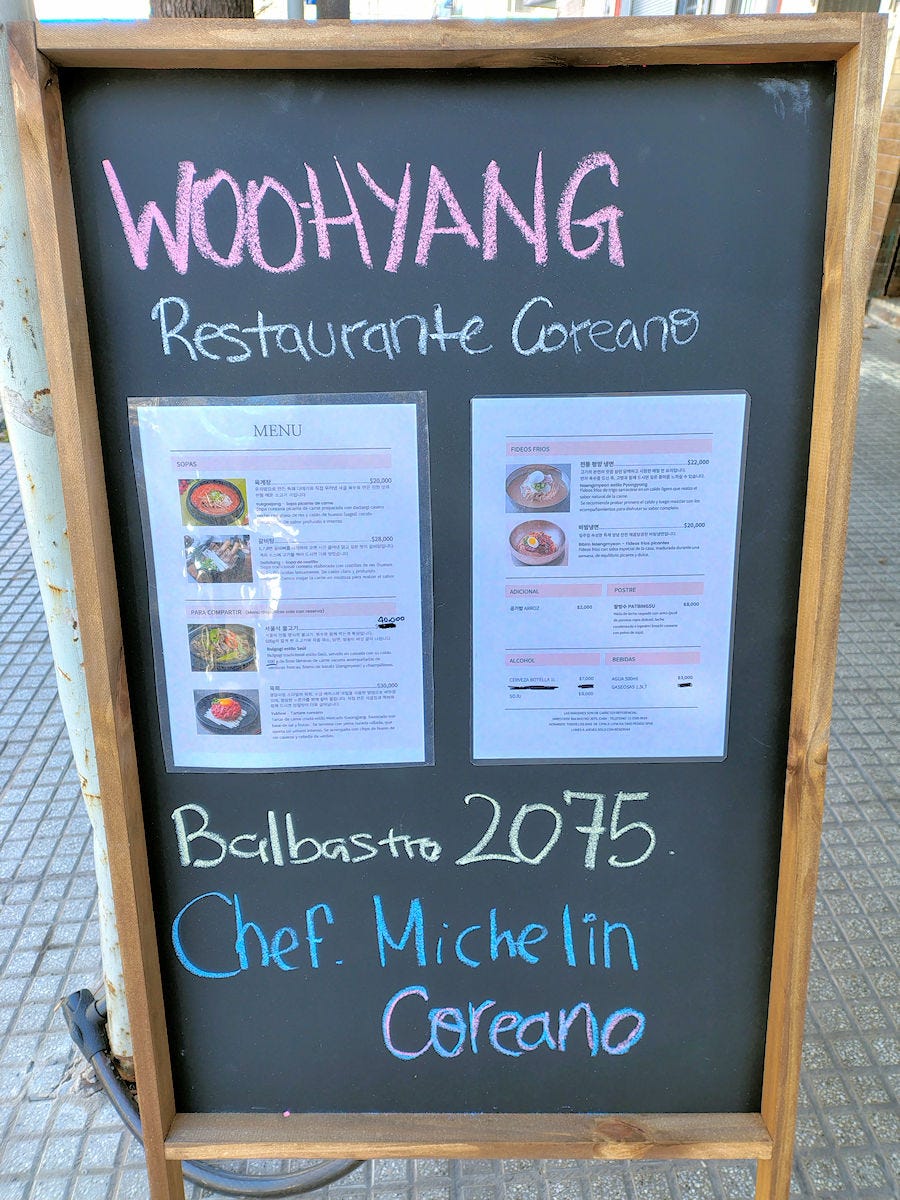
Now, my spidey-sense is tingling here. First off, there’s no such thing as a Michelin chef. Michelin gives stars to restaurants, not to chefs, and if a chef who works at a Michelin starred restaurant leaves, they no longer have any claim to being Michelin starred. The restaurant keeps the stars, not them. So, at the least, I now there’s a bit of stretching things here. But then, who in Barrio Corea is likely to know, or care?
We were greeted by the chef, who introduced himself as Sung Jun - we were the only ones in the places for the first 20 minutes or so (two couples came in while we were eating, and just as we were leaving, a group of four). He moved here, with his Korean-Argentine wife, just four months ago. As his Spanish is still “in the works”, we chatted in English, which he’s fluent in.
He talked about having worked at Born & Bred in Seoul, which is not a Michelin starred restaurant, though it is in the guide for Korea as worthy of mention. A few sentences further into the conversation and he said he was the chef… well, sous chef. And following the social media trail, he shows up as Daniel Sung Jun Kang, and I couldn’t really find much about his history. It appears that he did work at Born & Bred, and perhaps at The Clove Club in London, though it’s a bit murky, and, I’m not going to spend my day trying to delve deeper.
He’s charming to talk to, and, if he’s got the cooking skills, I don’t really care that much about how he promotes himself. Let Michelin deal with that.
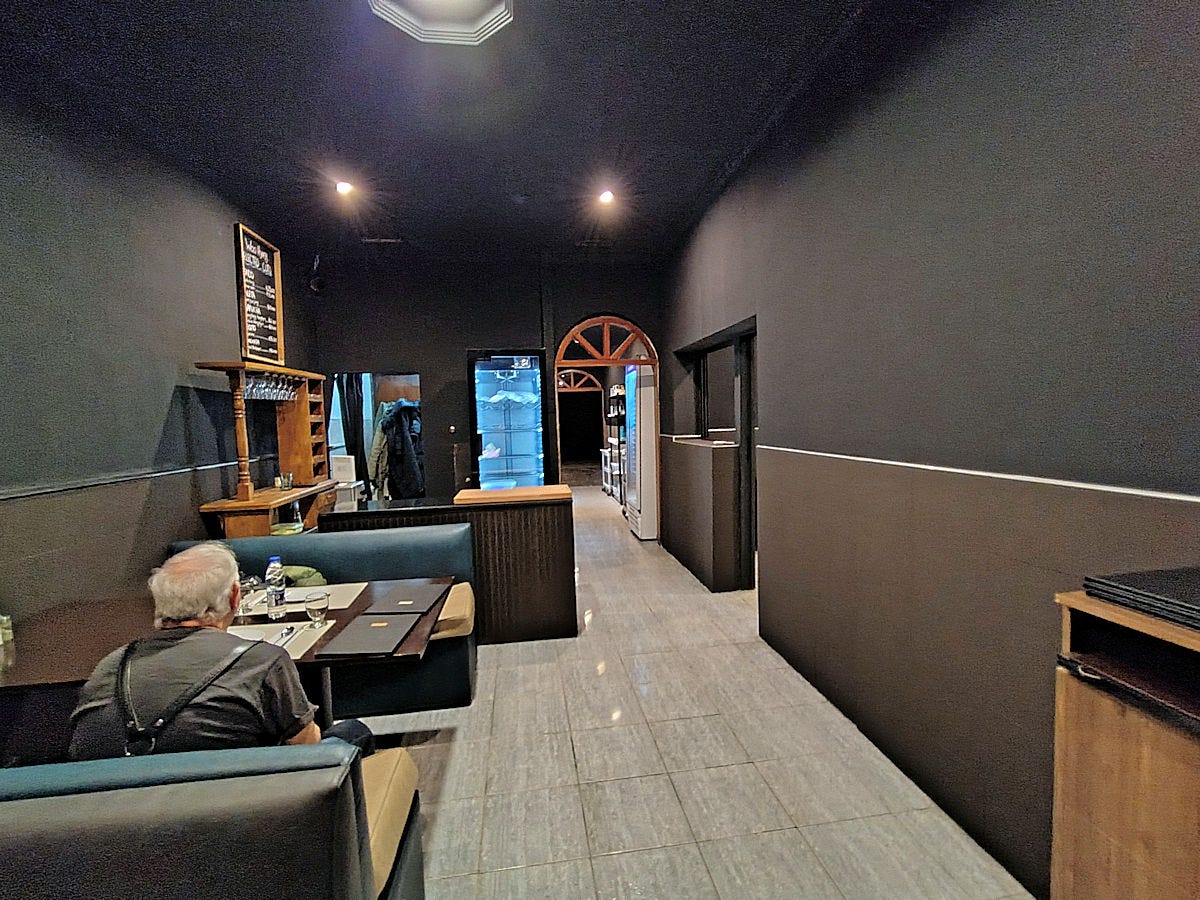
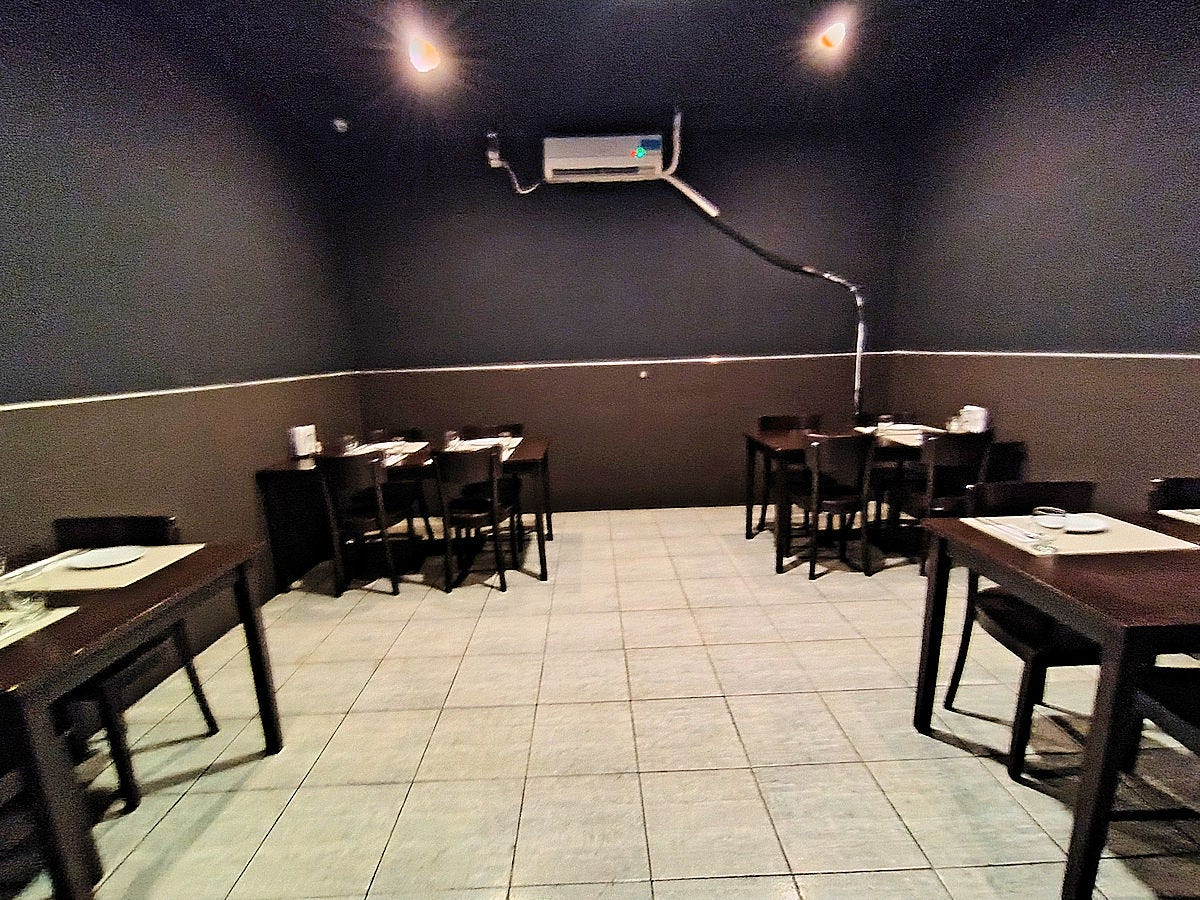
The place is, by the way, brand spanking new. The décor is minimalist, two tones of brown dominate. No artwork. I would note that while the chef is in proper chef’s whites, the others in the kitchen, the waitstaff, and the woman (his wife and co-owner) who was keeping an eye no things, were all in sweatshirts or t-shirts and sweatpants. Maybe if you’re going for an upscale image, go for a more upscale dress code for the staff?
The menu is short - a bulgogi, short-rib dish, a beef tartare, two soups - one mild, one spicy, and two cold noodle dishes - also one mild and one spicy. All beef. It’s the only thing he works with. At night, there are, or shortly will be, Korean parrilla offered - not the at table cook it yourself Korean barbecue, but meat grilled in the kitchen, to order, and served and carved tableside.
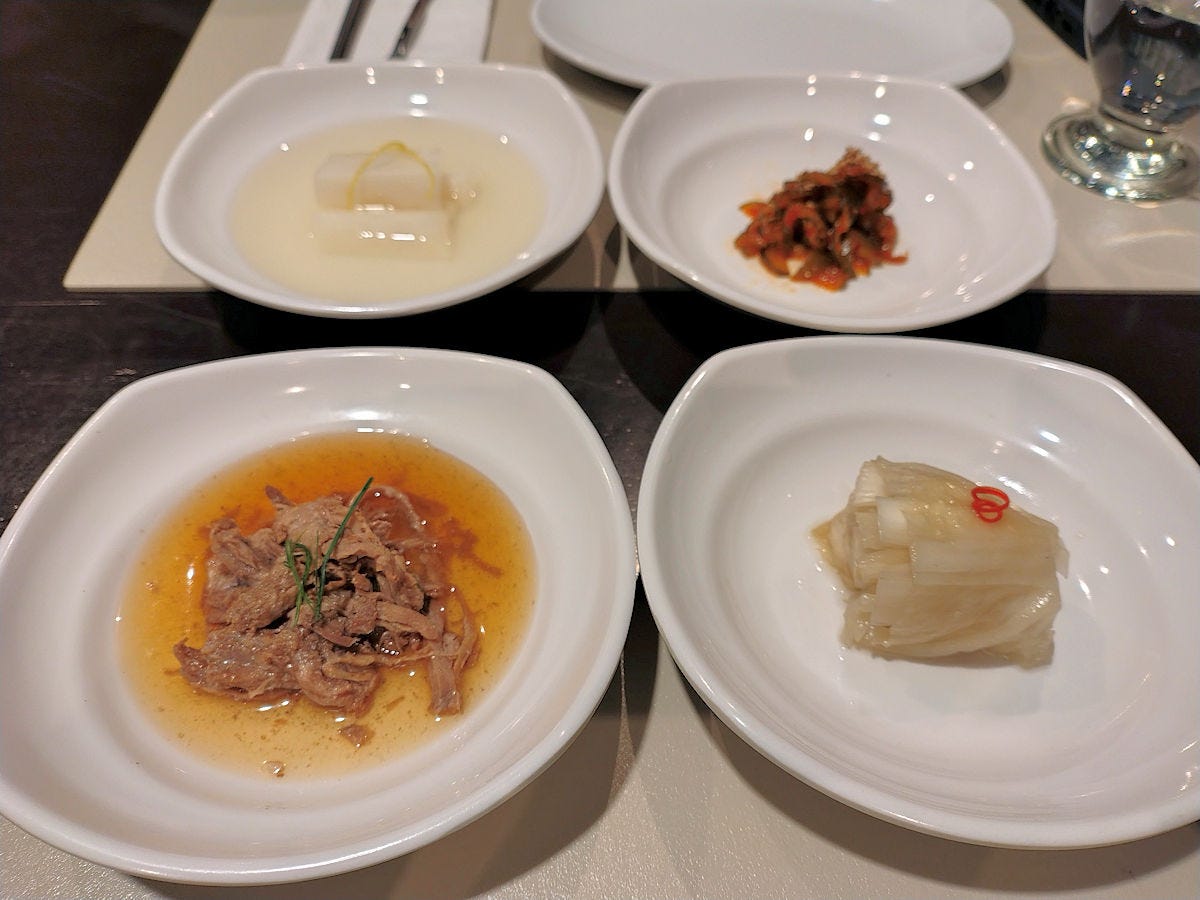
The banchan is a simple quartet - lightly pickled daikon, cucumber kimchi, white cabbage kimchi (not spicy), and a sweet shaved beef. The daikon one was a little odd for our tastes, and it was strange to have non-spicy kimchi, but we enjoyed it all. And, they bring more as needed.
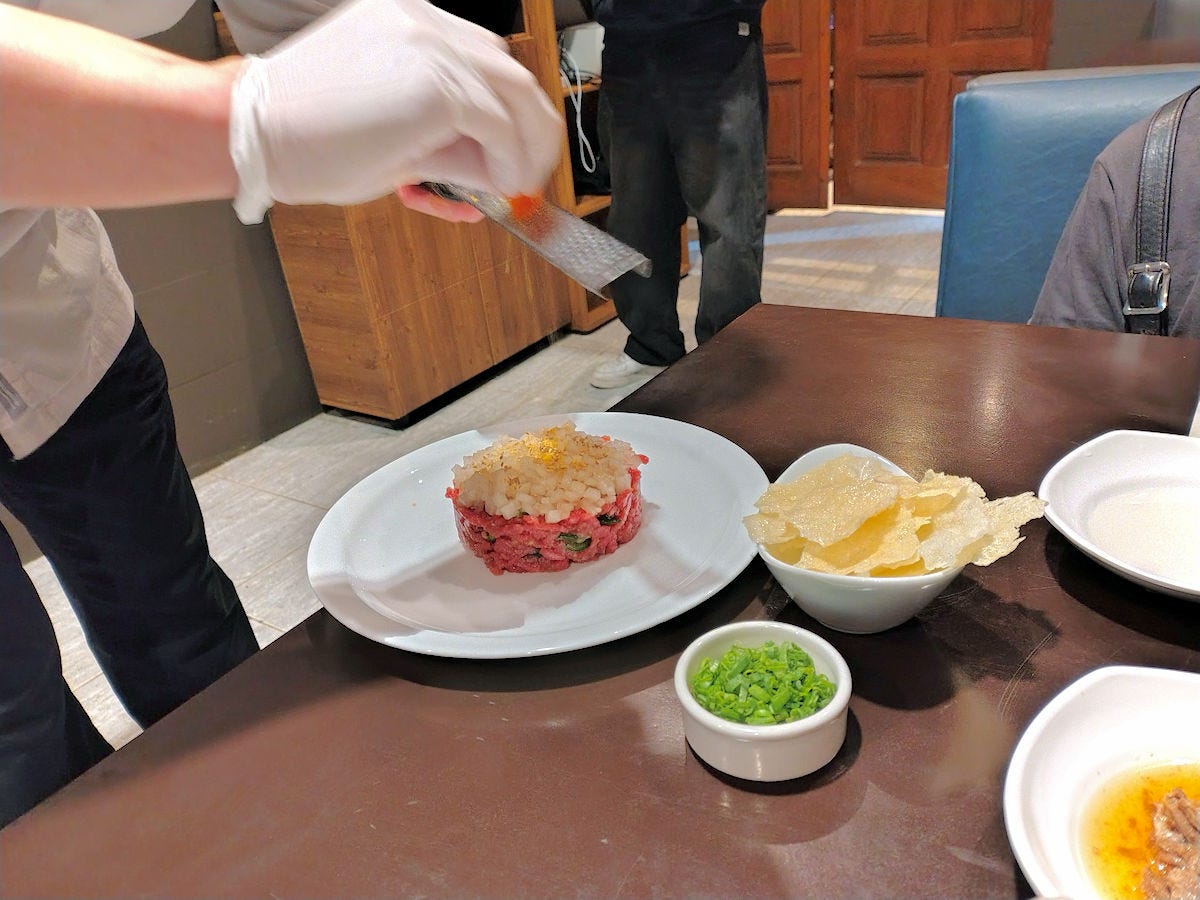
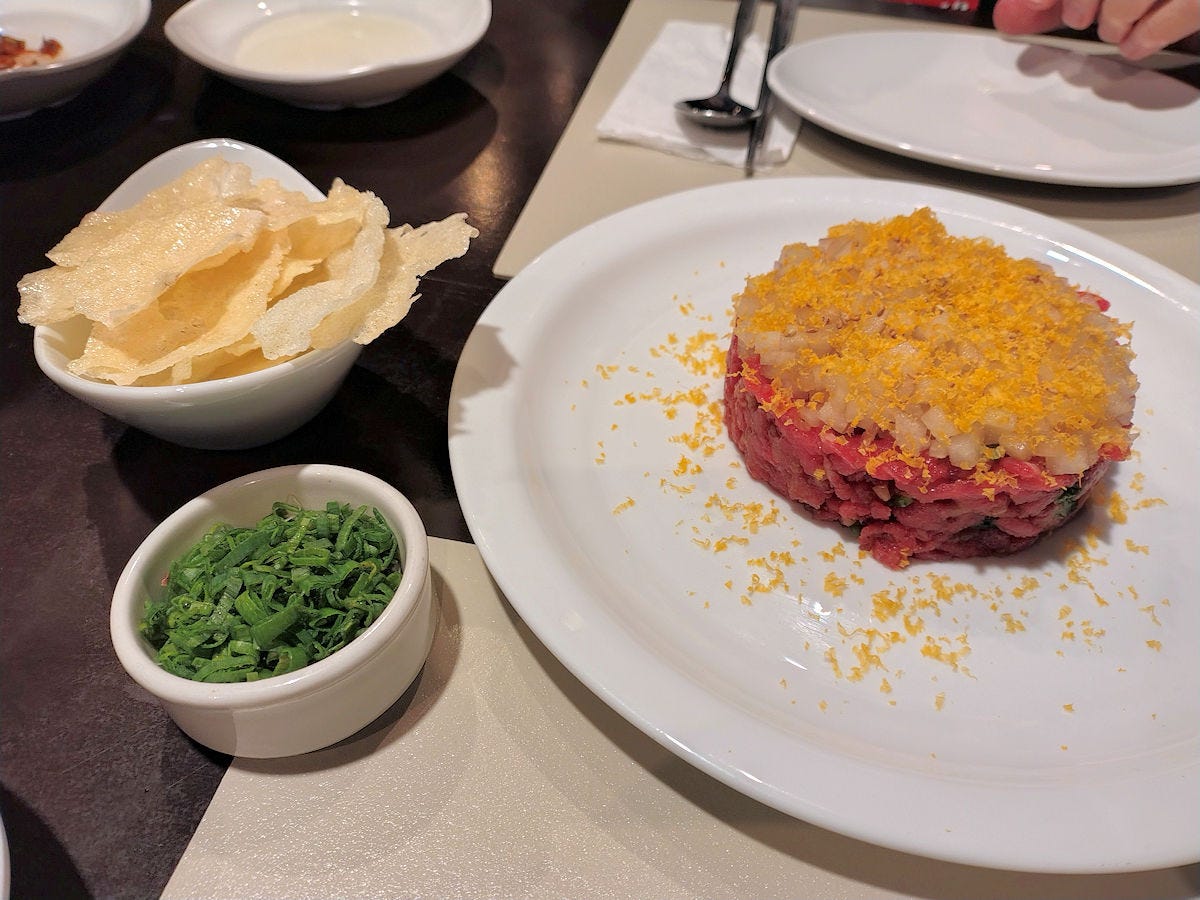
We took the chef’s recommendation and started with the beef tartare, yukhoe. Now, the menu says it’s knife cut beef, and the photo on their Instagram clearly depicts that. But this isn’t knife cut - it’s extruded from a meat grinder, and was in long… worms of beef, as I put it to my lunch companion. That made it a little harder to scoop up and eat, as it was all kind of tangled together. It’s topped with a layer of cooked pears, a cured egg yolk grated over it all tableside, and served with chopped chives and crackers made from rice pureed with short-rib broth and then dehydrated. It’s delicious, but it really does need to be knife cut to work right. 35000 pesos.
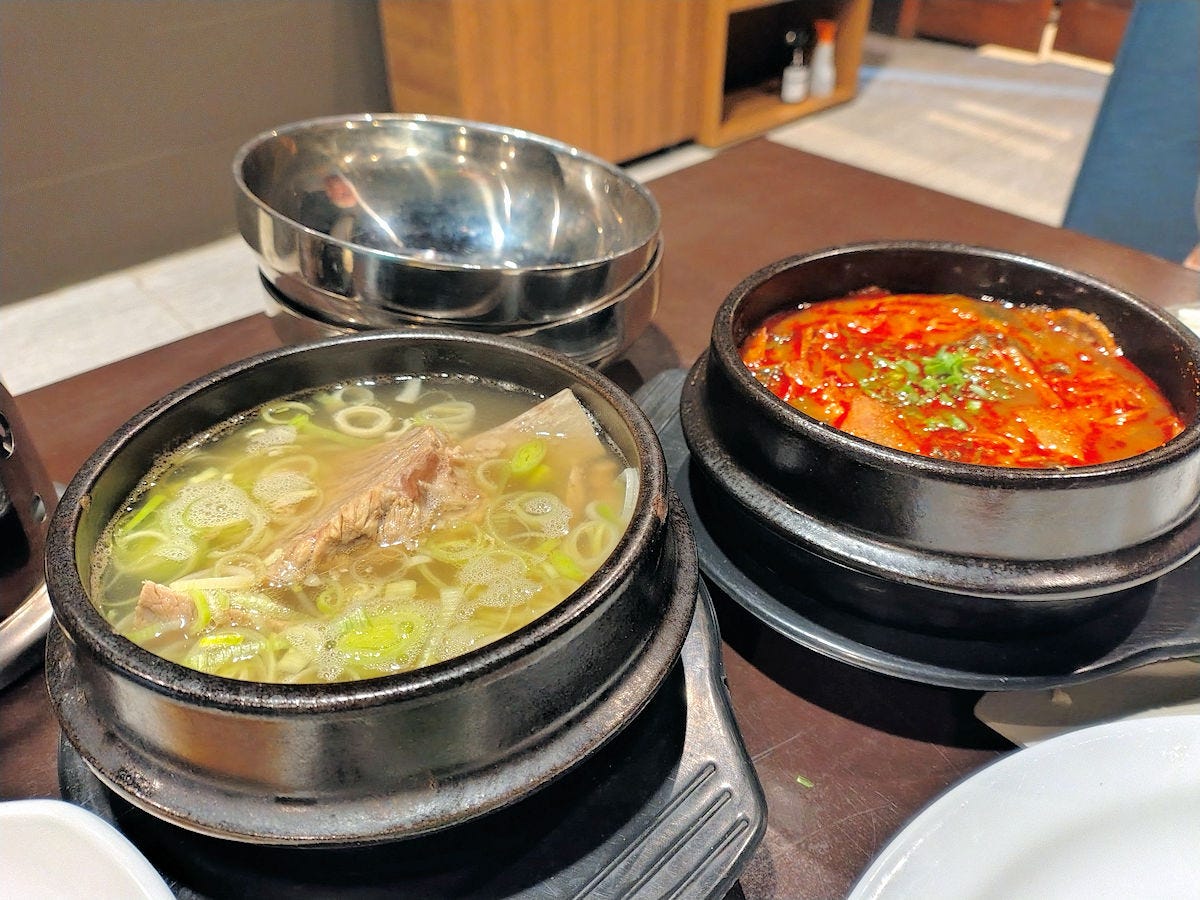
And, being a chilly day, neither of us was really in the mood for icy cold noodles (during winter, I think those ought to be hot noodle dishes, but it’s not my restaurant). What stood out for me about both of these soups was the depth of flavor in the broths. These are not casually thrown together - these are properly simmered and clarified broths worthy of paying attention to. The non-spicy soup, galbitang, one large short-rib sat atop half a dozen slices of short-rib meat, along with leeks. And to accompany it, a fiery mustard to mix in to your own tastes. The spicy beef soup, yukguejang, didn’t have a whole lot of beef in it by comparison - it was more of a kimchi soup, with just a few small slices of beef in it. Both were absolutely delicious. Served with rice to eat separately or mix in, to your heart’s content. 28000 and 20000, respectively.
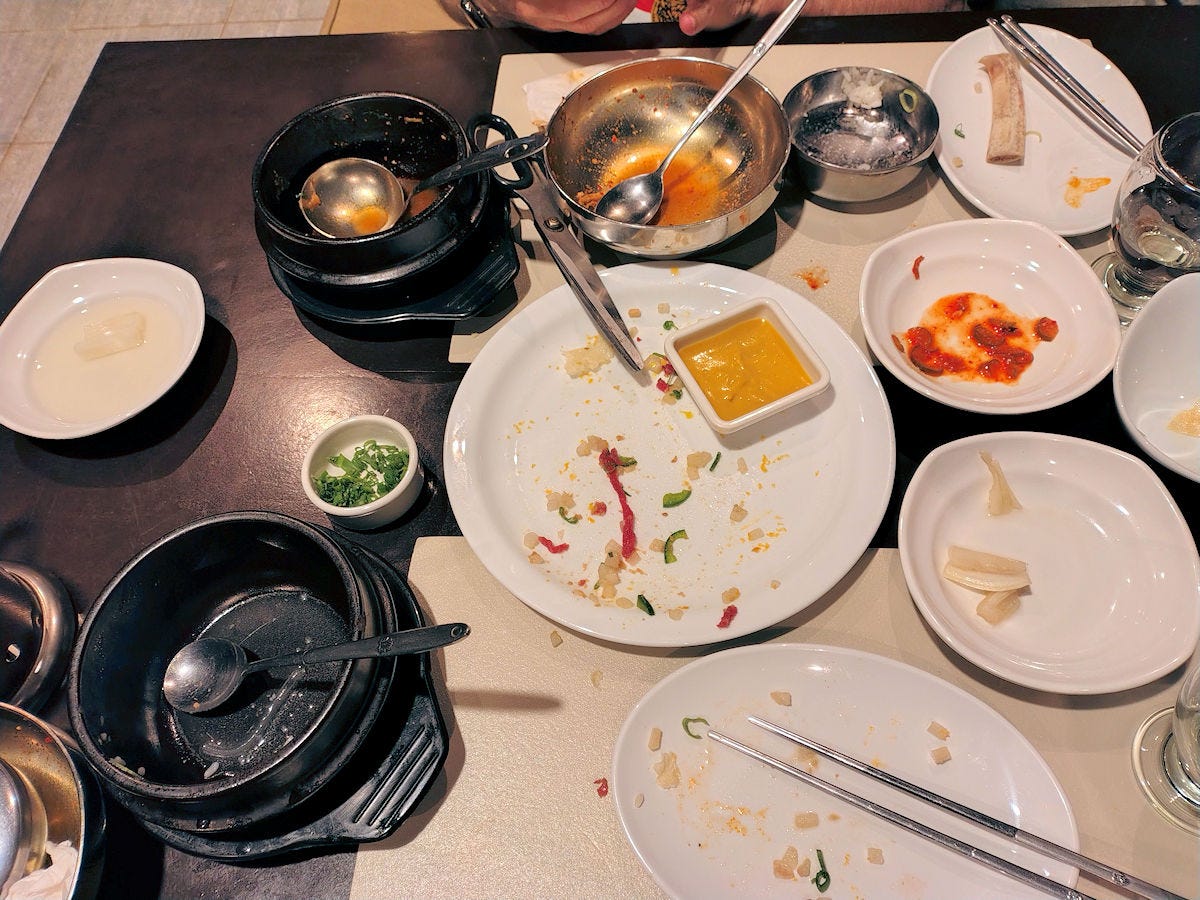
We were full, we were happy. It was definitely more than we usually spend in Koreatown for a Sunday lunch, but not by a huge amount. And it was a really nice treat to try something different in Korean cooking. We’ll definitely return to try the other dishes - it was well worth it.