
It's All Fine
When it comes to restaurants, we love reading glowing reviews, and we love reading caustic takedowns. What about when the restaurant is just... good?

Since it opened a year ago, I’ve been getting little missives, on an off, about how I simply must try ADA, a knew, creative Argentine restaurant, at Libertad 1198, corner of Arenales, just outside my neighborhood of Recoleta, in Retiro. It’s been on the list, and I decided to make it a focused review. Three visits, two of them solo, one with a group.
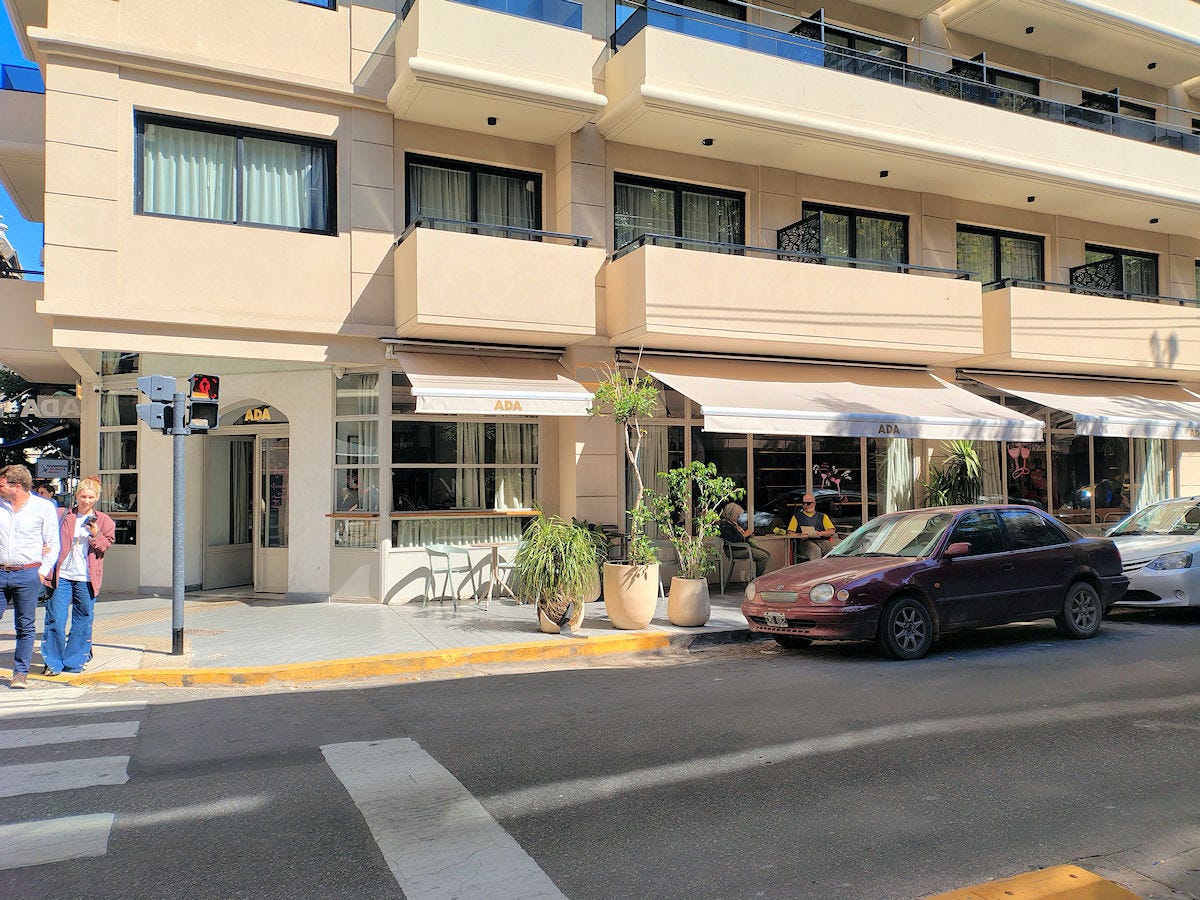
Now, the name… I don’t have any explanation for why it’s capitalized. It is a woman’s name, though according to interviews with the owner, Ezequiel “Pocho” Álvarez, an actor and cinematographer who turned his passions towards food during the pandemic, it was simply one he came across, not anyone he knows. He says that it means something “beautiful, of noble origin”, in Hebrew… which is not exactly accurate. Ada means something of noble origin in German and Scandinavian languages. In Hebrew it simply means an “adornment” or “ornament”. In Turkish, an “island”, in Igbo, “first daughter”. It holds the distinction of being the second woman’s name, after Eve, mentioned in the Torah (Genesis 4:19-20)… twice… when she marries Adam and Eve’s great grandson, Lamech.
Álvarez wanted to focus the foundation of the restaurant in macrobiotic principles, but giving free reign of interpretation to the chef, Costanza Cerezo Pawlak, who garnered Michelin praise (albeit no stars) for her three course set menus at Quimera Bistro in Mendoza, at the Achaval-Ferrer winery. Now, despite what I’d guess is common perception, a macrobiotic diet is not vegetarian nor vegan. It focuses on “harmony with nature”, with the intent to eat smaller amounts of locally raised meat, balanced by fresh, locally grown produce and grains. In many ways it was the precursor of today’s farm-to-table and eat-local movements.
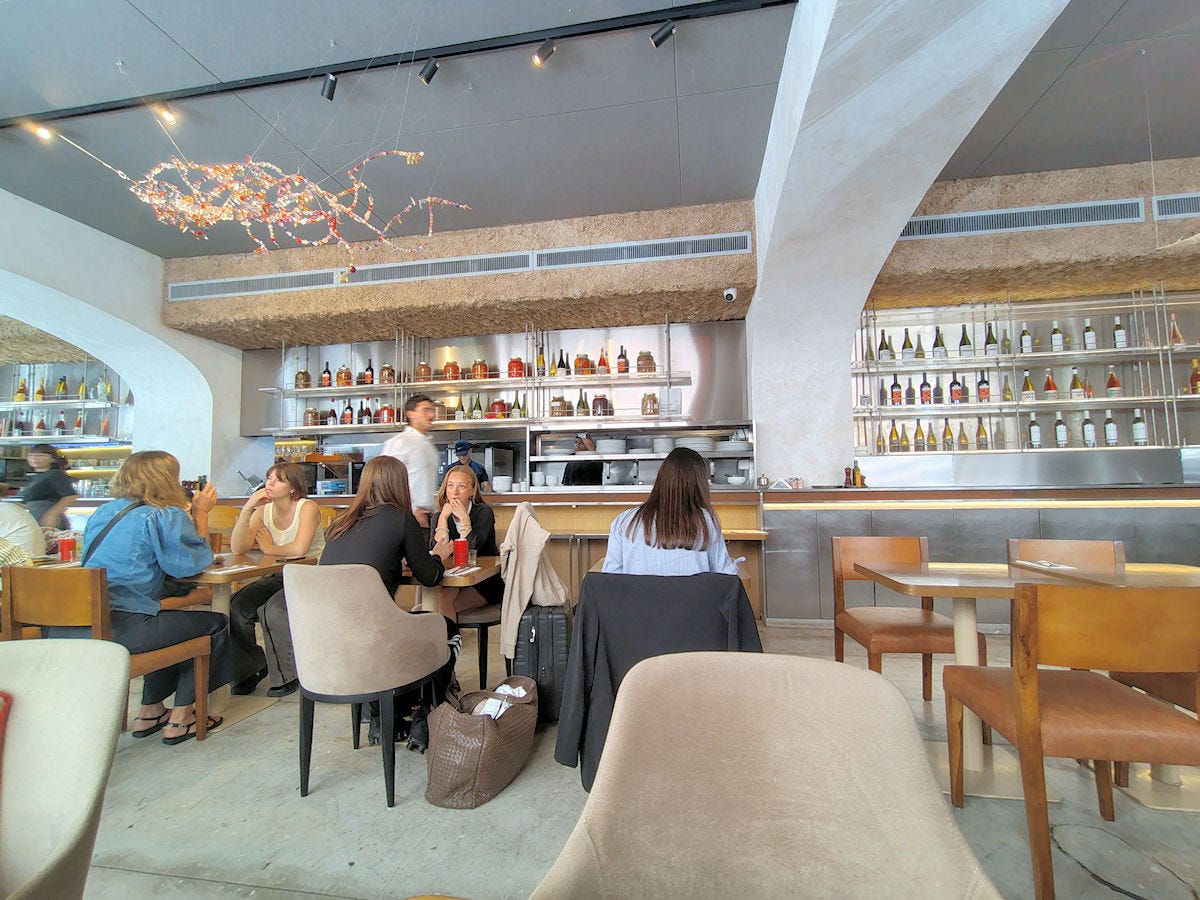
The room fits the theme, with soft earth tones, and tangled lighting elements that mimic vines. Personally I might have stayed with that theme for the waitstaff, who instead are clad all in black, matching, branded t-shirts. Pets are welcome, and on all three visits there was at least one table with a dog curled up beneath or straining at its leash.
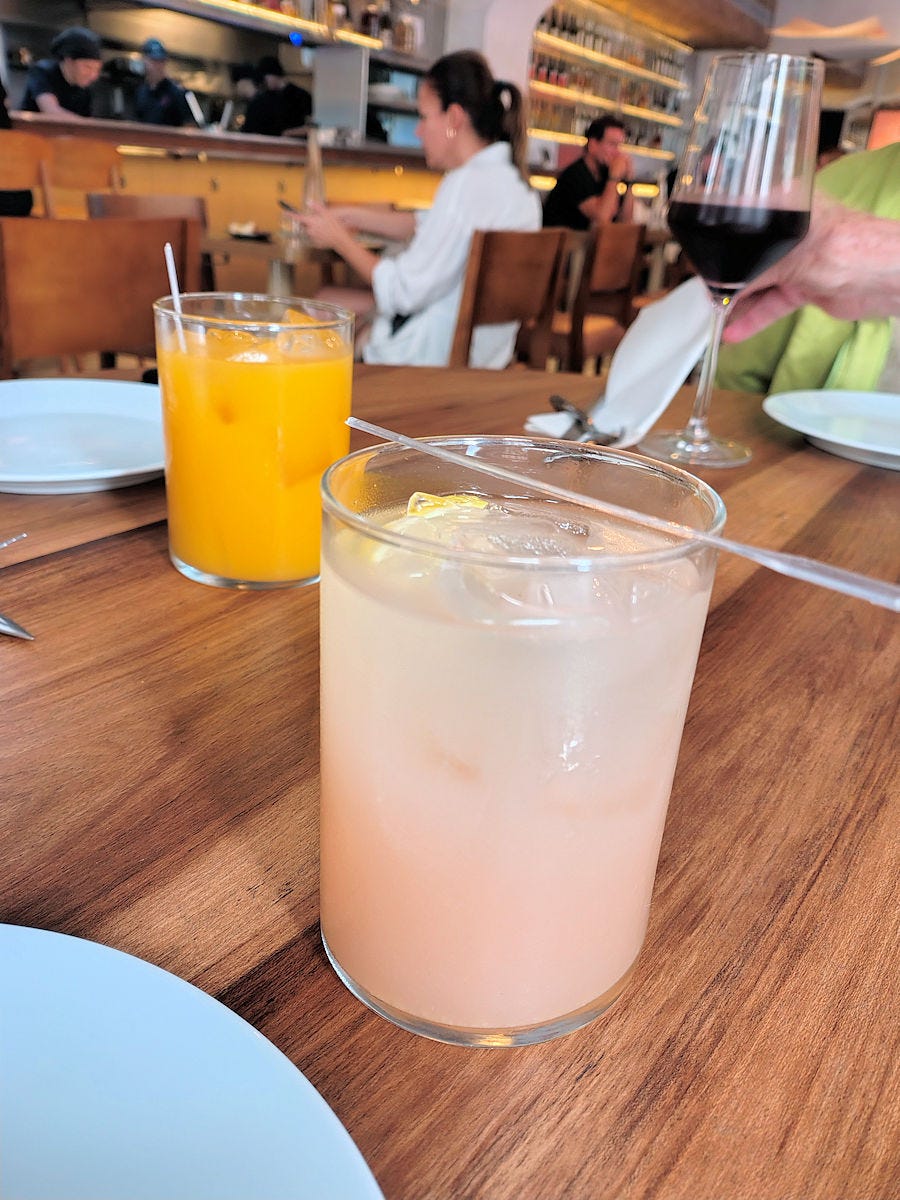
I am particularly enamored of their juices and mocktails. They make their own ginger beer, which is fantastic (6500 pesos), and another, the Green Chef - a blend of green apple, cucumber, and celery juice with mint and lime (7500 pesos). They’ve got an interesting, if slightly pricey wine list - not that the wines are overpriced for what they are, but the wine list just basically has no inexpensive wines on it. Almost a better deal, the couple of wines by the glass, which you could have a bottle’s worth of and still not pay as much as the least expensive wine on the menu.
Let’s jump into the food - what did they get right and what did they get… okay?
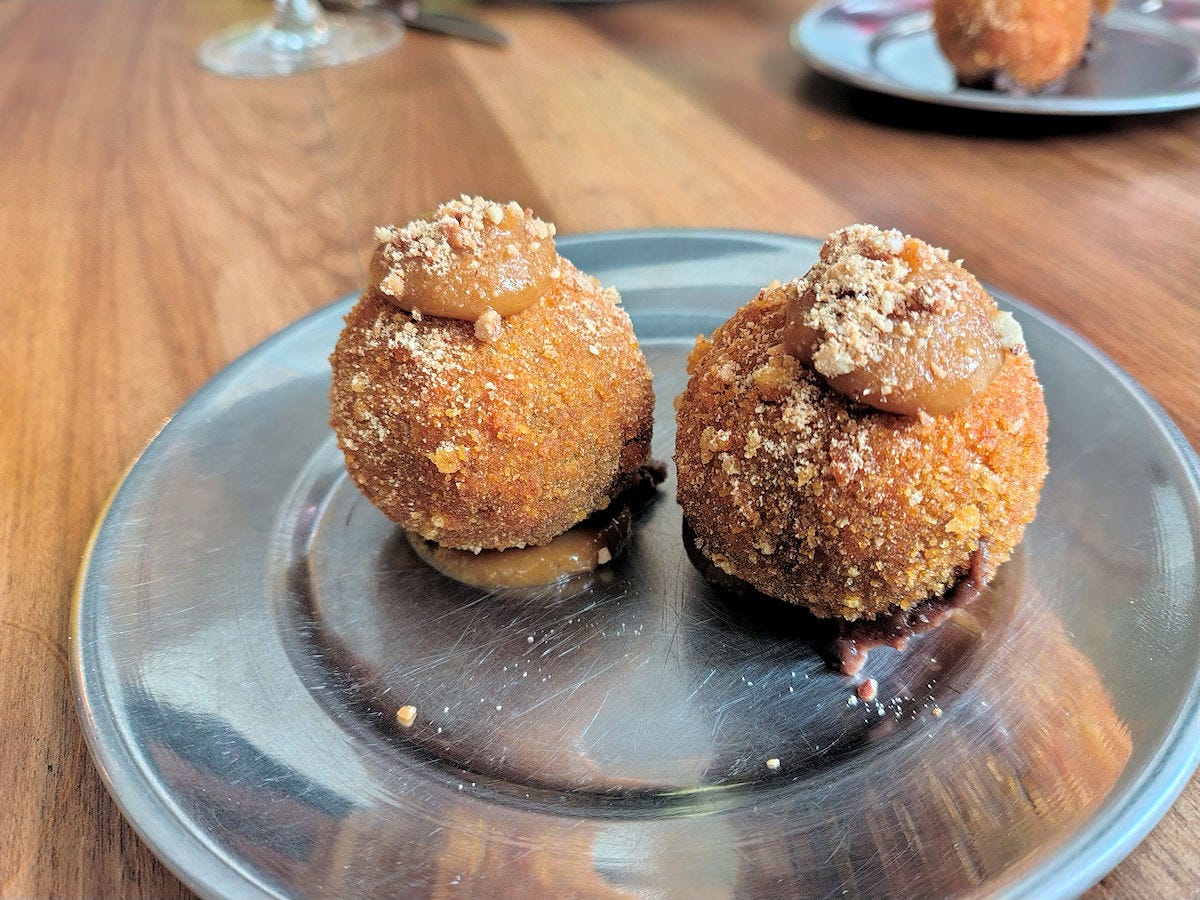
Surprisingly, the runaway favorite across the board is their duo of morcilla (blood sausage) croquettes. They’ve turned the sausage into, basically, a custard, encased it in breadcrumbs, deep fried it, and served it up with a pureed apple chutney. It goes up there in my pantheon for favorite blood sausage dishes over the years. And yes, I have a pantheon of blood sausage dishes. 10500 pesos.
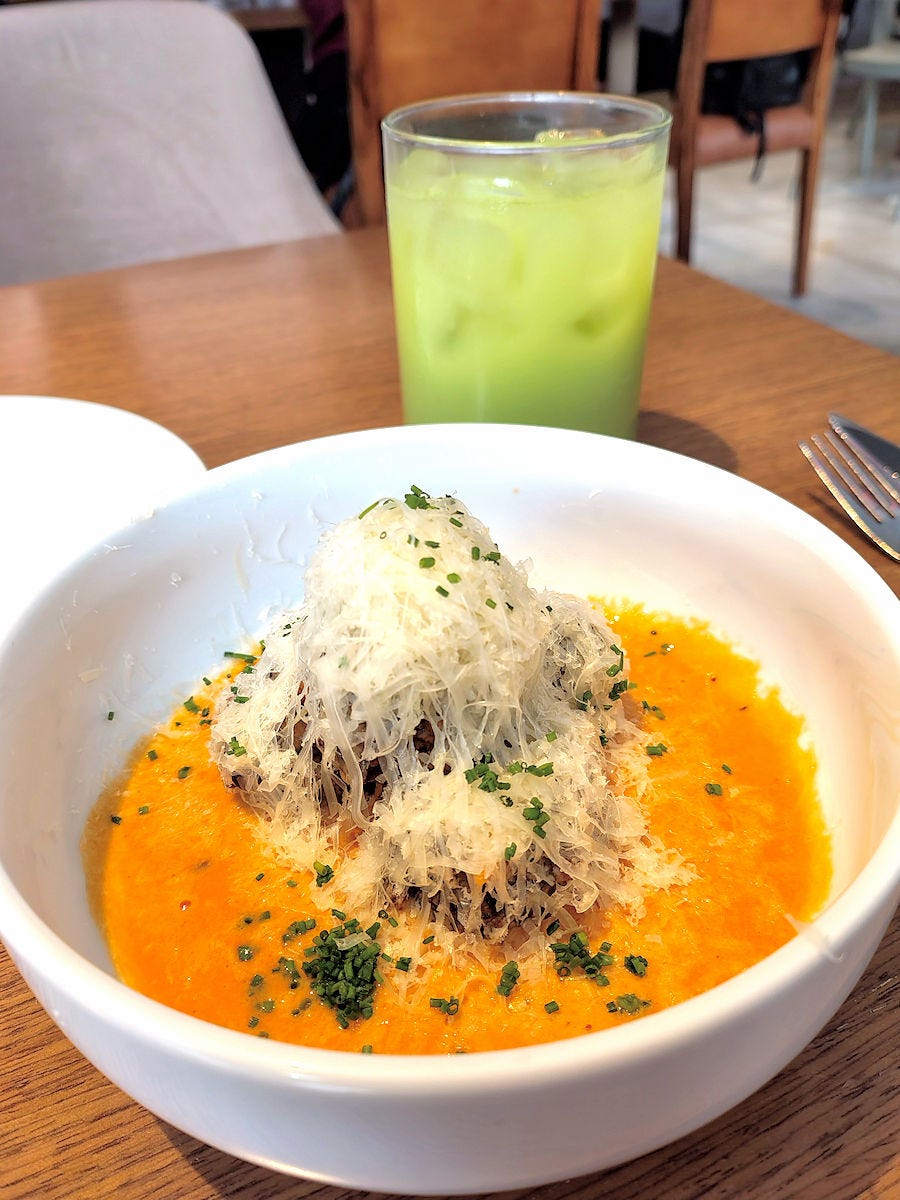
Meatballs, obviously, had to be tried. A quartet of them, deep-fried and crunchy on the outside, delicious and tender on the inside, piled high with grated cheese and served over a classic, creamy tomato “alla vodka” sauce. They are as excellent as the croquettes above, though 19000 pesos feels a bit steep for four meatballs the size of a walnut shell. That’s the Green Chef juice in the background.
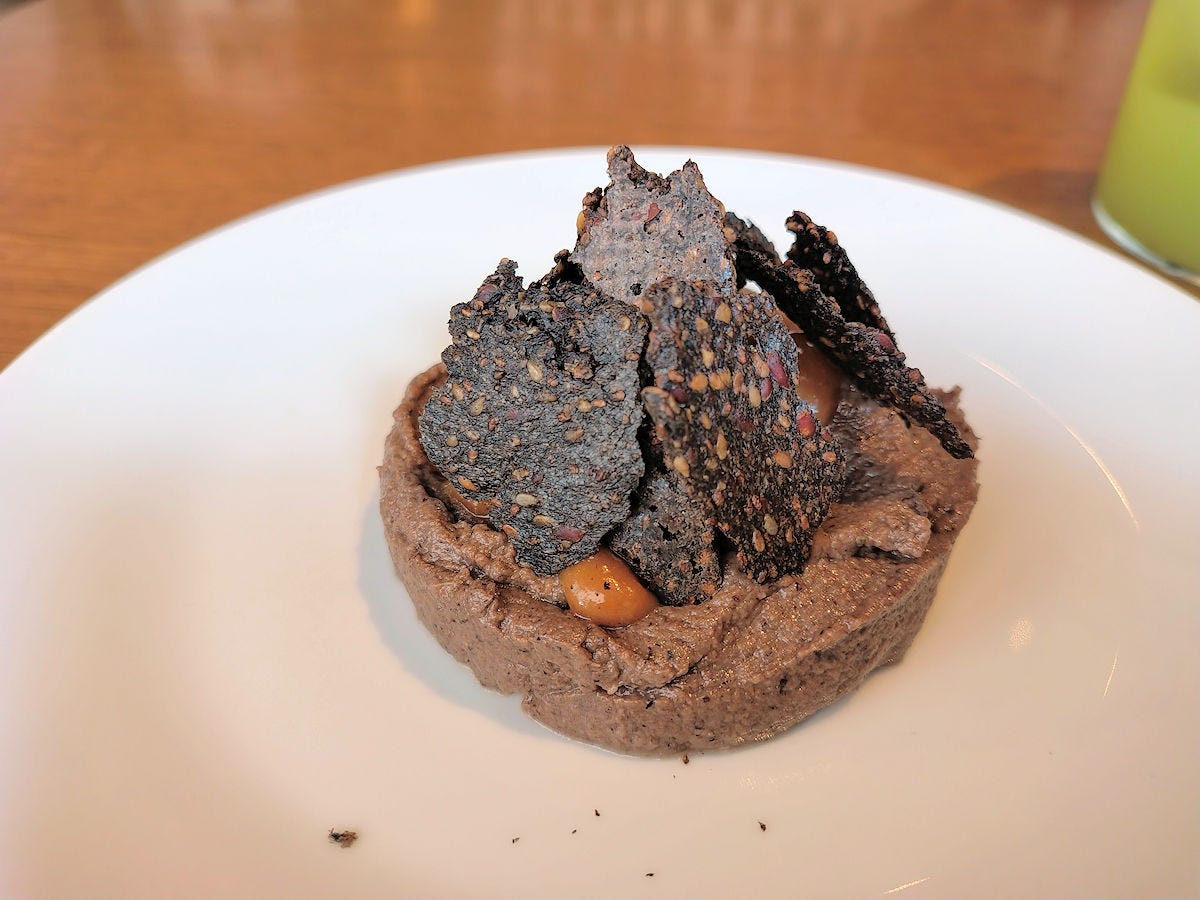
I was less enamored of the mushroom pâté. Beyond just sort of looking scatological, it’s kind of bland. It needs a good hit of salt, maybe a little pepper. And the linseed crackers need to be… cracker-y - i.e., crunchy, rather than the texture of fruit leather. It was all just okay. 15000 pesos.
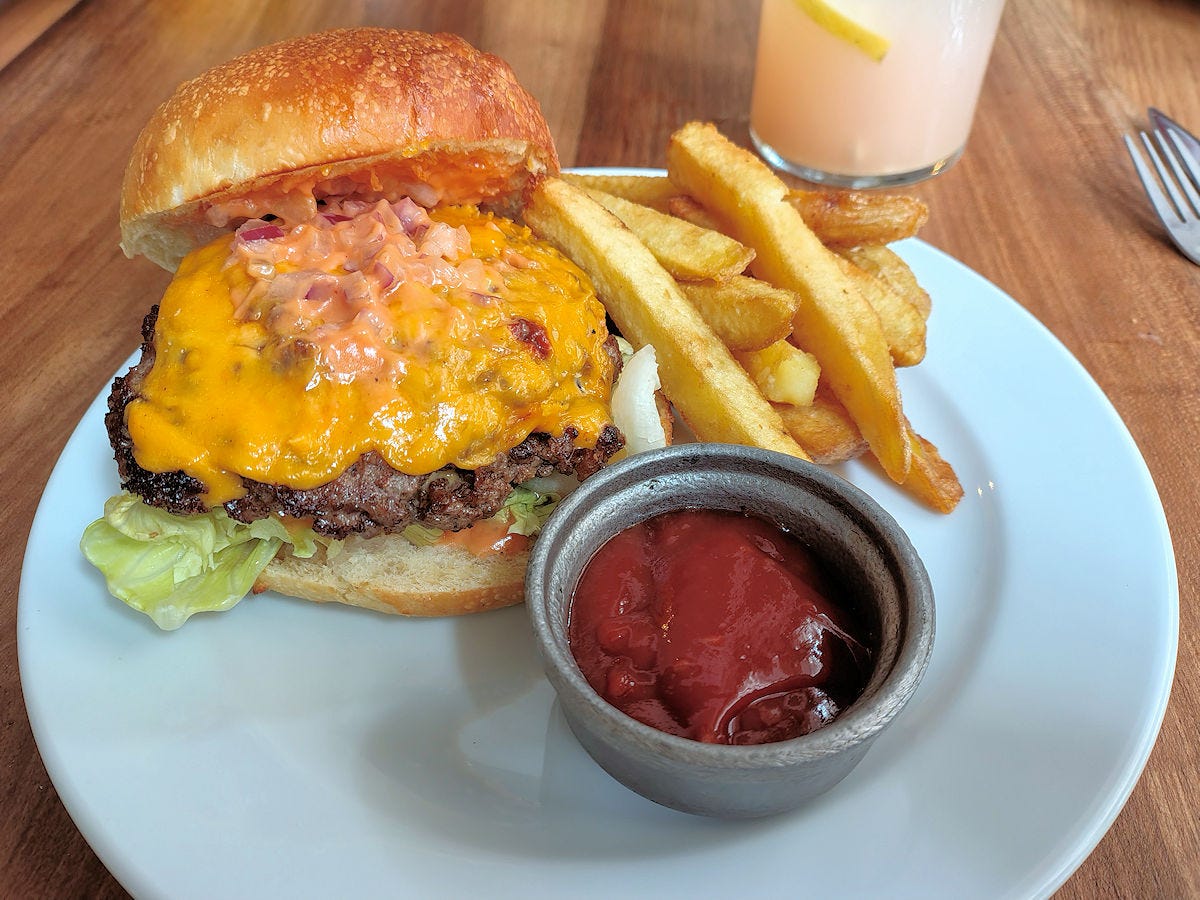
From their sandwich menu, I couldn’t not try their burger. I didn’t expect that two of my four companions on the Horde visit would follow suit, but so be it. It’s a two-patty burger, with clearly good quality meat, but basically unseasoned, and the flavor is kind of overwhelmed by the cheese they’ve used, an intense, almost Cheez Whiz™ kind of flavor. The lettuce and tomato are fresh, the bun is fantastic, and held up throughout the meal, and we liked that the pickles were tangy and not sweet. The fries are excellent. 25000 pesos.
I am not normally a huge fan of Argentine pastrón, which is the local version of pastrami. They are not, by any stretch, the same thing.
Both pastrami and pastrón descend from the same source: Romanian Jewish immigrants arriving in the late 19th and early 20th centuries, bringing their cured meat traditions — rooted in Romanian pastramă — to new shores. In both New York and Buenos Aires, Jewish butchers pivoted from the original pork and mutton to beef, and the basic logic remained the same: a long brine with salt, sugar, and aromatics, followed by smoke and heat.
But the two traditions were then shaped by their local environments, and they diverged considerably. New York pastrami latched onto the belly cut — fatty and deeply marbled, smoked over hardwood and steamed to a near-falling-apart tenderness, with an aggressive peppery crust. Pastrón landed in a country with a deep preference for lean beef, and settled into leaner cuts like peceto (top round), mild or no smoking, a subtler spice profile (Argentines and pepper, traditionally, don’t mesh well), and a firmer, more sliceable texture of a sandwich “lunchmeat”.
The other big divergence is cultural absorption. New York pastrami retained its identity as a specifically Jewish immigrant food, codified in institutions like Katz’s and inseparable from Lower East Side mythology — you eat it in a particular way, on rye, with mustard, and piled high. Pastrón quietly got folded into the broader Argentine deli and rotisería universe, losing most of its ethnic specificity along the way. Most porteños today think of it simply as a cold cut, something you layer into a tostado or scatter across a pizza, more everyday ingredient than cultural statement. Same grandfather, genuinely different grandchildren.
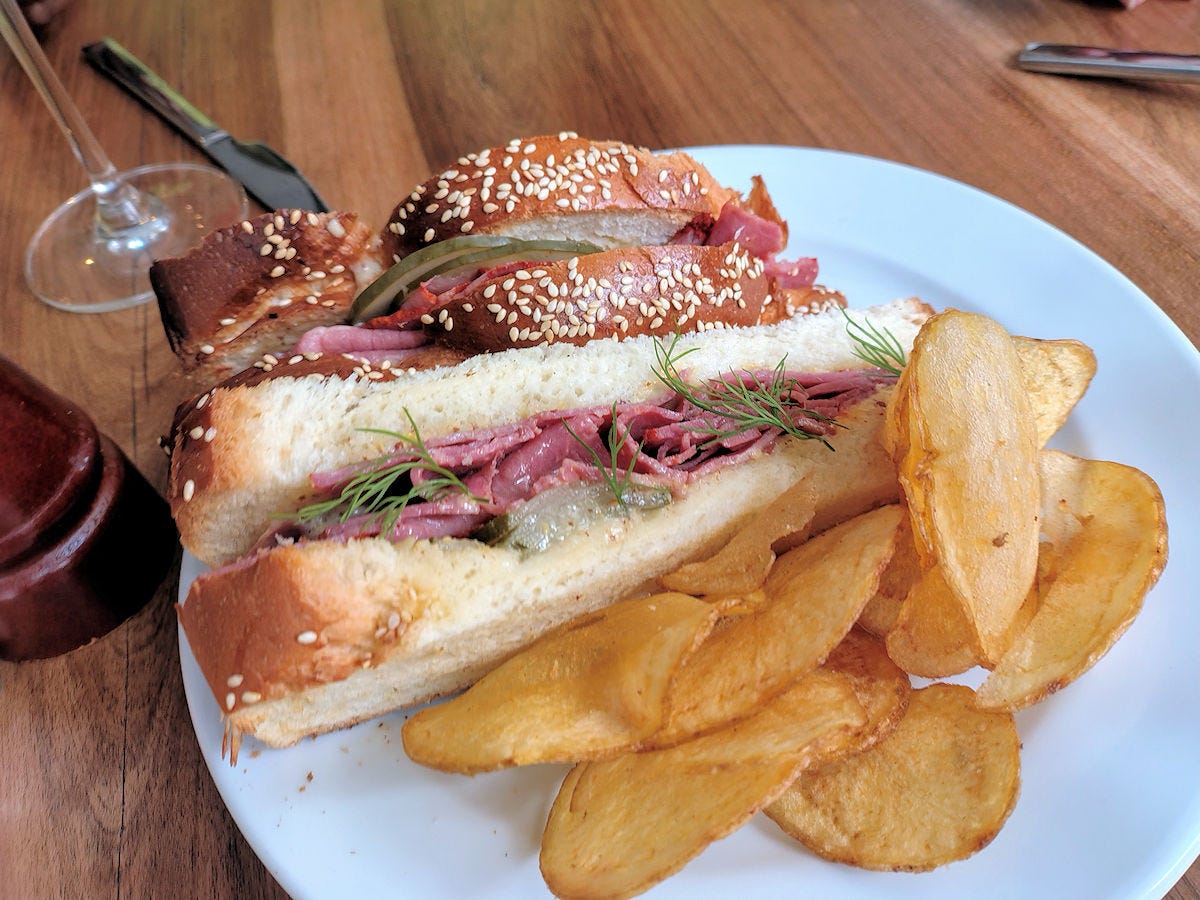
This sandwich is made with pastrón. It’s not bad pastrón, but I still deeply prefer pastrami. As best I know, the only place in town that kind of makes pastrami in the New York style is Mishiguene, though their version is a smoked shortrib. Again with great pickles here, a nice sharp mustard, though of course, I’d rather it be on rye bread than white. Still, it’s a very good sandwich. 20000 pesos.
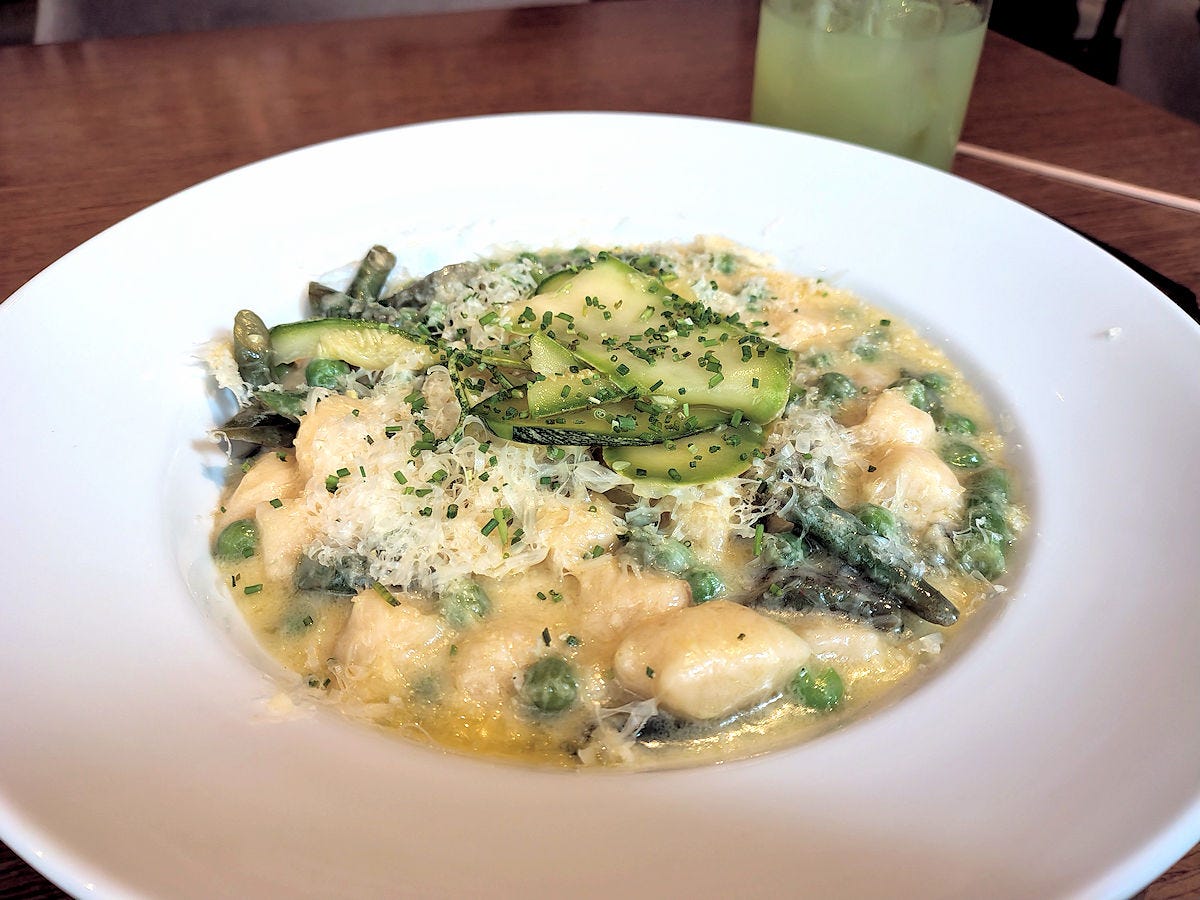
Very good gnocchi, in a lemon “cream” sauce, though perhaps “creamy” in texture would be more accurate, as my sense is there’s no actual cream in this. There is a lot of cheese. The vegetables are fresh and vibrant - at the moment a mix of peas, green beans, and zucchini, I gather that varies. They’re left crunchy - just barely cooked, so that’s a personal thing - I wouldn’t have minded them being cooked a bit more, but I know people who would both find it off-putting and others who would love it. The gnocchi themselves are decent - a little gummy, but not bad. It’s a good dish. 27000 pesos.
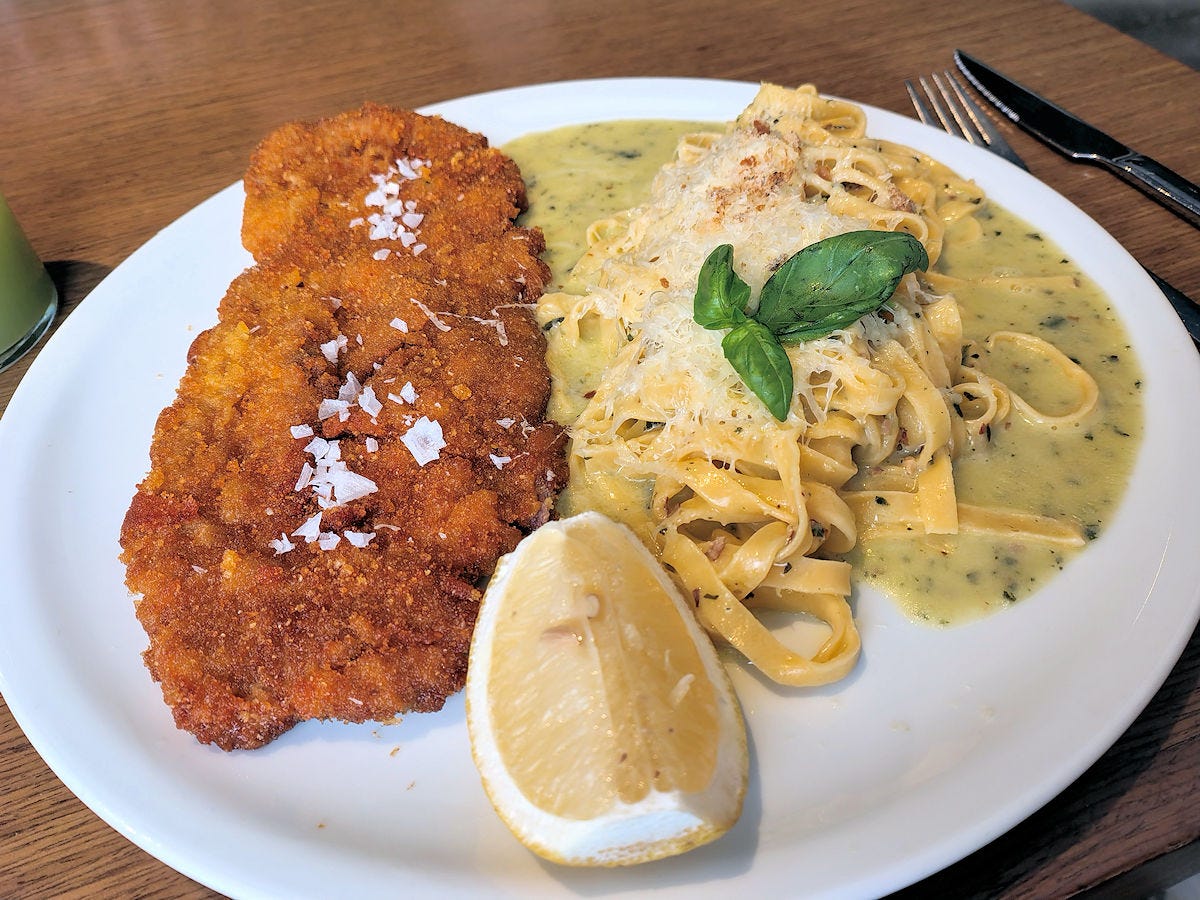
And, the milanesa. Weirdly salted - the meat itself, and the crust, seemed to have no seasoning at all. Instead, a couple of big pinches of flaky salt atop. It’s just not the same as the salt being embedded into the meat and its breadcrumb case. And the pockets of flaky salt were a little over the top, and I pretty much just tapped them off of the milanesa and then sprinkled some regular table salt and pepper over it. The accompanying “spaghetti” which was actually tagliatelle, has just sort of been plopped on top of a rather liquid basil sauce. No clinging to the noodles, it just sort of sat there. And, desperately in need of salt and pepper. My least favorite dish of all of the above, and one with so much potential with some really minor tweaks (seasoning, and I’m surprised that a chef and kitchen of this caliber doesn’t, apparently, know how to toss pasta with sauce and cooking water to get it to cling). 36000 pesos.
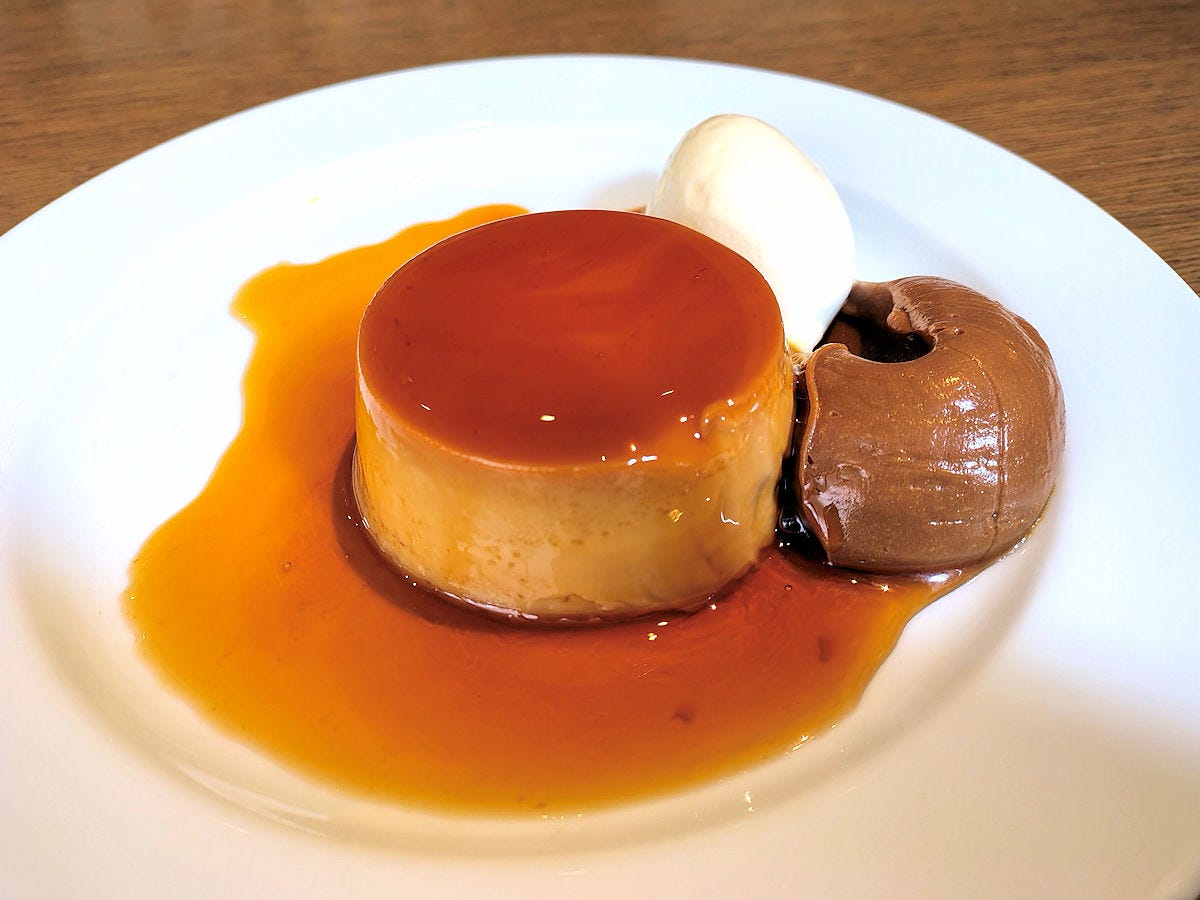
And only one dessert tried over the course of three meals. Their much touted flan. It’s an excellent flan - absolutely, perfectly, creamy smooth. It does not, however, taste of the promised orange, and, I don’t know, maybe use some other sort of scoop for the dulce de leche, like whatever you used for the whipped cream (unsweetened), so it doesn’t look like… well… poop. 14000 pesos.
Overall… I like the space, it’s comfortable and relaxed. As someone allergic to dogs, on my two solo visits I had to look around to sit a little further away from them, though that changes, as on one visit, midway through the meal a new table sat next to me with one. It’s a consideration for some of us. They do have outdoor seating on the sidewalk. Service staff are great when they’re at your table - helpful, friendly, etc. But they’re a bit, I hate to say it and be one of “those people” of my generation, but there’s definitely an element of only doing exactly as much as they’re required to do in the moment. They have a tendency to cluster at the front end of the bar and chat with each other, paying zero attention to the room until someone waves wildly enough to get the attention of someone (I noted it’s usually the cashier, who’s facing the room) who then sends someone over. The food is, pretty much, all good to very good. At least from what we’ve sampled, they do better on the appetizer end of things than the main course and sandwich end. It’s slightly pricy, but hey, much of that is probably the neighborhood. In the end, recommended for a good, casual meal.