
December Dish
"What the new year brings to you depends on what you bring to the new year." – Vern McLellan

What’s been cooking in the Casa SaltShaker kitchen? Both on and off the menu….
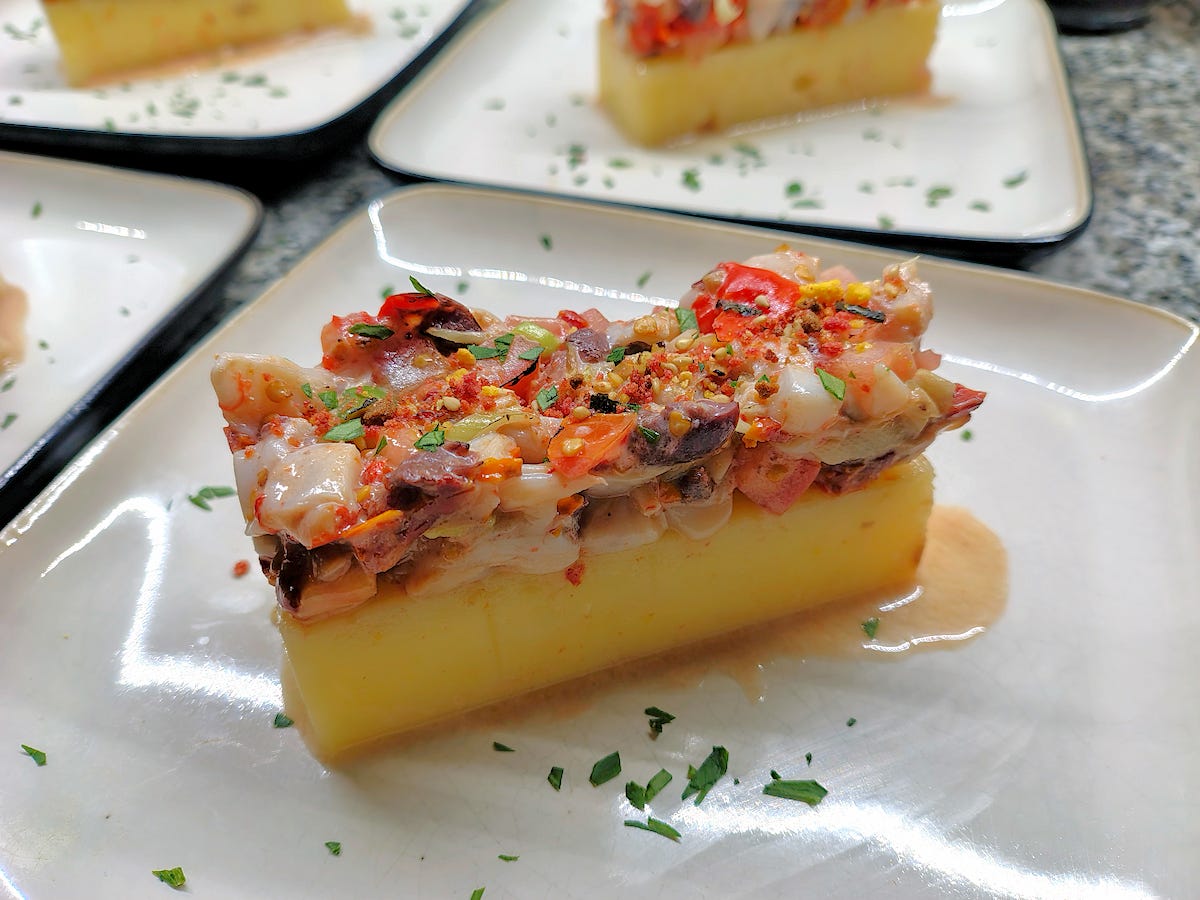
A new twist on the traditional Peruvian causa. The base, classic, chilled purée of potatoes with lemon, ají amarillo, olive oil, and salt. The salad on top, razor clams mixed with boquiño chilies, fresh and dried tomato, green onion, black olive, mayonnaise, and smoked salt. I torched the top of that to just give it a little lightly charred note, and then sprinkled it with a “beef flavored” sukiyaki furikake. Served with Philippe Caraguel Extra Brut sparkling (50:50 Chardonnay & Pinot Noir) from Mendoza.
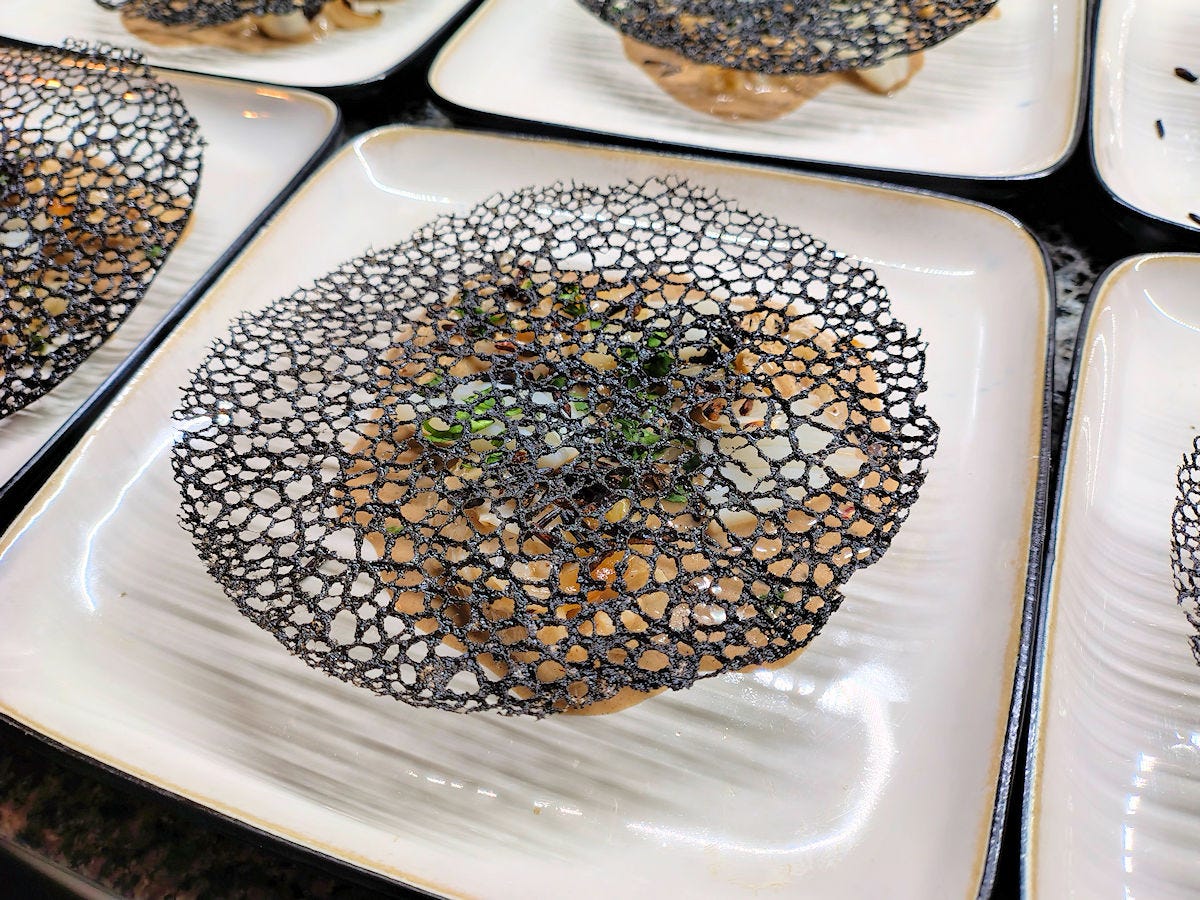
I called this a “black ceviche”. It’s merluza negra (literally, “black hake”, but it’s Chilean sea bass) sliced sashimi style, and lightly poached diced calamari, cured in a leche of lime juice, olive oil, black garlic, fermented black beans, and charred rocoto. Decorated with lightly charred onion petals, cilantro leaves, and puffed wild rice, and then a squid ink tuile over the top of the whole thing. Served with Altos de las Hormigas “Burbujas de los Andes” sparkling (100% Bonarda).
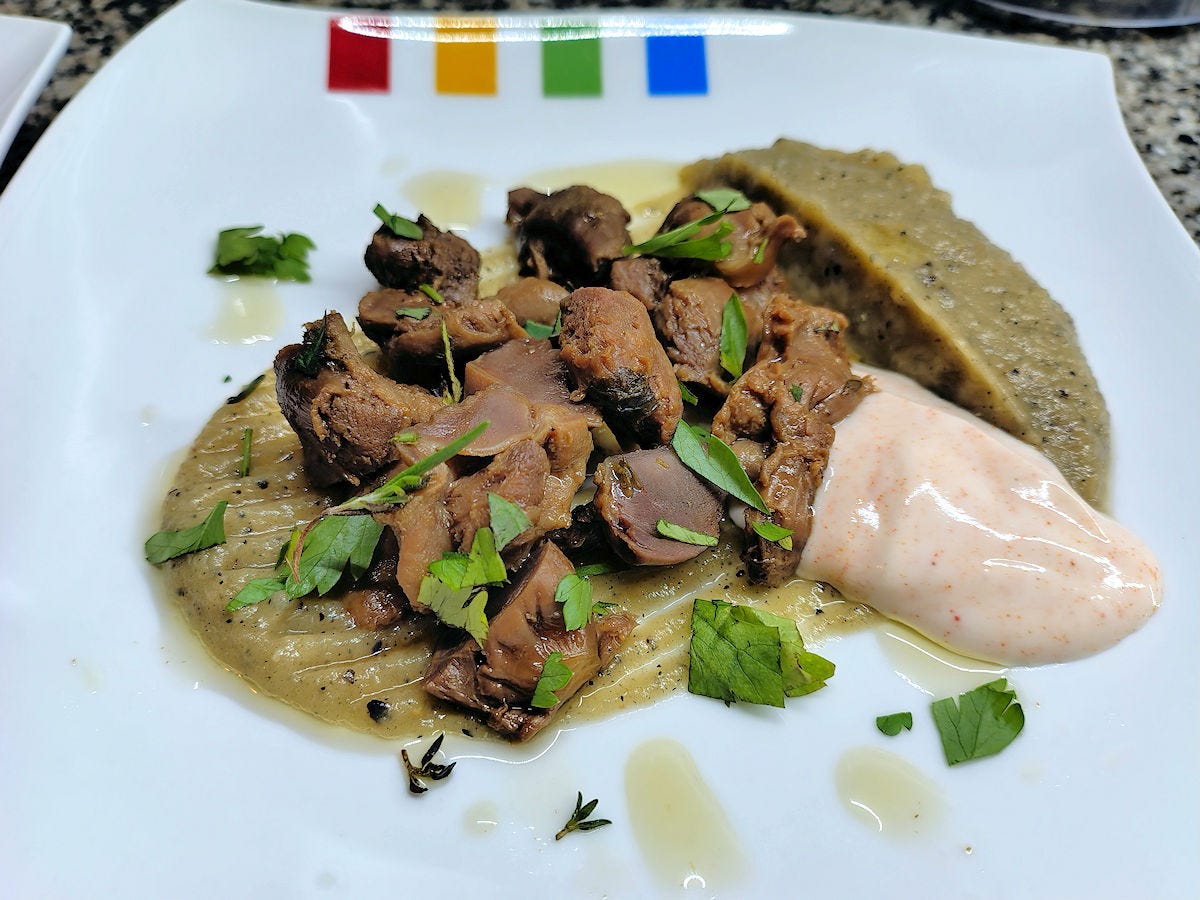
Now this one’s “different”, and it’s been in the works for awhile now. I started with the idea of cooking mollejitas, chicken giblets, in the herb, chili, and beer mixture we use to make huatía sulcana, a braised beef dish. After a solid three hours of cooking, they’re as tender as can be, and deeply infused with all those flavors. Served over a charred eggplant puree (garlic, olive oil, salt), with a dollop of three-paprika yogurt (sweet, hot, smoked), and a coarsely chopped mix of the seven different herbs I use in the huatía - parsley, cilantro, rosemary, oregano, thyme, basil, chives, and mint. Served with LaMadrid “Zunzun” Rosado de Cabernet Franc 2019.
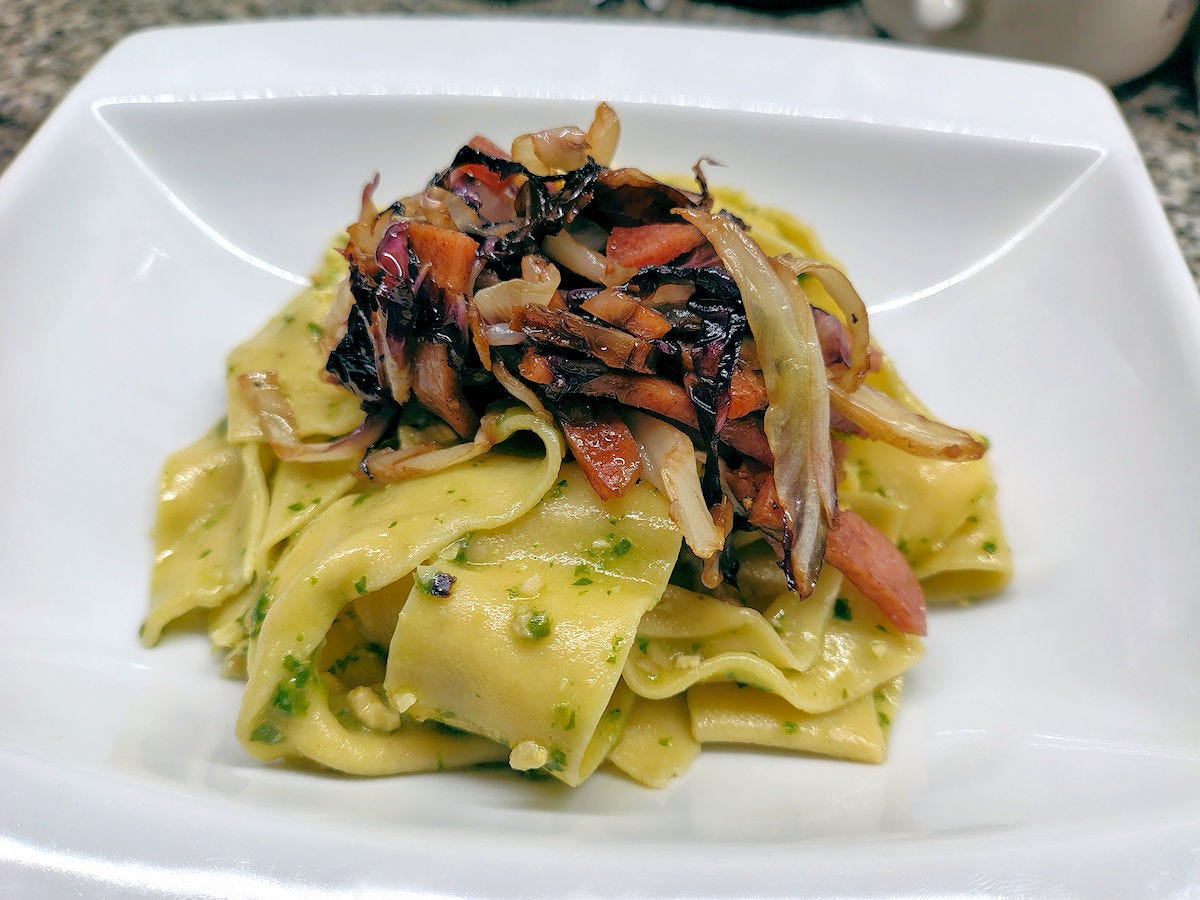
Another one in the works for awhile. Semolina pappardelle tossed with an arugula, walnut, garlic, and parmigiano pesto; topped with a sauté of walnut mortadella and radicchio, finished with a drizzle of reduced balsamic vinegar. Served with the same rosé from the previous dish.
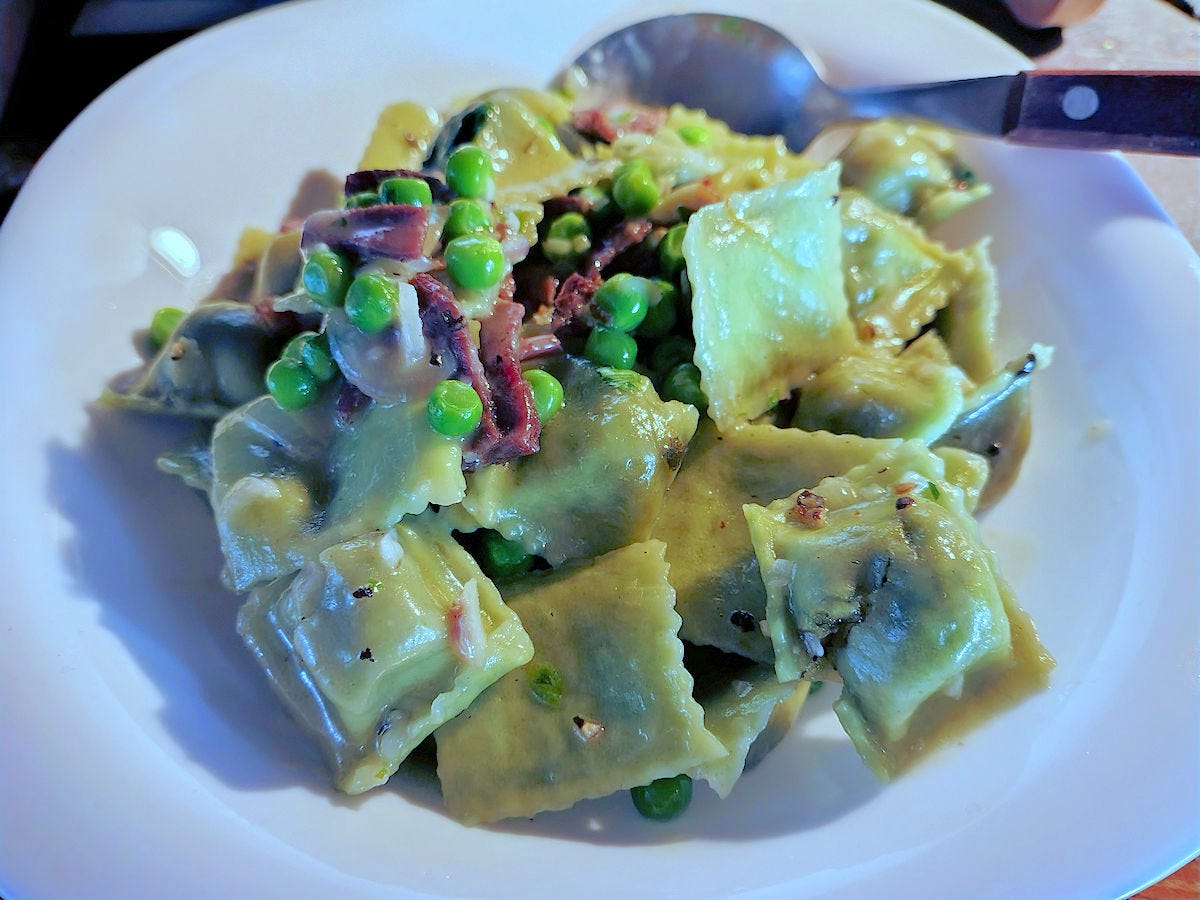
Spinach ravioli filled with butternut squash puree. Tossed with “snail butter” (butter with shallots, garlic, parsley, and a drizzle of pastis), peas, and smoked guanaco. Someone gave me a package of the stuff, and it’s tasty, but a bit intense to just eat on its own. It worked really well in this mix of flavors. Guanacos are in the same family as llamas, though significantly smaller (typically about 3-4 feet tall and weighing in at about 200 pounds). In fact, recent research suggests that the modern day llama was bred by us from guanacos through various selective breeding techniques, to create a “beast of burden” big enough to carry stuff. This was lunch at home. No wine, sorry.
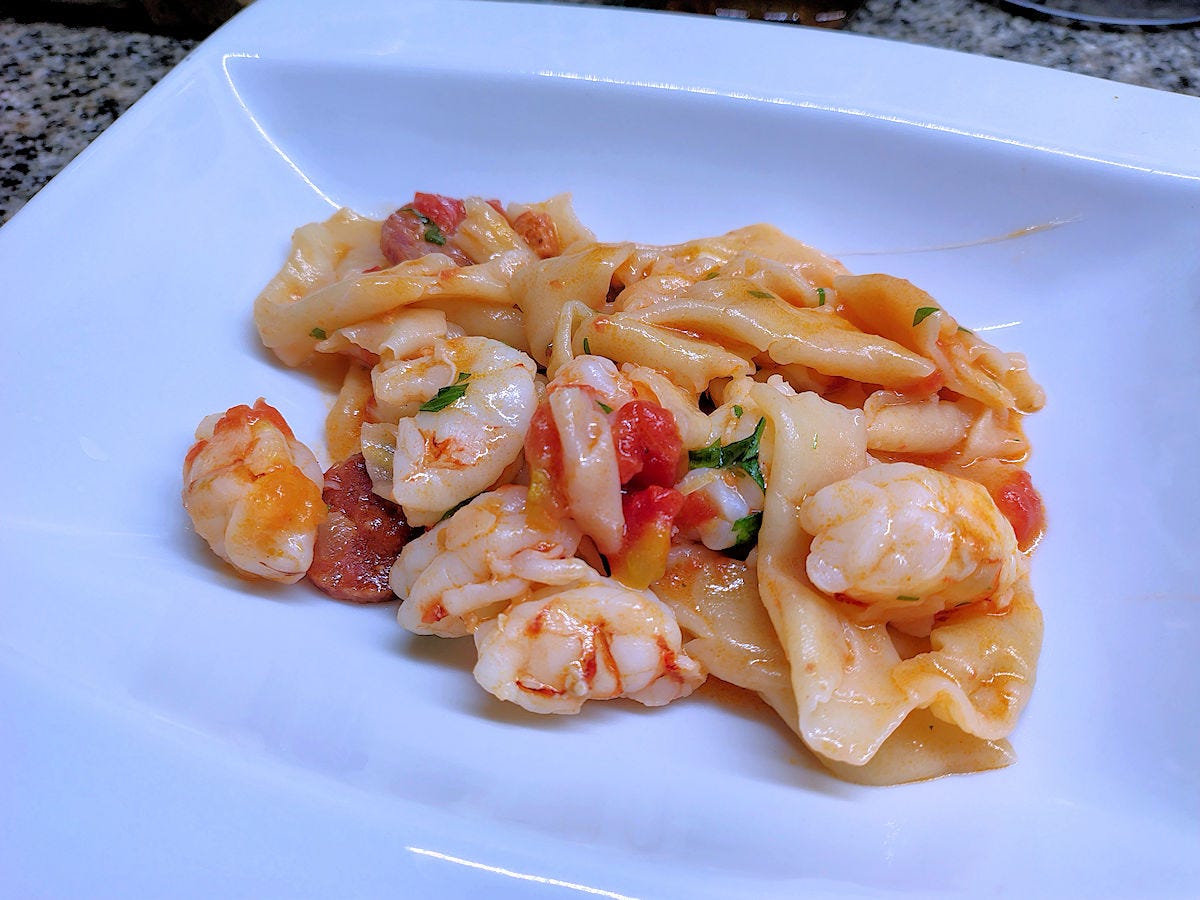
A Calabrese inspiration, with handrolled fileja pasta (sort of the Calabrian equivalent of fusilli - mine didn’t have as much time as I’d have liked to dry and hold their shape, so they semi-unraveled), with ‘nduja, longaniza sausage, prawns, tomato, garlic, parsley, and bocconcini. The particular ‘nduja I was able to find isn’t as spicy as I’d like - I should have added some chili to the dish to up the spice level, or, as I’ve been thinking recently, given how hard good ‘nduja is to find here, I may just make my own. It’s actually pretty easy, and just needs a month or two of aging. Served with Mosquito Muerta’s Cordero con Piel del Lobo Rosé 2024, a Malbec based rosé.
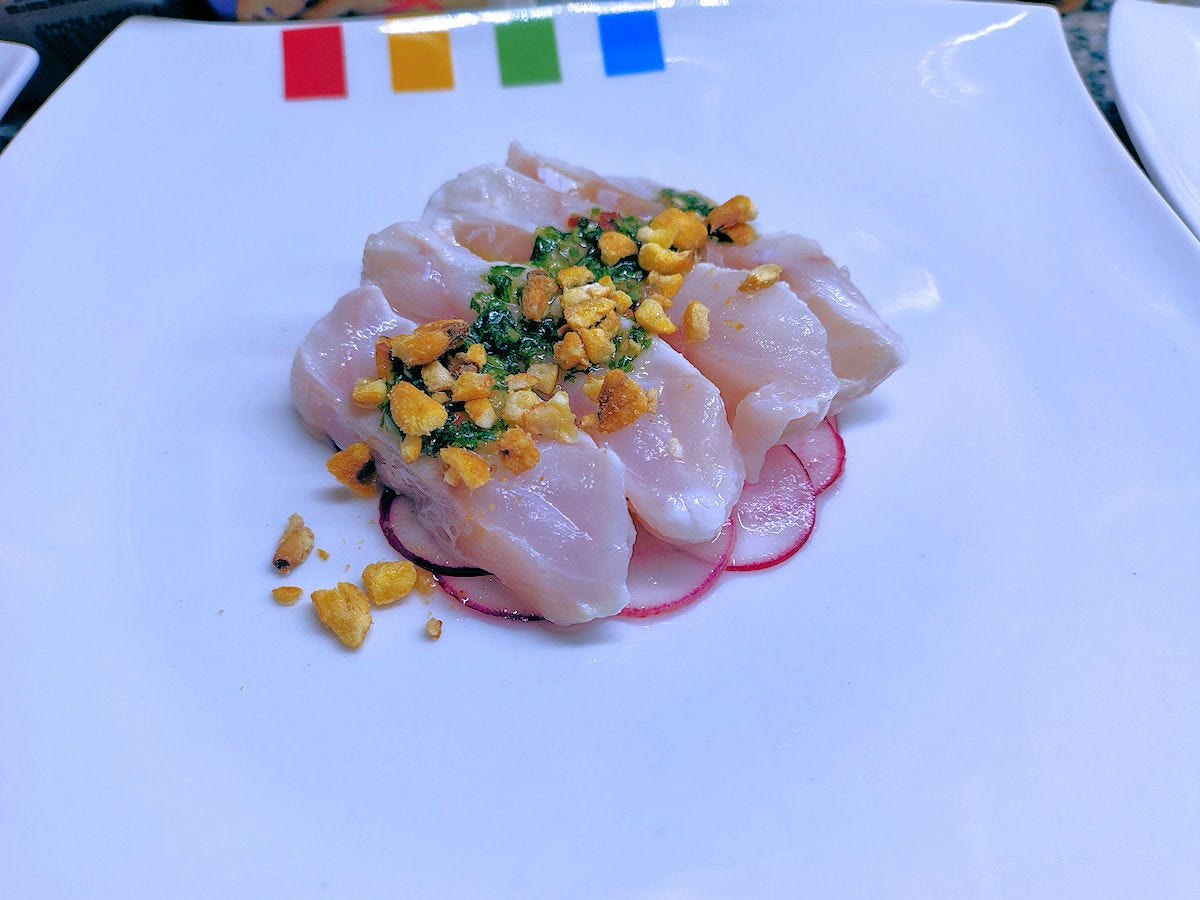
One of my favorite crudos to date, this one just came together pretty much perfectly. On the bottom, thin slices of radish that were brined for a few hours. Topping that, thicker slices of mero, a local grouper, cured for about 45 minutes in a mix of lime, lemon, and orange juices, with a touch of grated celery and garlic, plus salt and white pepper. The salsa verde on top is a fiery mixture of red aji limo chilies, cilantro, parsley, garlic, olive oil, rice vinegar, and salt. Then I took some fried corn dusted with chili powder and blitzed it to a coarse crumb for texture. Served with Famiglia Bianchi’s Extra Brut sparkler, a two-thirds Chardonnay, one-third Pinot Noir blend.
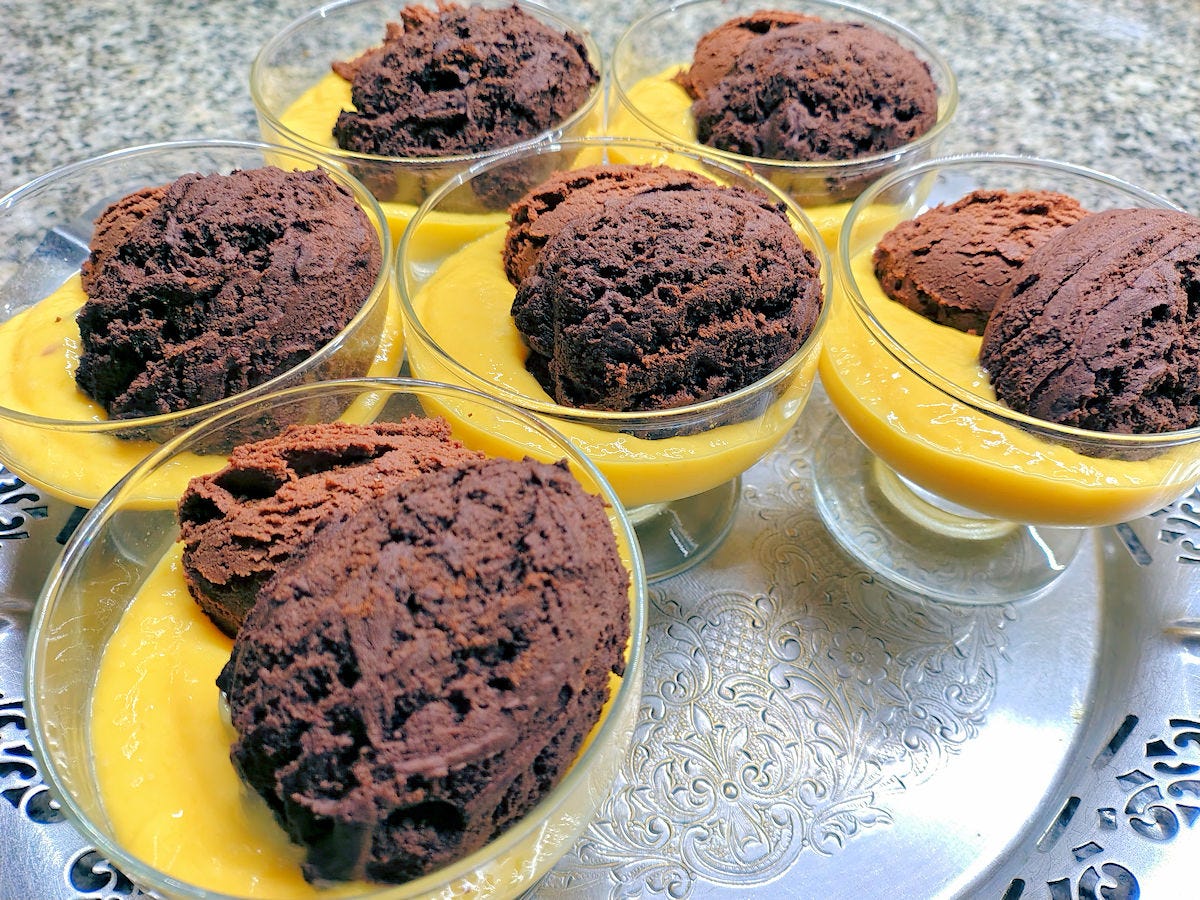
And finishing off with a couple of desserts. Deceptively simple - a rich, cocoa cookie aside a bittersweet chocolate semifreddo, both nestled into what is, for all intents and purposes, a very thick mango lassi - a puree of mango, yogurt, sugar, and sea salt. Served up with Susana Balbo’s Late Harvest Malbec 2013.
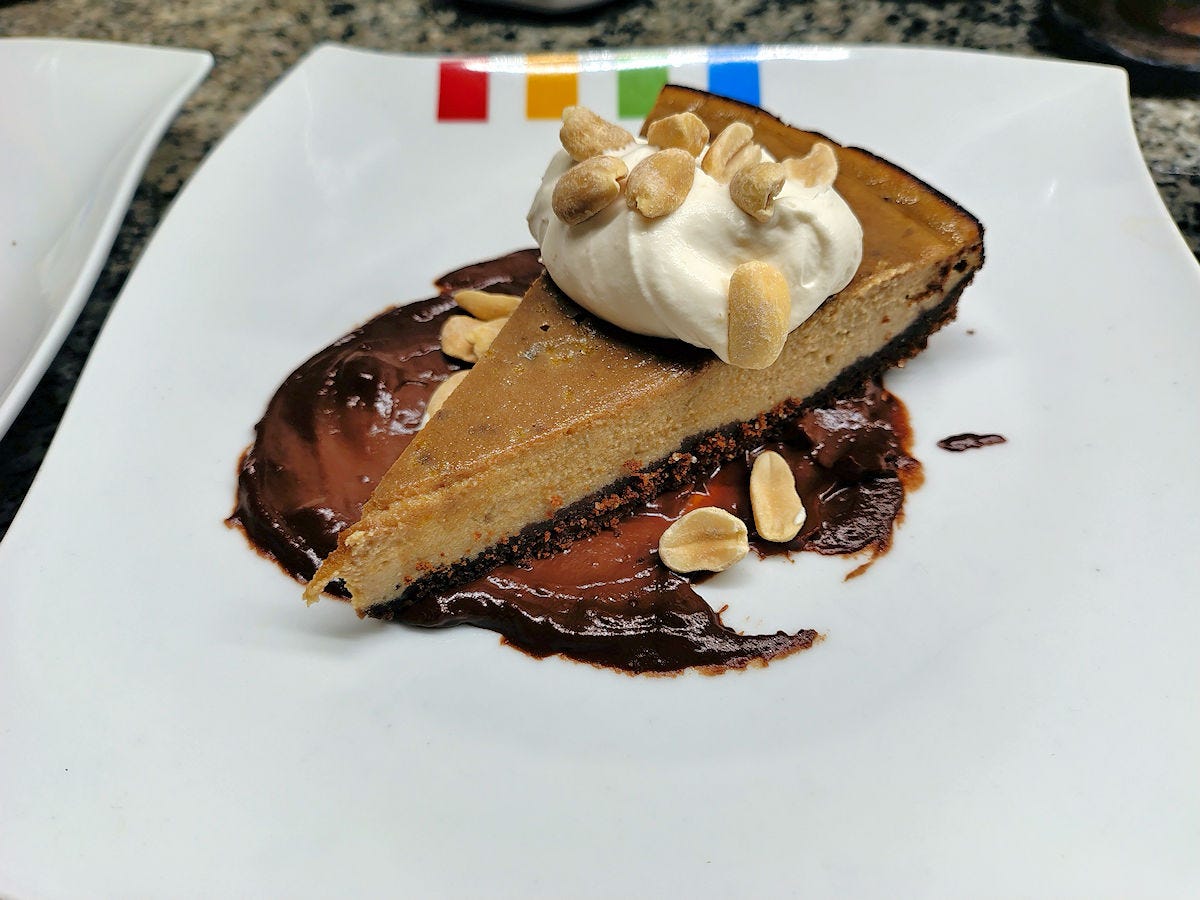
And, to cap off the month, and year, a banana and espresso cheesecake with a light dusting of butterscotch chili powder over the top as it baked. Served over a dark chocolate and espresso cream, topped with vanilla whipped cream and toasted peanuts. Served with Zuccardi’s “Malamado” Malbec Licoroso.
And that’s December for you. Next post, the obligatory best of 2024 round-up, and then on to 2025!
Dan, I enjoy seeing your culinary creativity. Happy New Year!
The proper common name for Dissostichus eleginoides is "Patagonian toothfish." "Chilean sea bass" is a marketing name that dates only from 1977.
Its Argentine fishery is, by most accounts, better managed than in Chile. Our local supermarket displays it as "Chilean sea bass, product of Argentina."